Archive

Tag Archives: Italy

IMG_9477
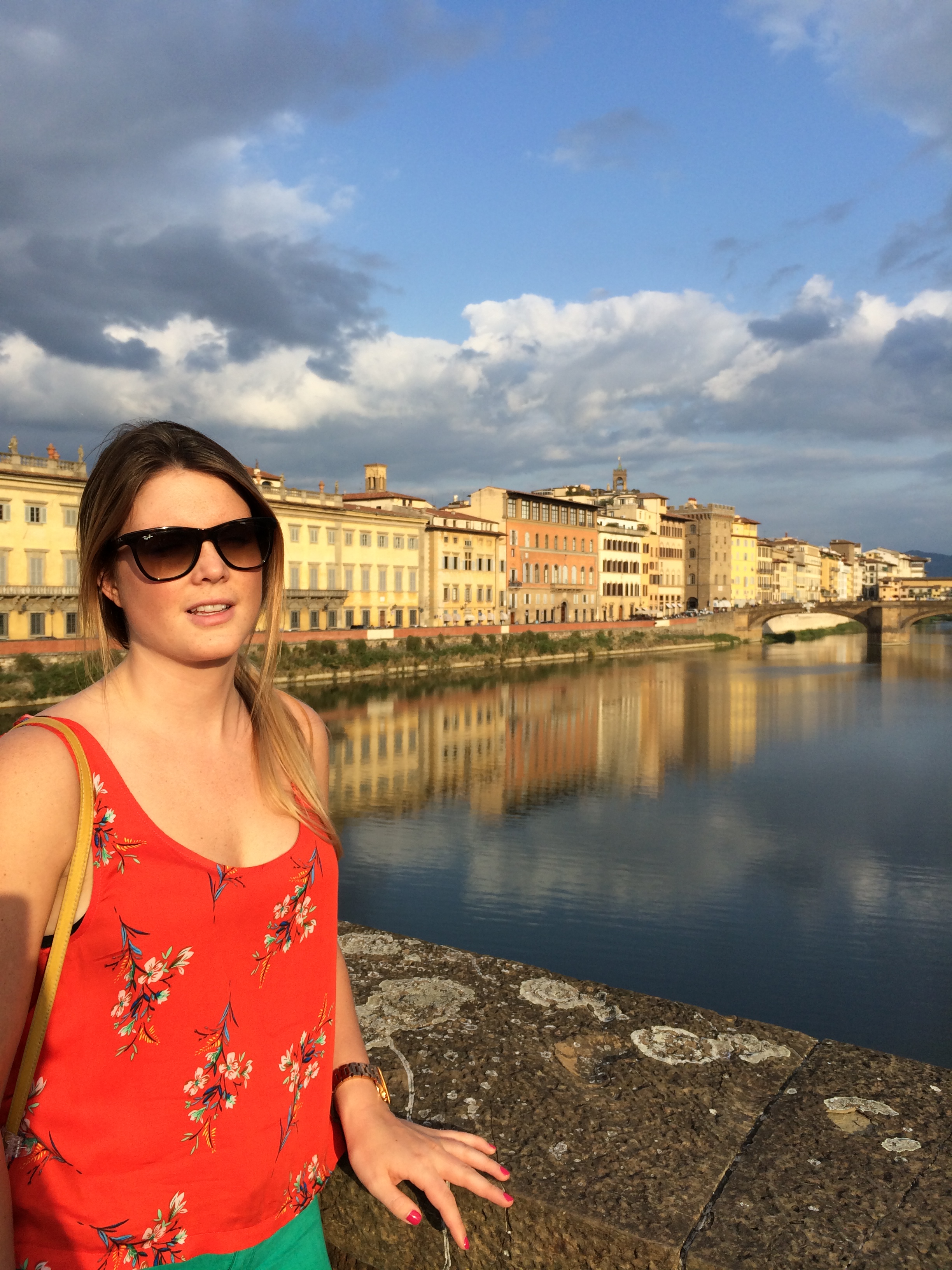
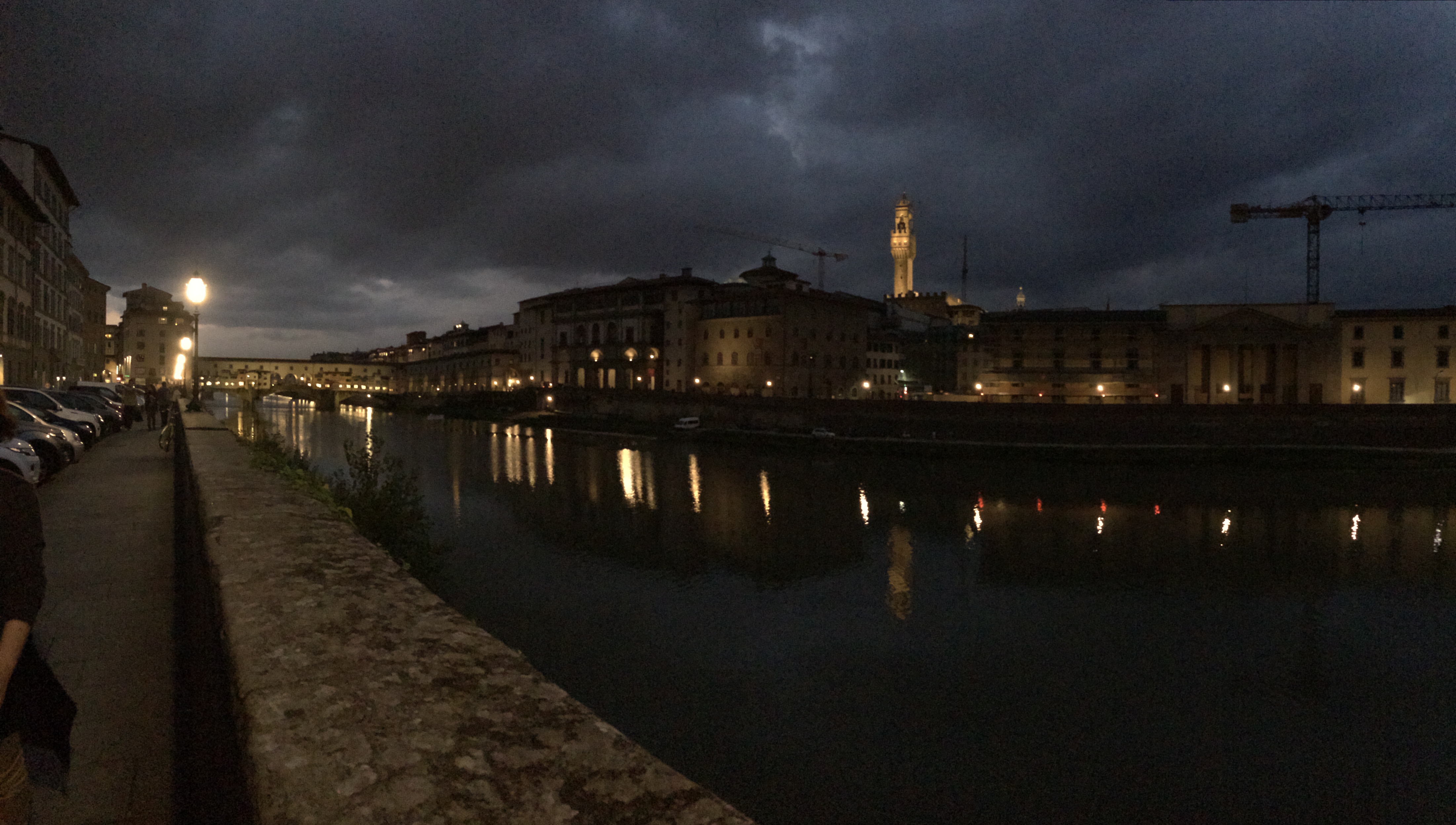
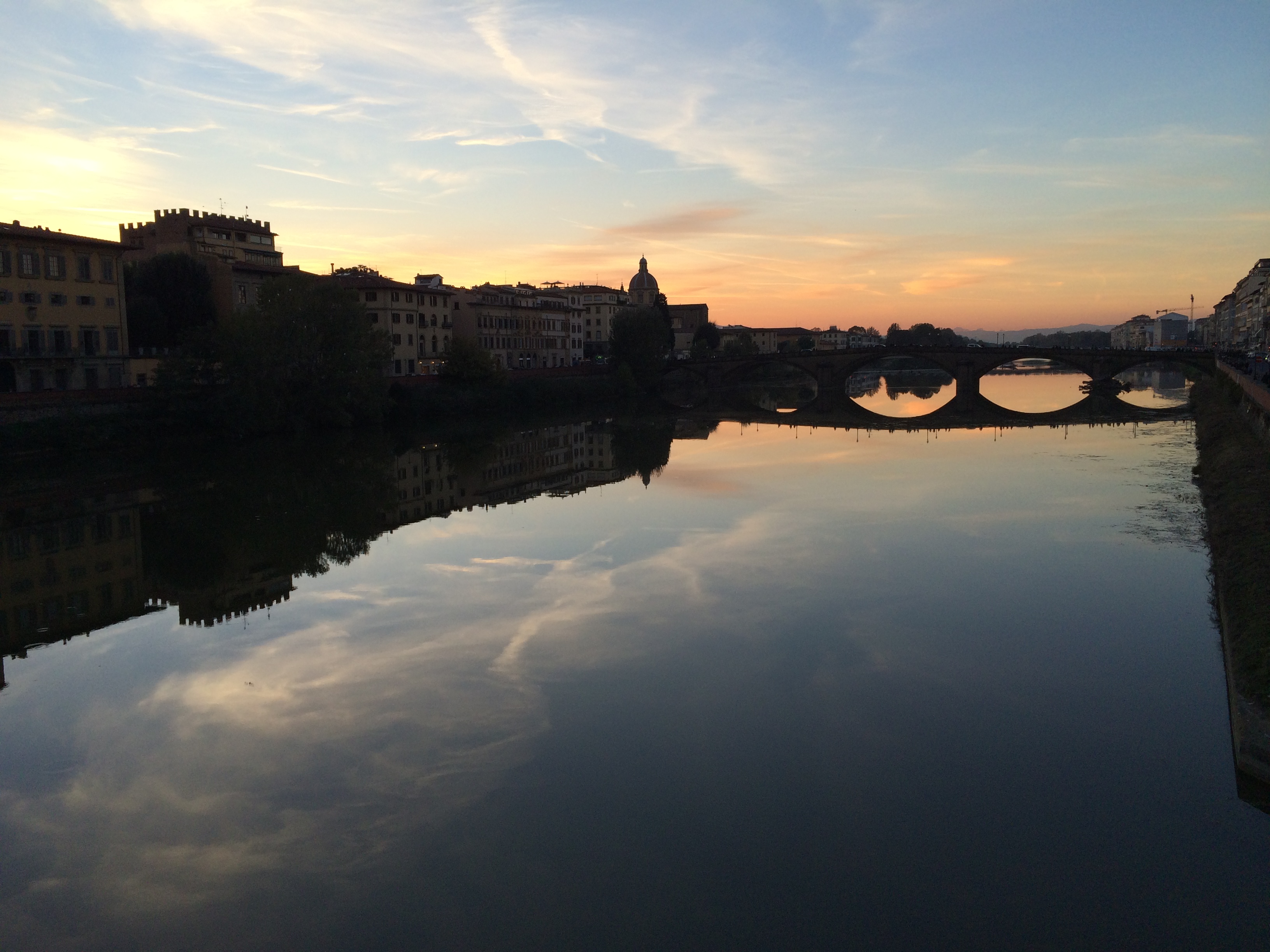
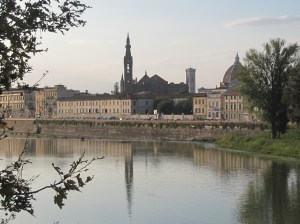
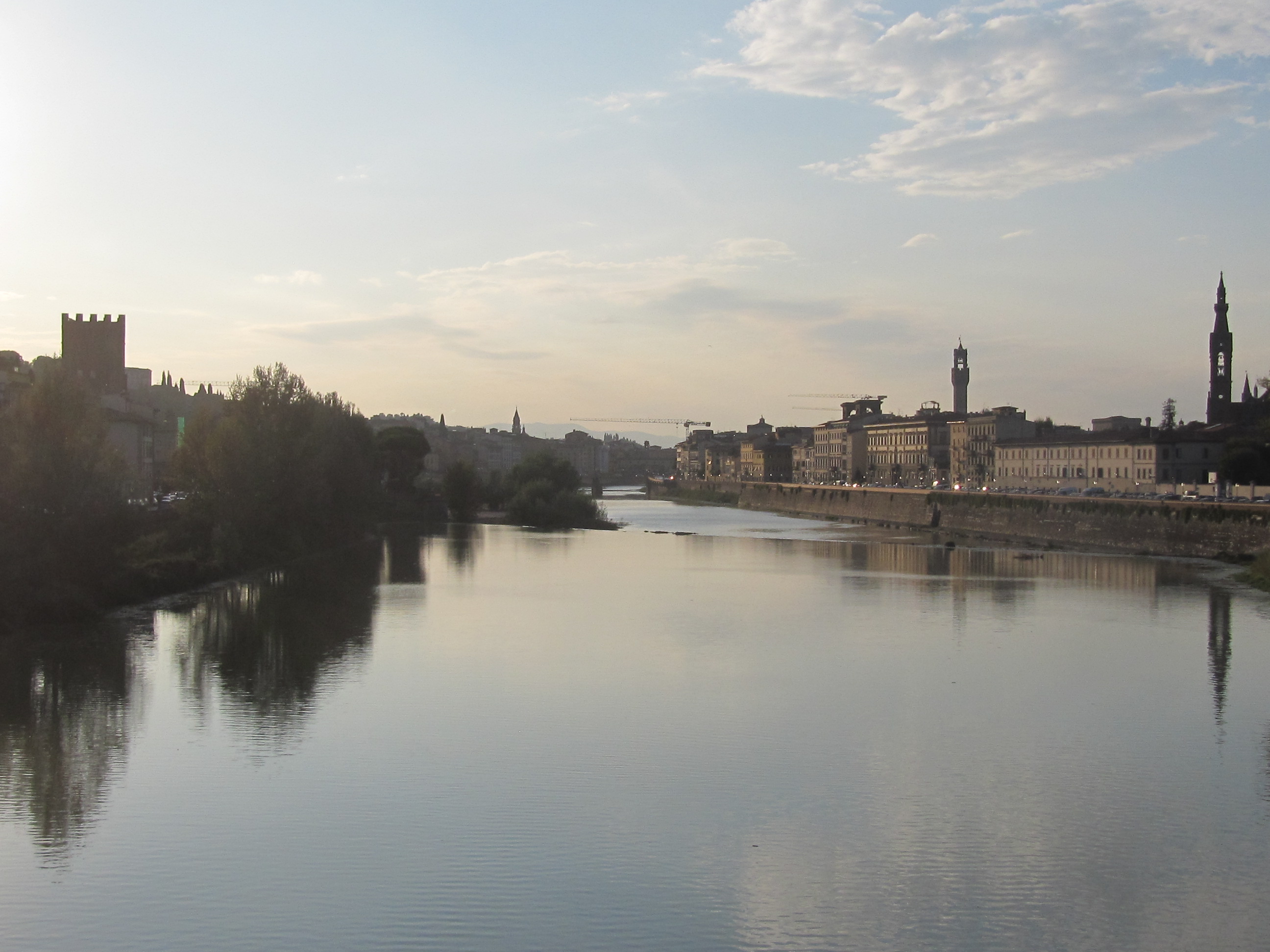
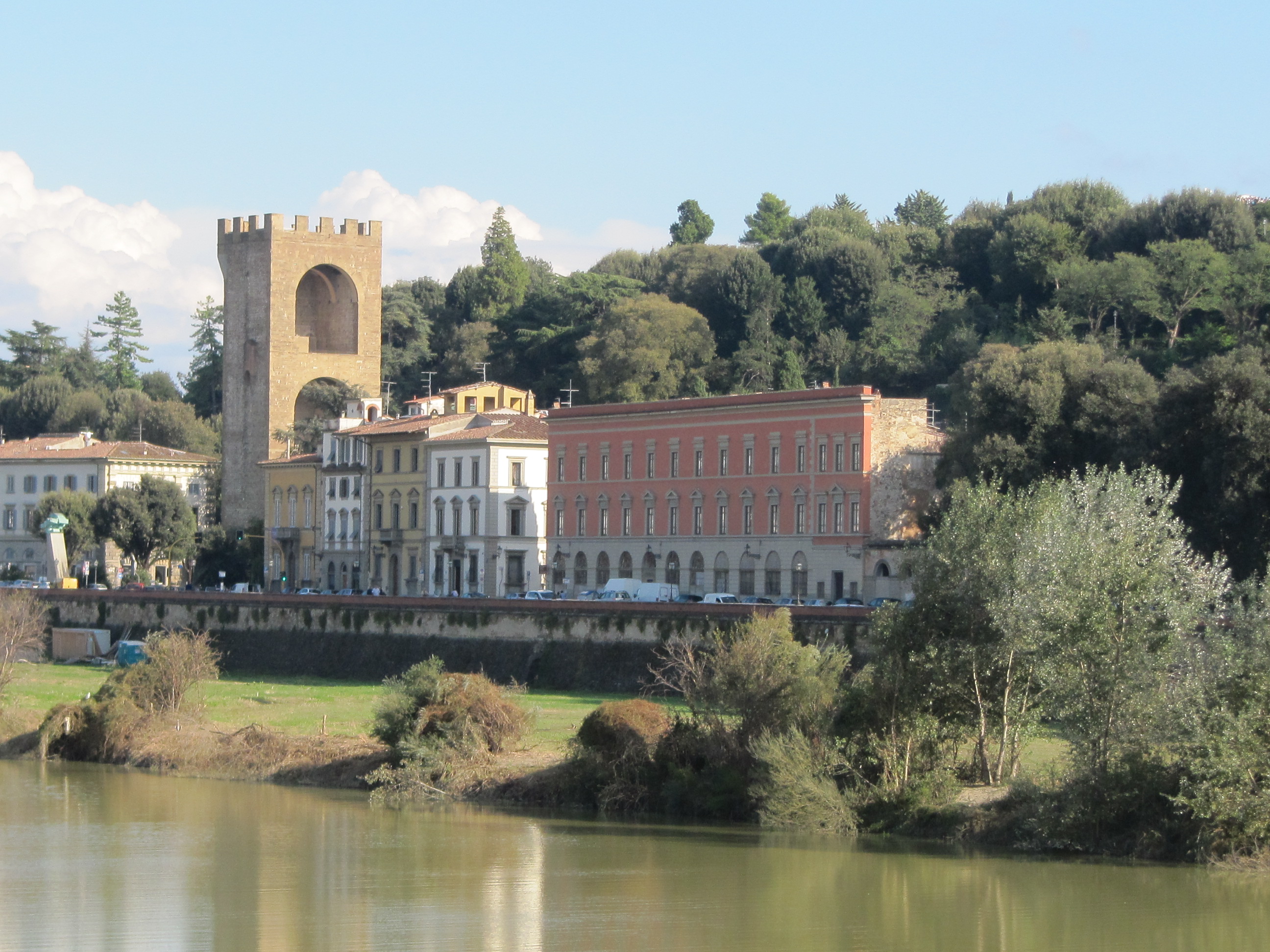
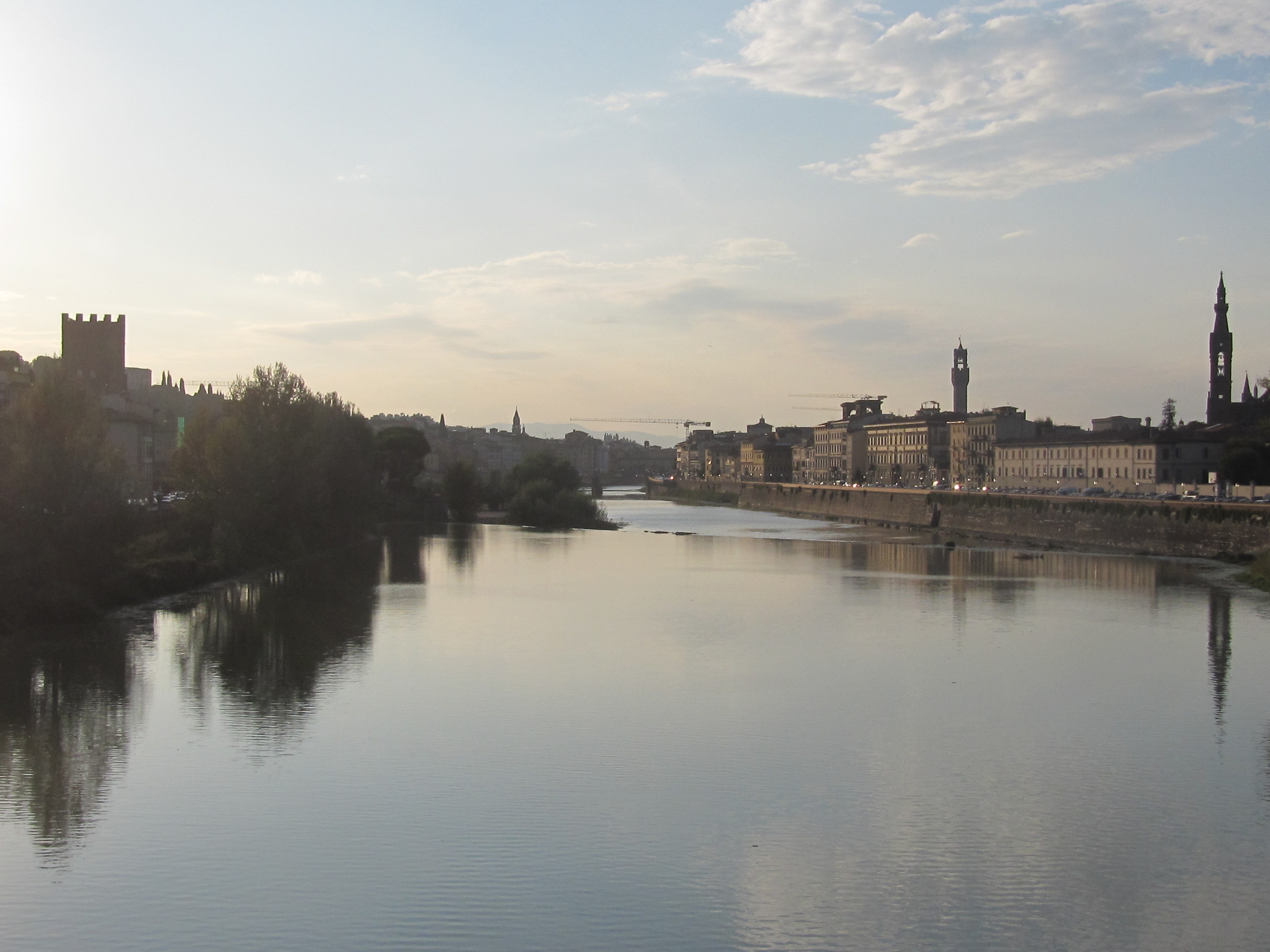
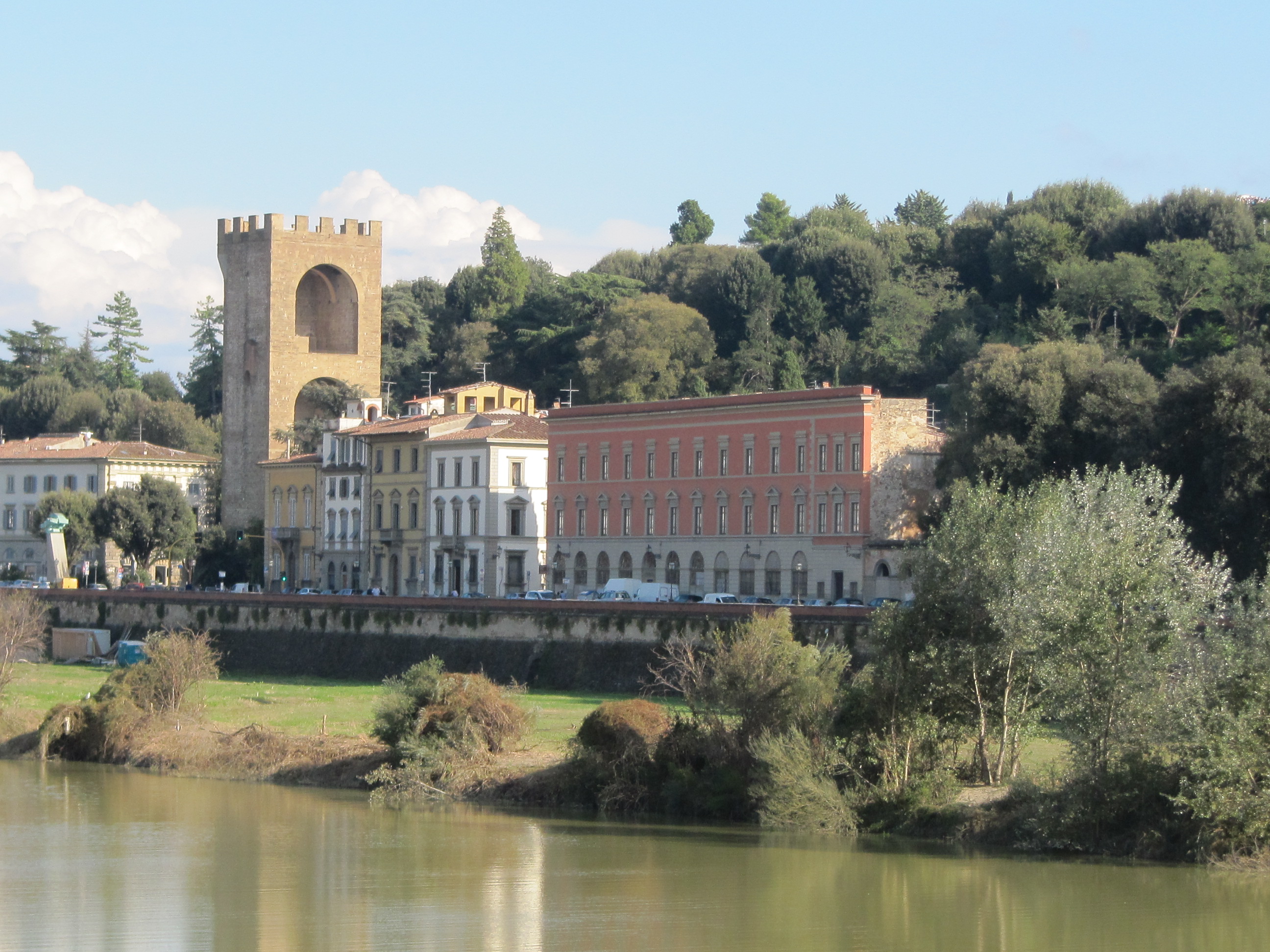
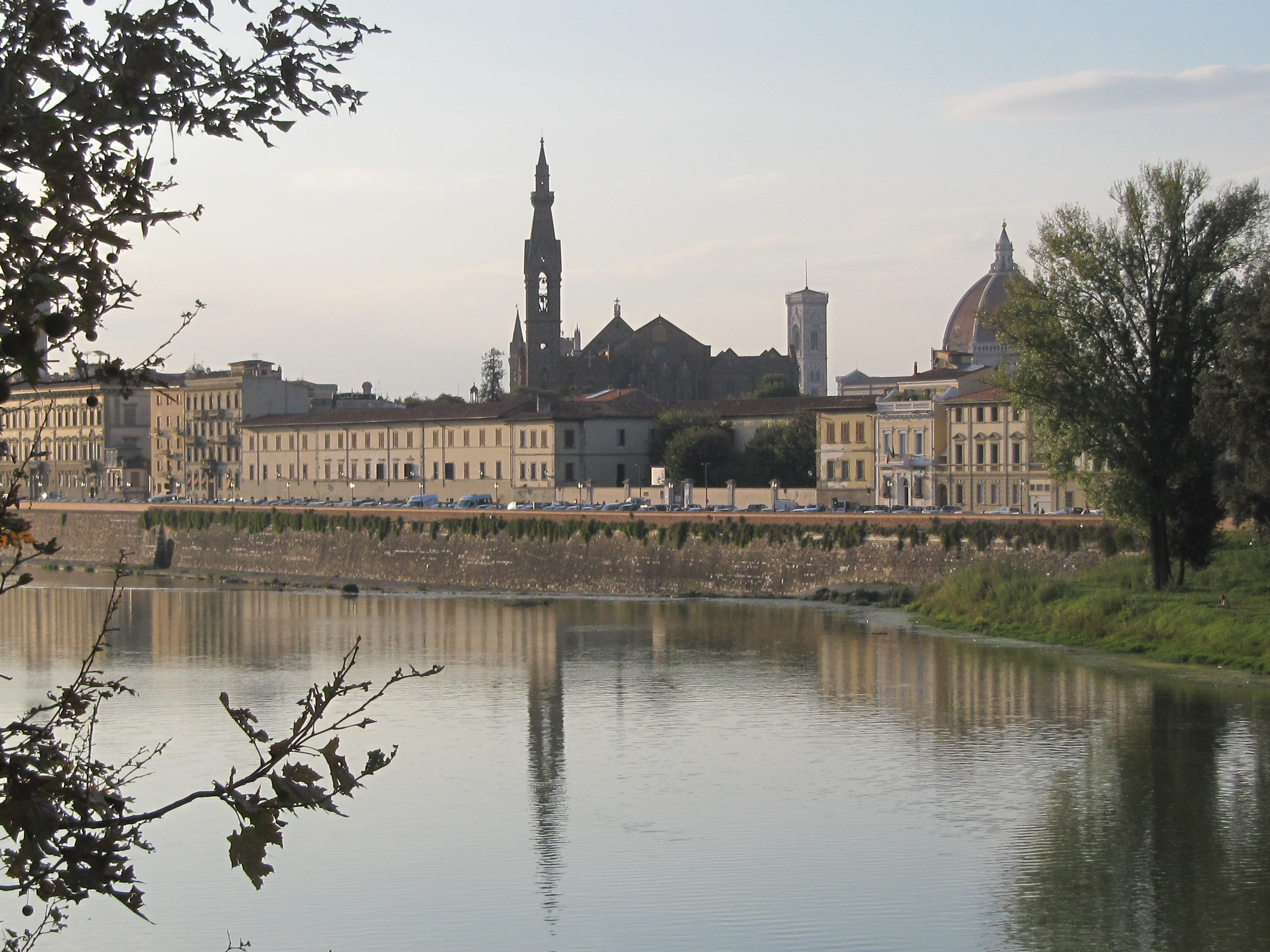
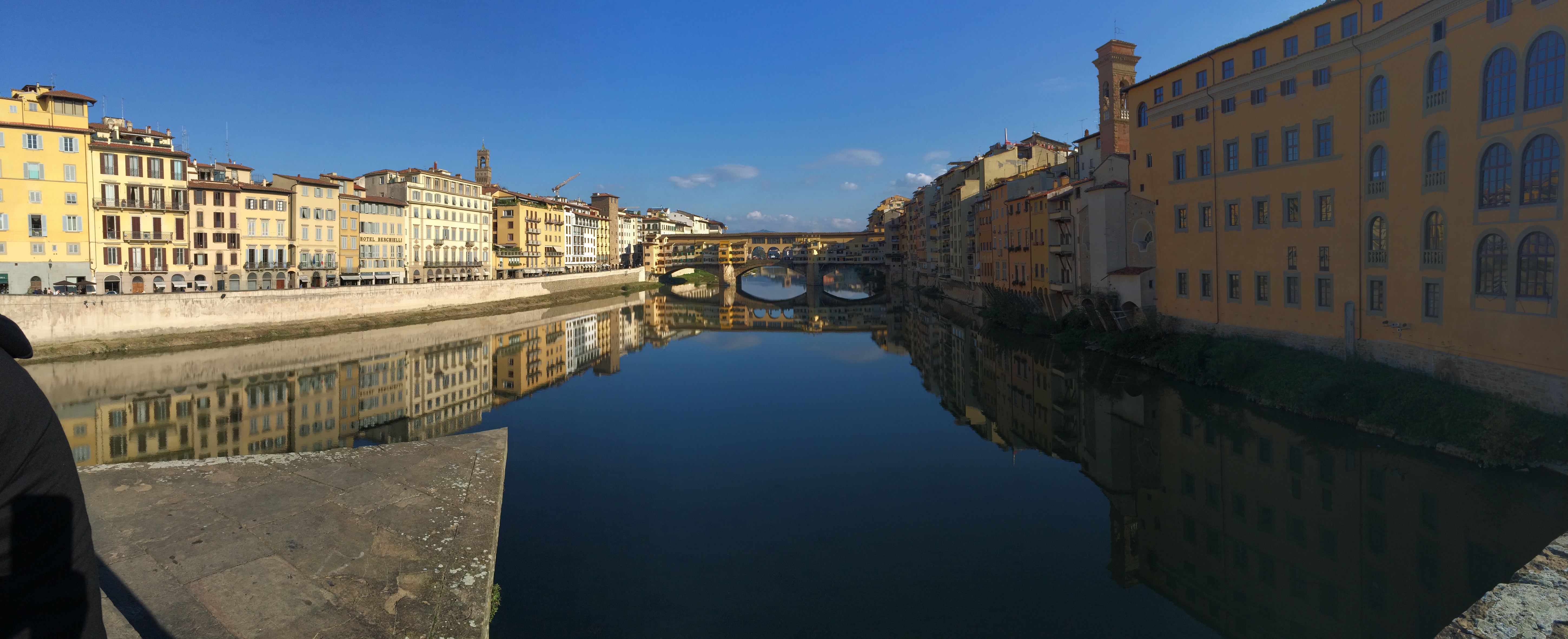
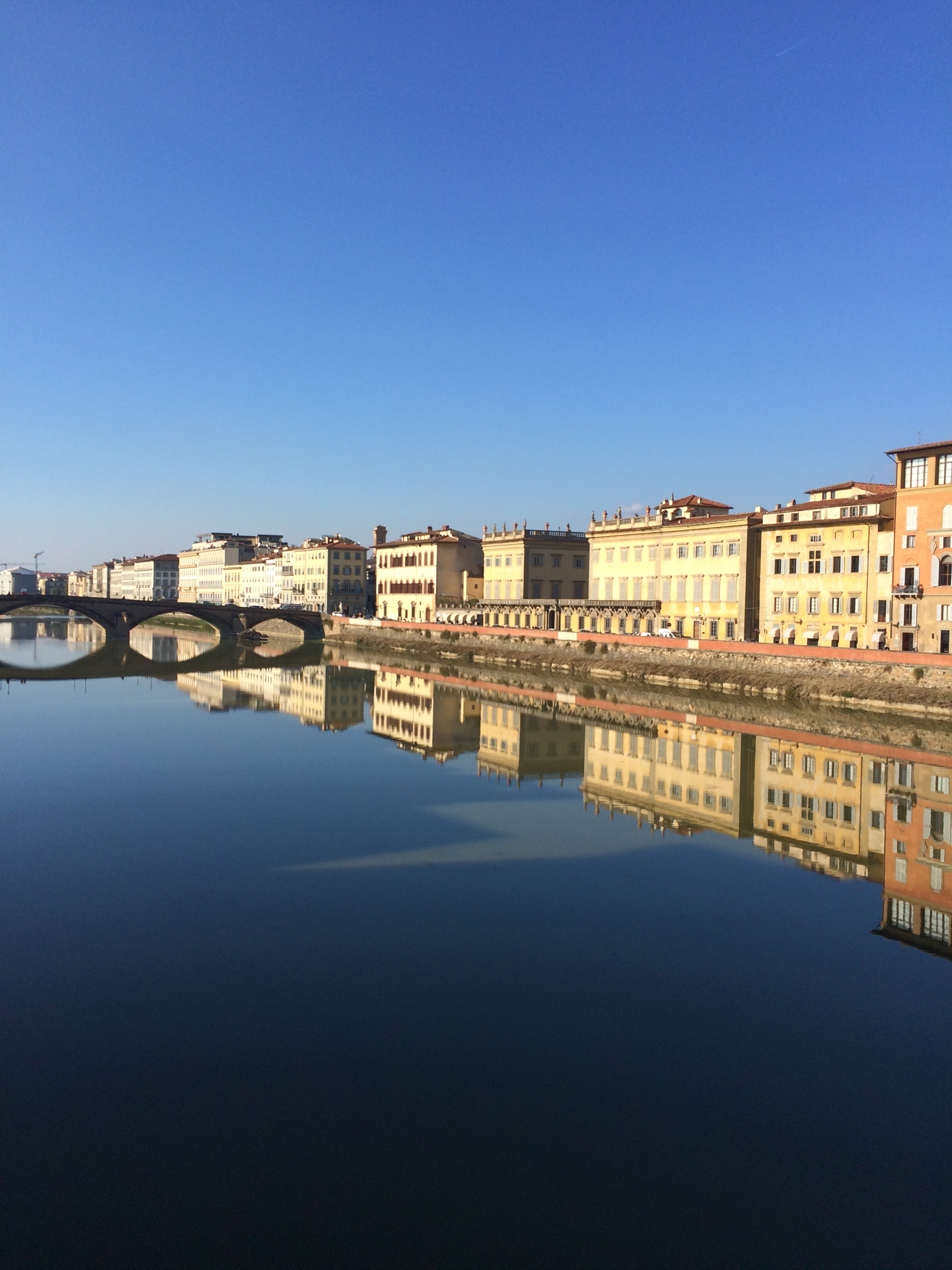
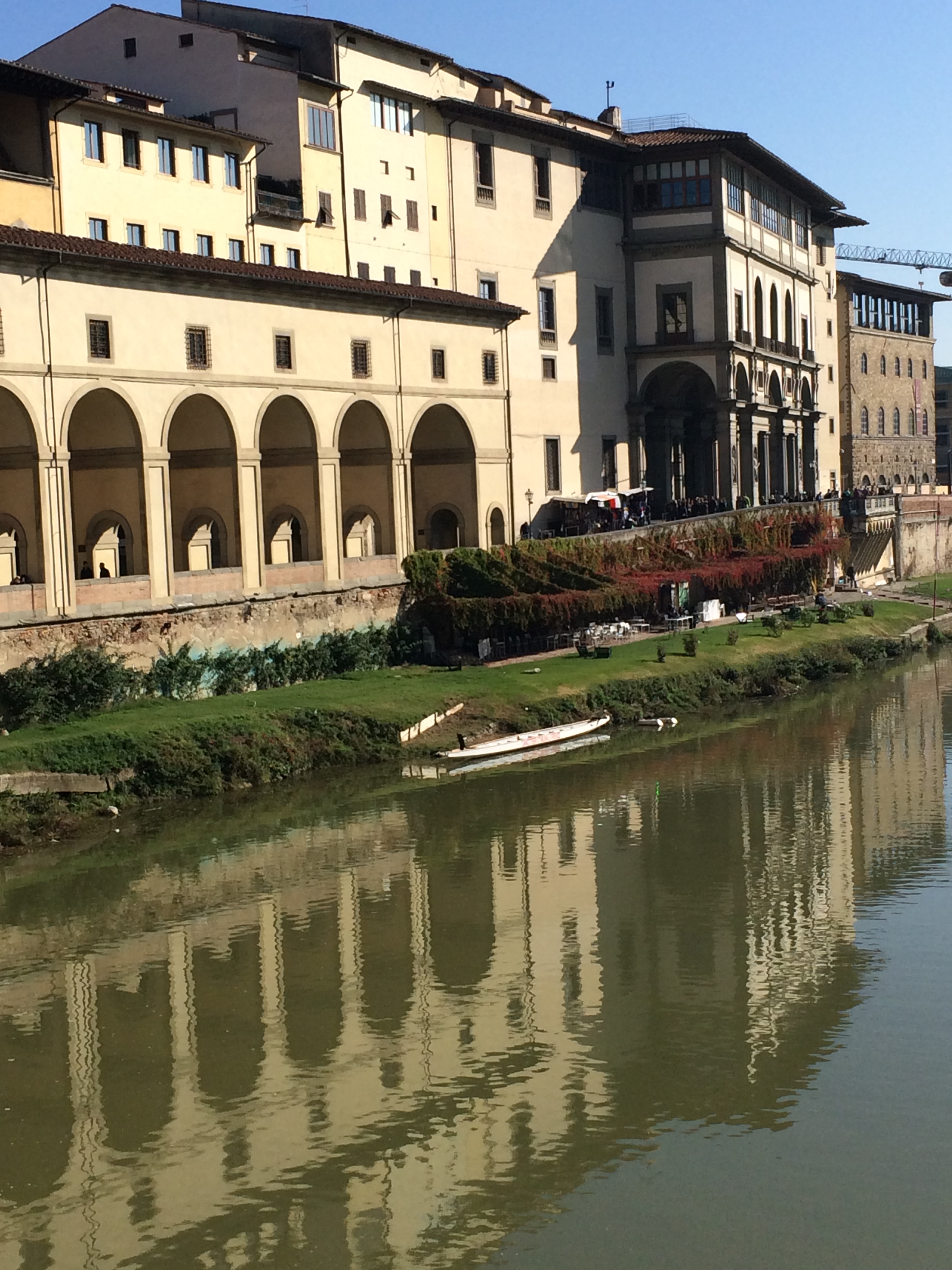
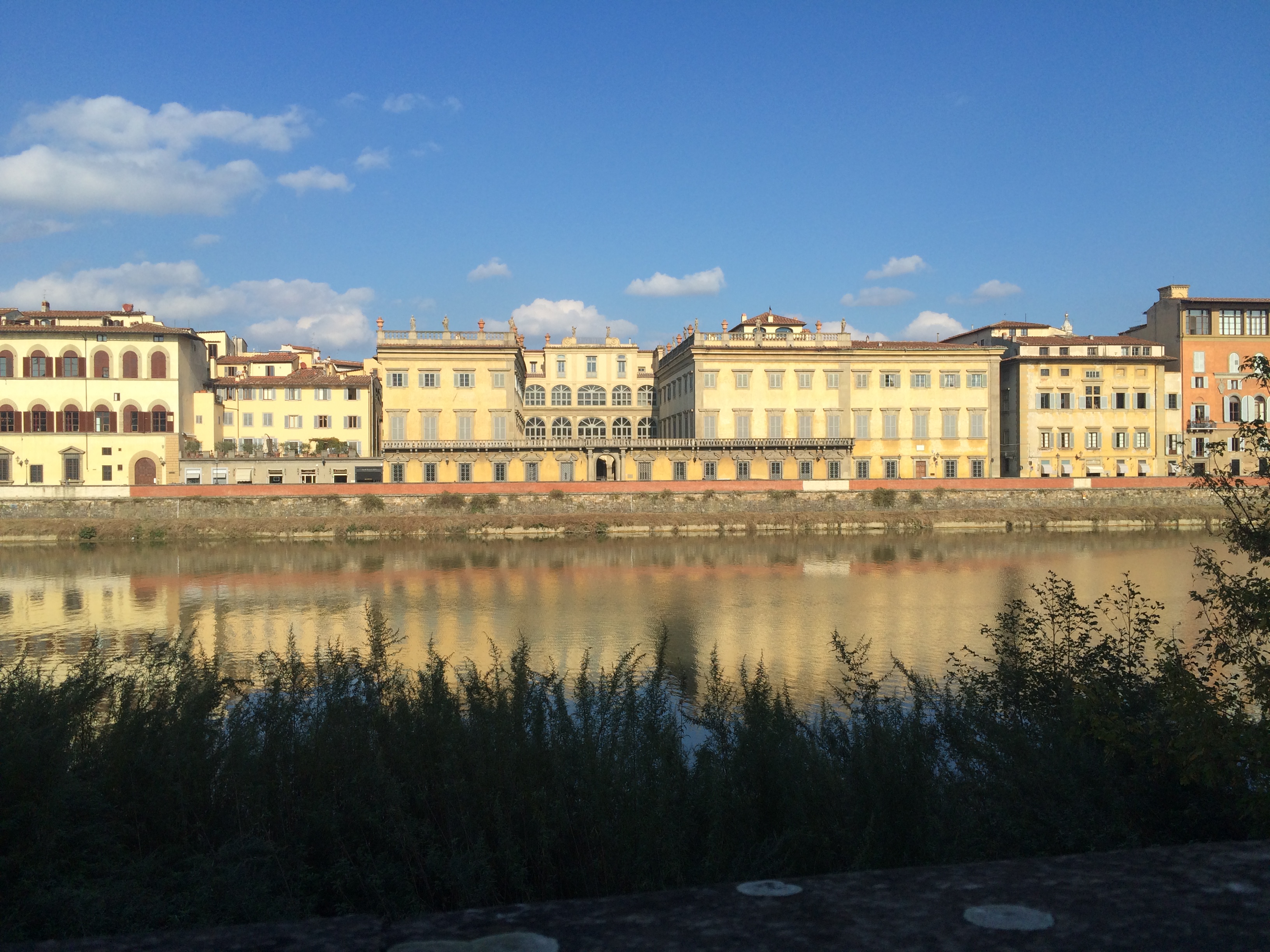
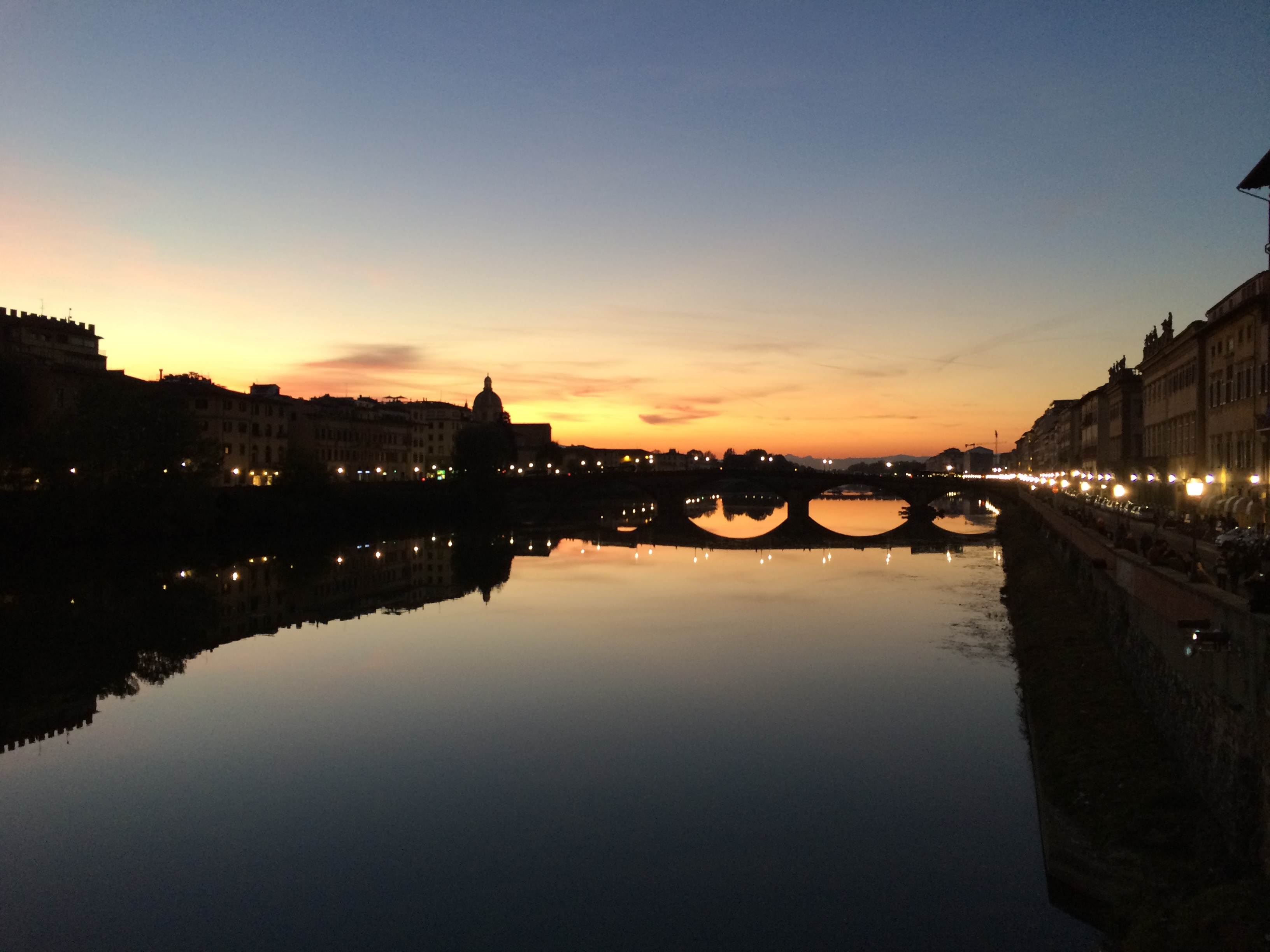
Visiting Florence one cannot help but cross, re-cross, walk and walk again along the banks of the River Arno which cuts through the centre of the city. Having crossed or walked along it daily, I found myself constantly shooting pictures of the River, its banks and bridges—it was constantly mesmerizing….there were days when I simply sat by the river, glass of wine in hand or leaned for hours on the river walls spellbound by the interplay of river, buildings and light.
IMG_9452IMG_9475

It is clearly central to the identity of Florence.

129
130

Since ancient times, the Arno river has been the transit route between the mouth of the sea and the Apennines when wood was needed for architectural works. It is 241 kilometers long. Over time the Arno greatly influenced the economic development of Florence. However drought and periods of low water reduced its navigability and with the construction of railroads in the 19th century, it was no longer a commercial transit route.
772
769

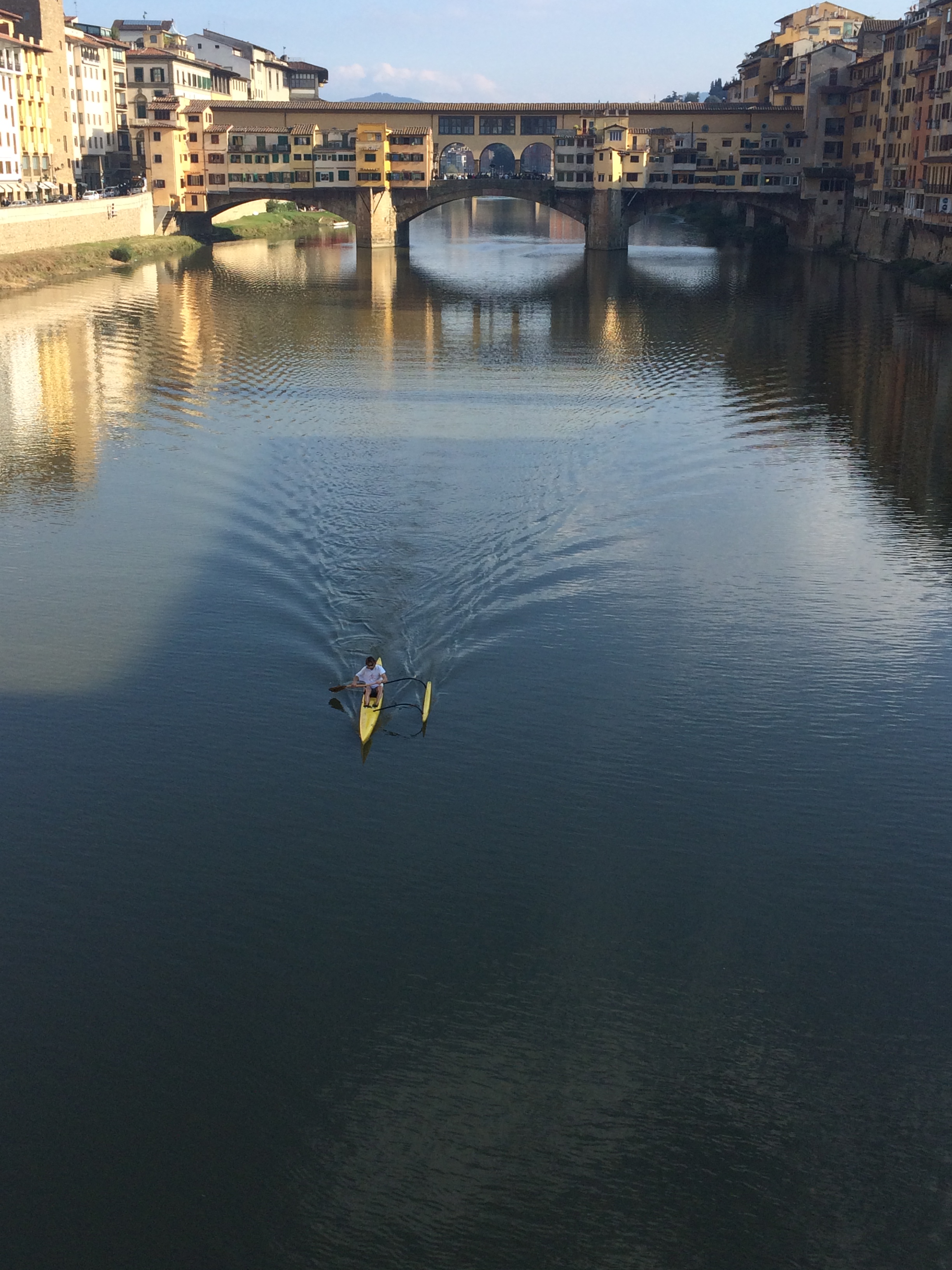
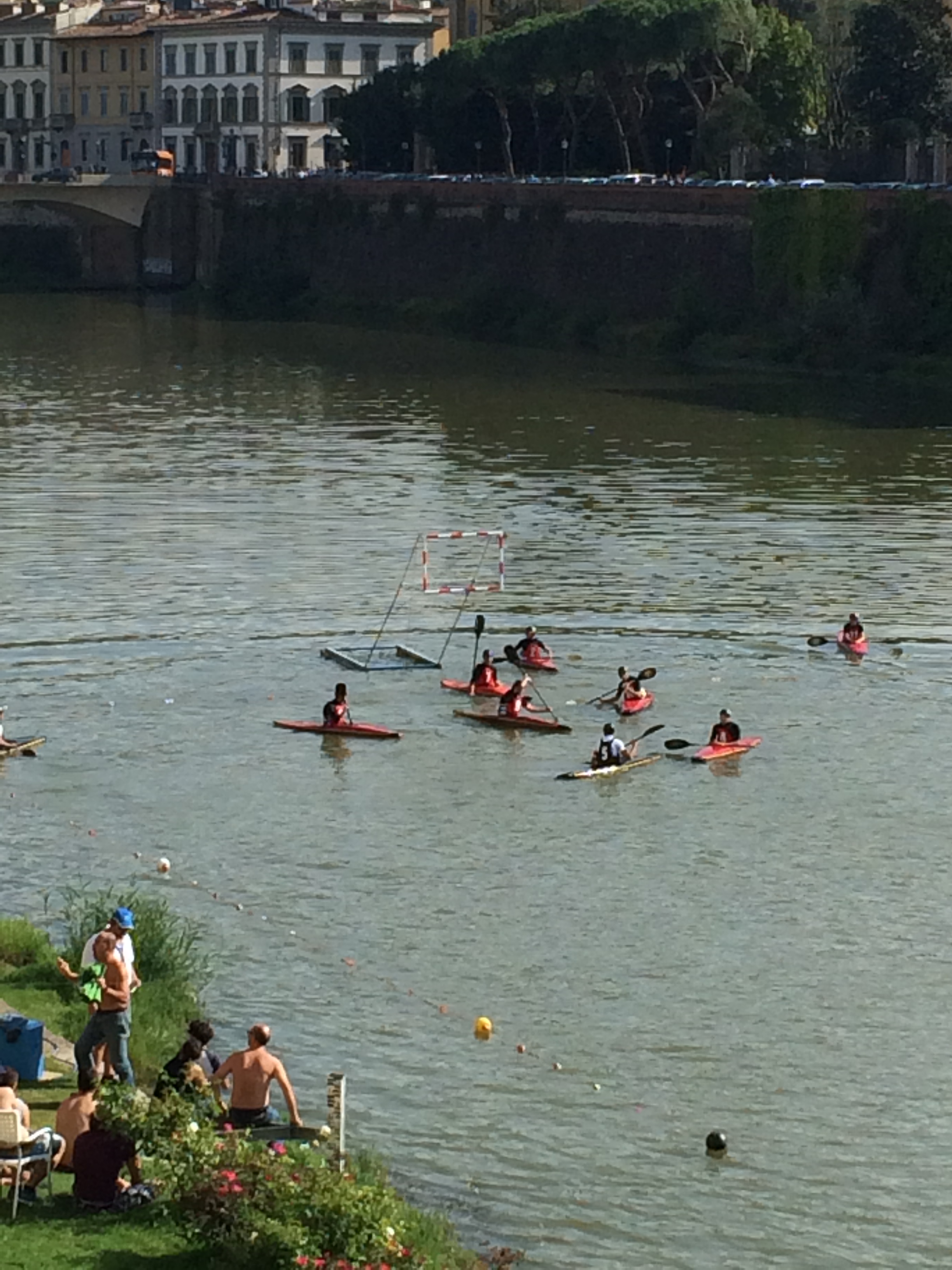
Almost immediately one notices there are no tour boats, no water taxis or commercial craft. The only boats I saw were the local rowing club members out for their sculling practices. I very calming form of boat traffic. One Sunday I was entertained by a two teams of 6 players in kayaks that seemed to play a sort of waterpolo / waterbasketball at the rowing club just below the Ponte Vecchio.
014
271IMG_1256

Even though the river is often low and calm, it has flooded. The worst in the history of the city since the flood of 1557 was the 1966 Flood. It had a lasting impact on Florence. 5000 families were left homeless and 6000 stores were forced out of business. Immeasurable damage was done to the art and the ancient book collections in the city. People from around the world, including experts (named by Florentines subsequently as MUD ANGELS) came voluntarily to help clean the city and retrieve the works of art and books. Restoration efforts continue even today. In 1984 a dam was built and the river banks were raised to protect the city from future disasters.
024IMG_1171<a

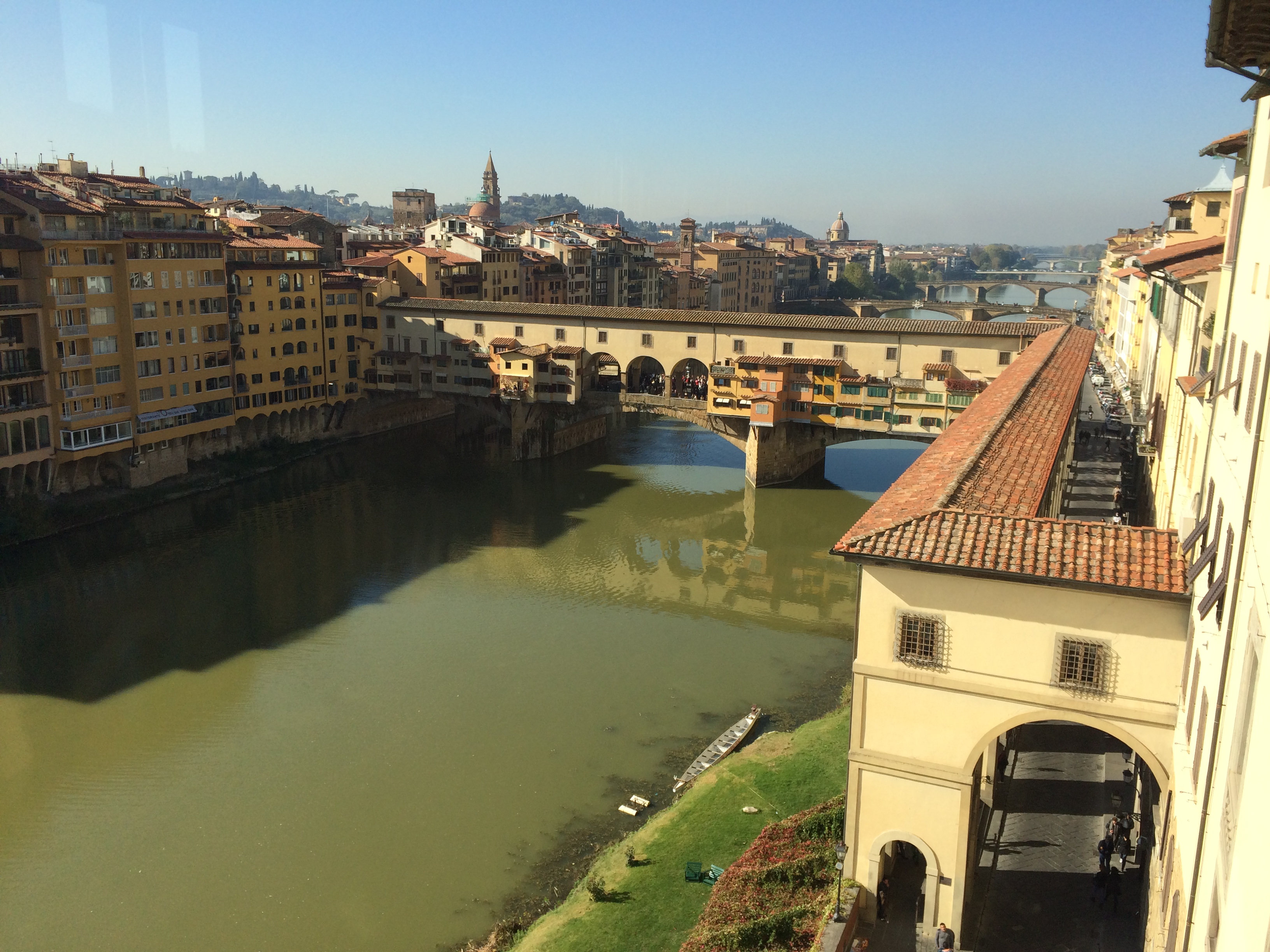
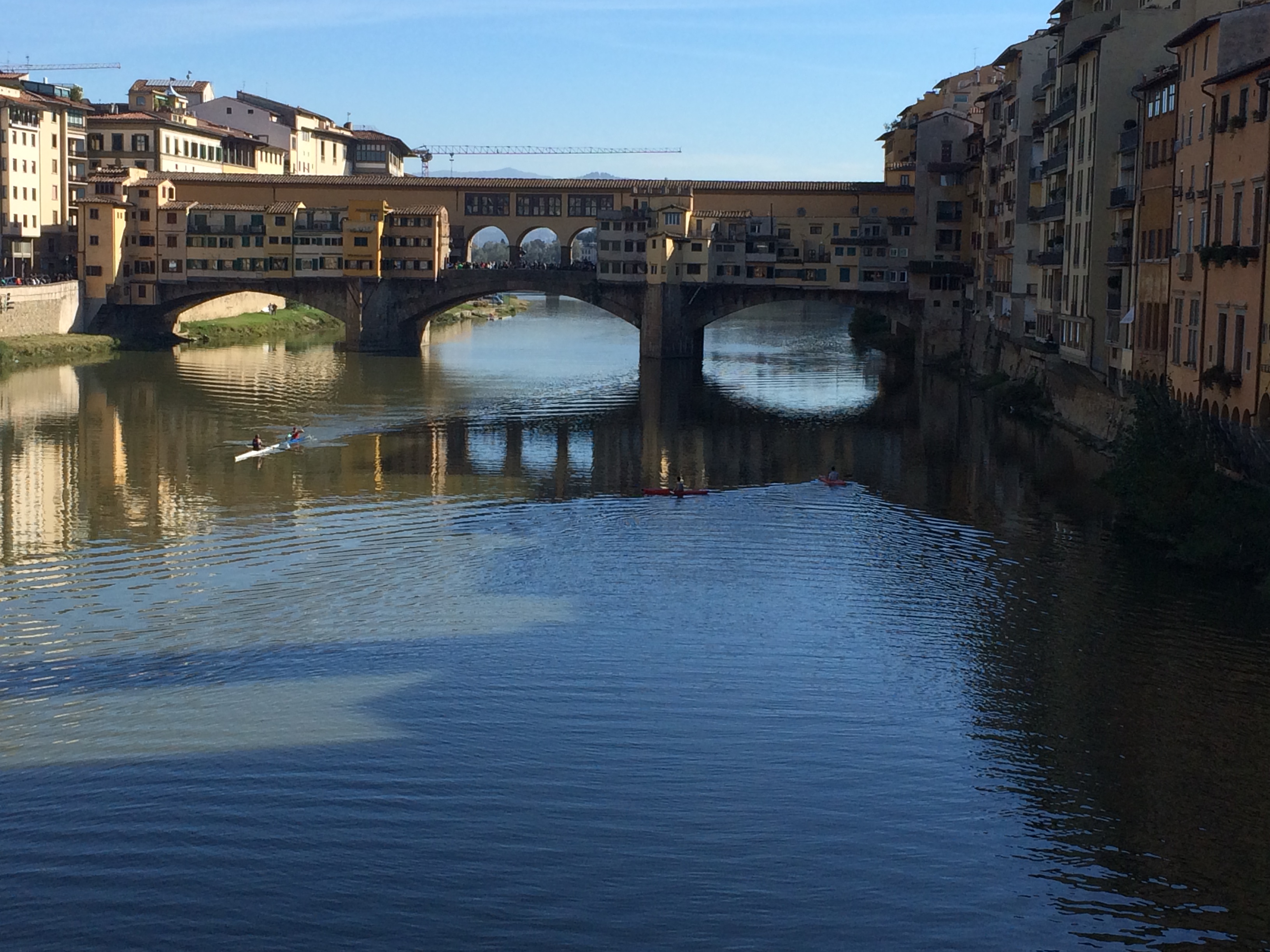
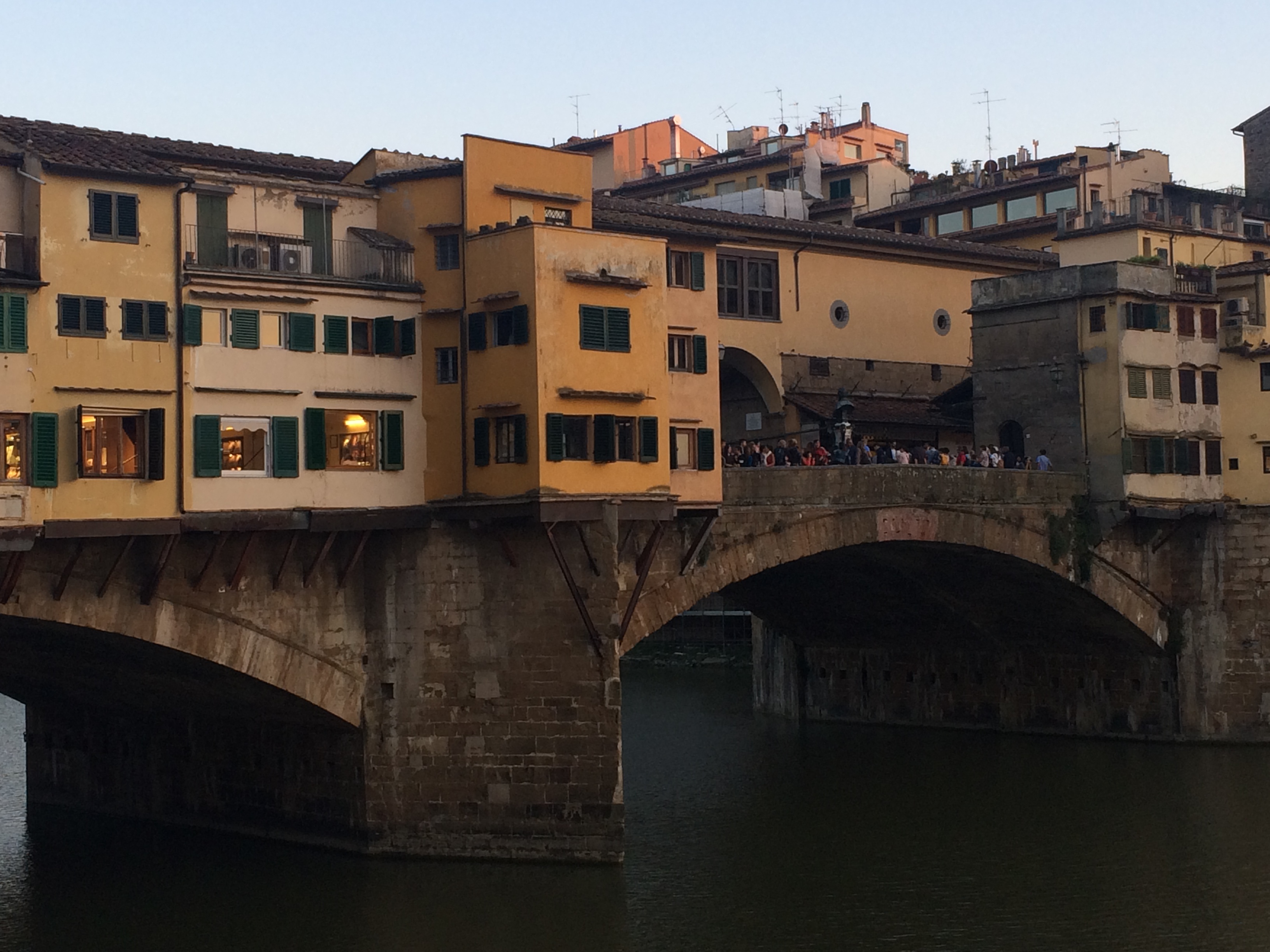
The Ponte Vecchio ‘Old Bridge’ is possibly the most well known and most photographed of the bridges. Oltrarno or ‘other Arno’, meaning the other side of the Arno, is the neighborhood across the river. A wonderful area, in which you will find the Pitti Palace and the Boboli Gardens. I spent 2 weeks in a loft apartment in Oltrarno and loved this neighborhood. It is the home of many students and working Florentines.
The Ponte Vecchio was, until 1218, the only bridge across the Arno in Florence. In World War II, it was the only bridge not destroyed. It withstood the weight of the tons of water and silt when the Arno burst its banks in 1966.
015

While today goldsmith shops are housed in every nook and cranny of the bridge, the shops were owned by butchers in the 13th -15th centuries. As the Pitti Palace was ‘oltrarno’ they had to use the bridge to get into central Florence. The noble Medici did not like walking amongst the lower society nor the smell of the meat cutters,they built a corridor above the shops as their personal passage to the Palace—the Corridoio Vasariano. The original butchers, fishmongers and tanners were banned in the 16th century (probably due to the rank smell that accompany these businesses) by Ferdinand I. He decreed only goldsmiths and jewelers could have stores on the bridge.
IMG_1252

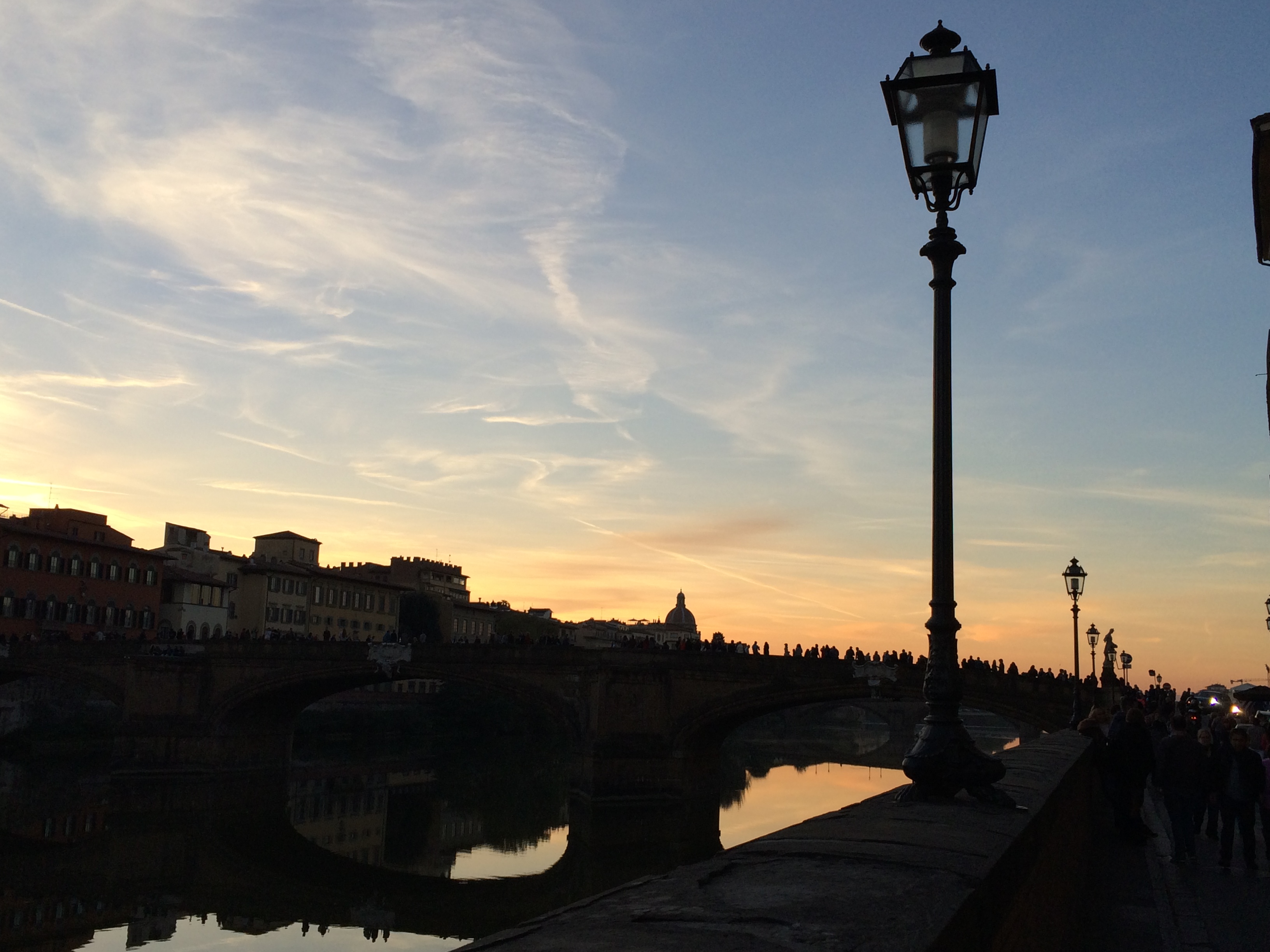
As you can see from my photos ( and I took many more) I loved taking a passeggiata (stroll) along the rivers and across the bridges. Ponte Santa Trinita lay at the bottom of my road, a stones through from my loft apartment. It led straight to the Ferragamo and best gelato shop across the river.

337
IMG_1207

547

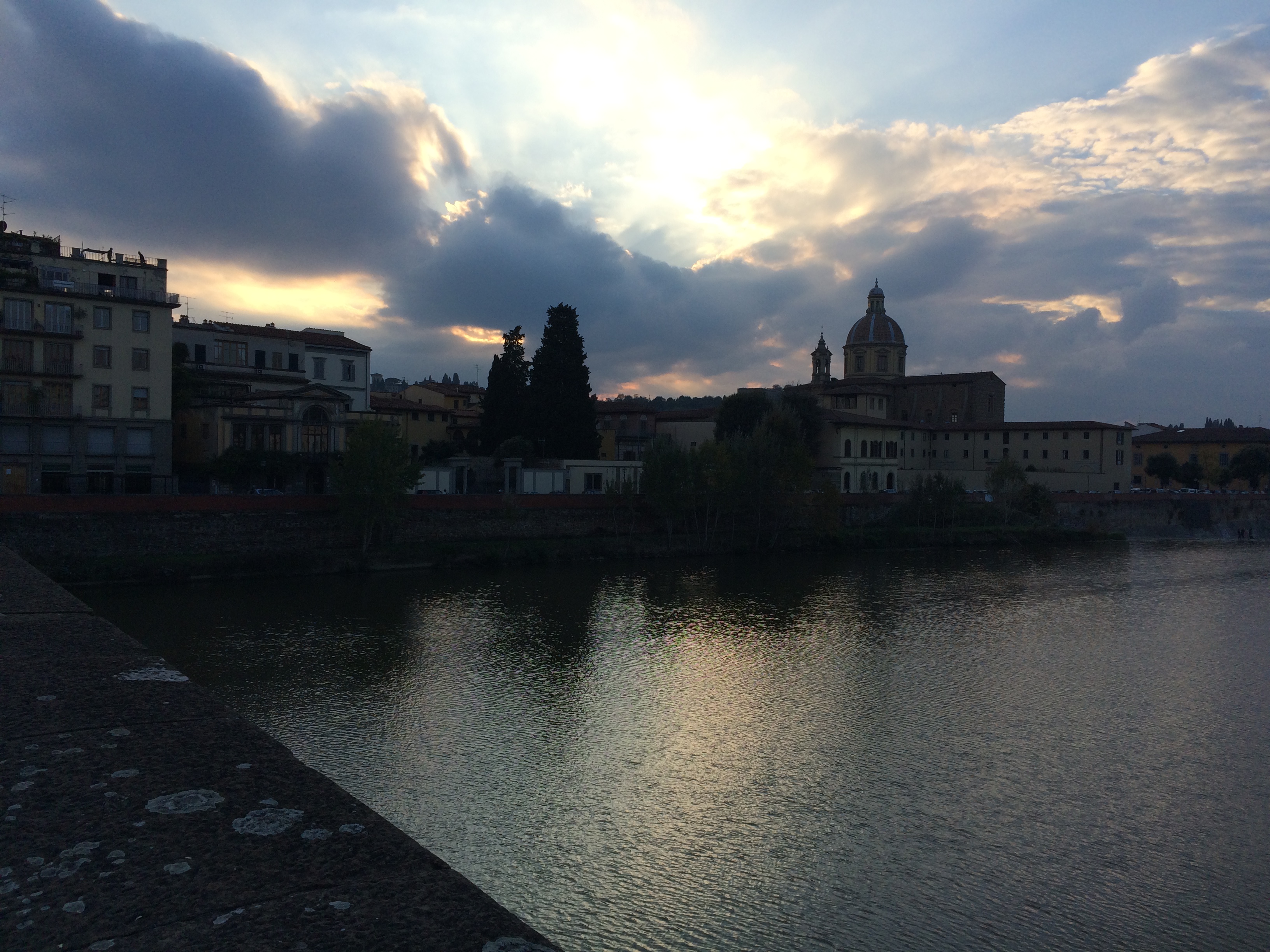
You will see from many of the river and bridge pictures, that the other element which fascinated me was the amazing skies in Florence. I read ( can’t remember where I picked this up) “ Italy celebrates an endless vocabulary of light on landscape that change from morning to evening, north to south and season to season. The luminous vistas recorded by Leornardi da Vinci in his paintings can still be seen when travelling any Tuscan Road”.
IMG_1268IMG_1221IMG_1212

Certainly I was constantly drawn to take photos of the skies. I hope you enjoy the pictures….they will long be a wonderful memory for me.
461

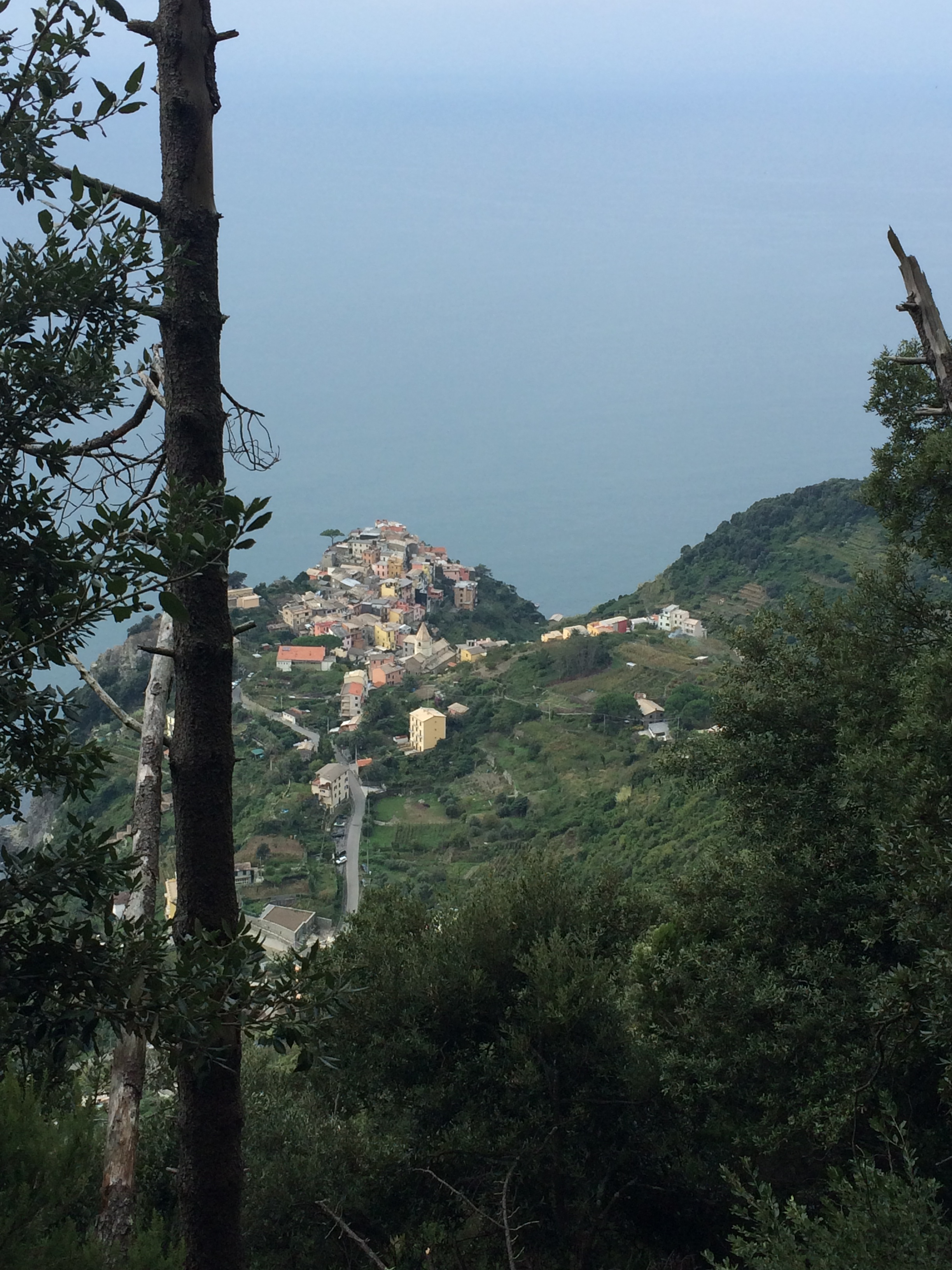
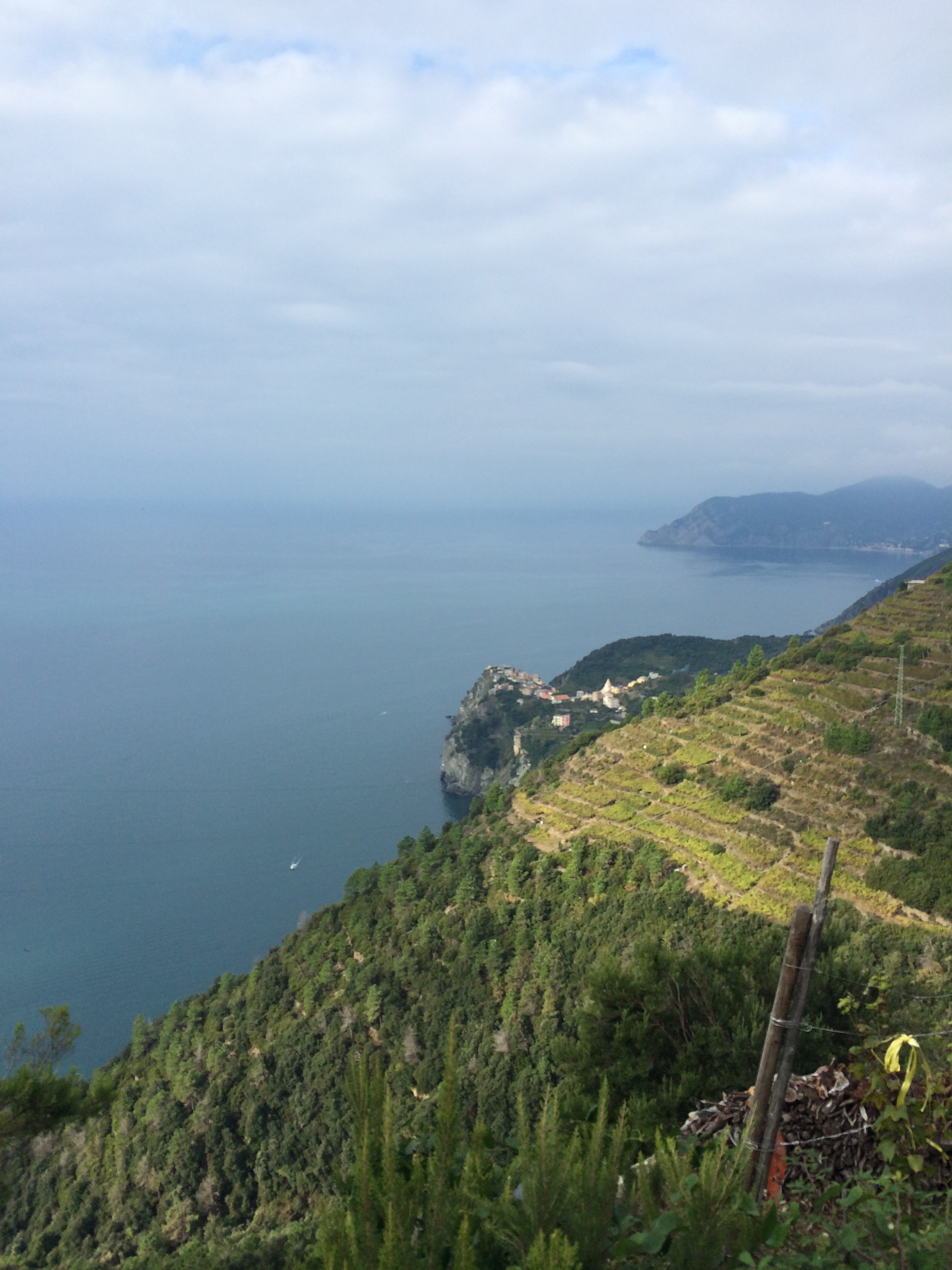
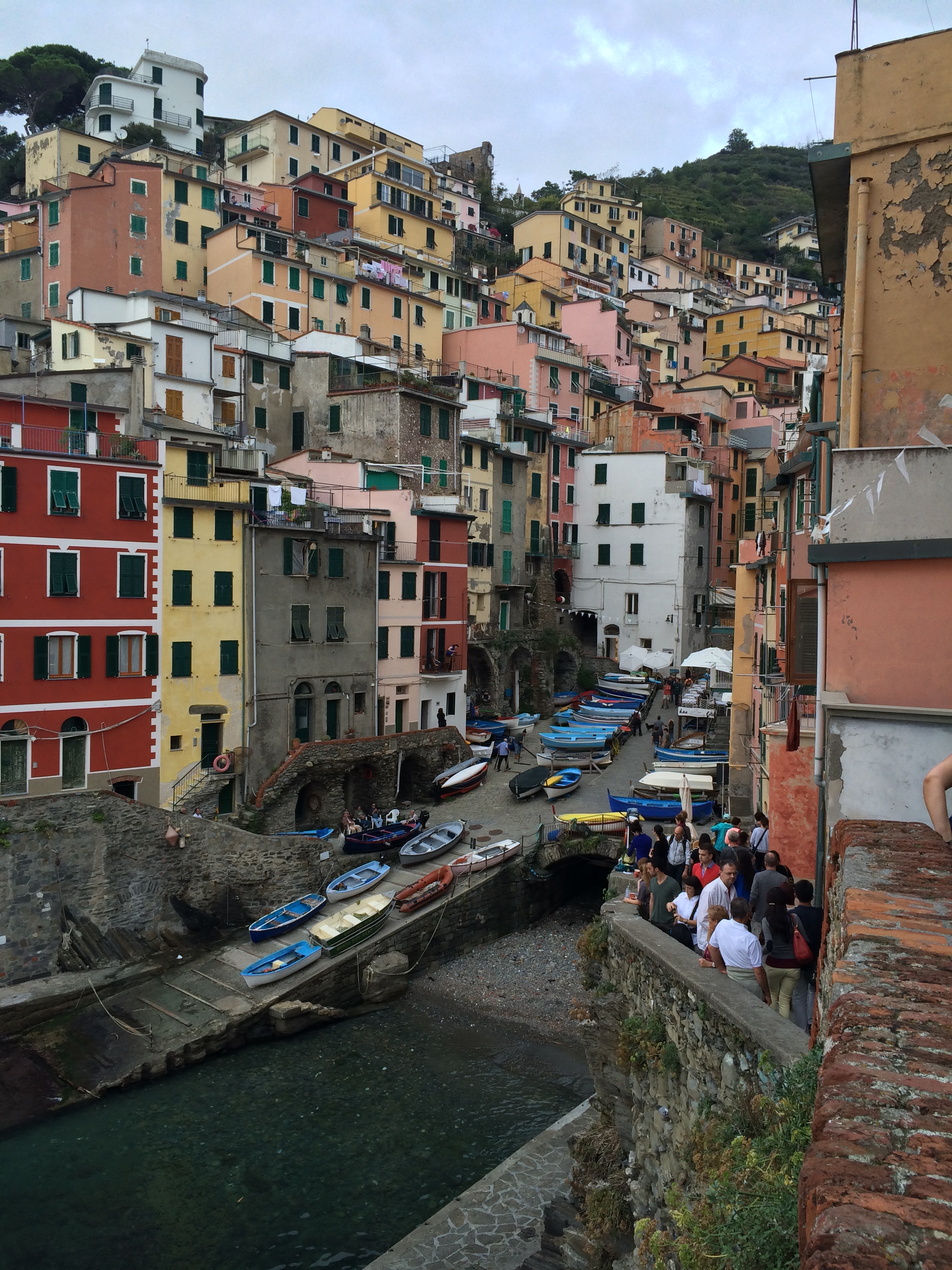
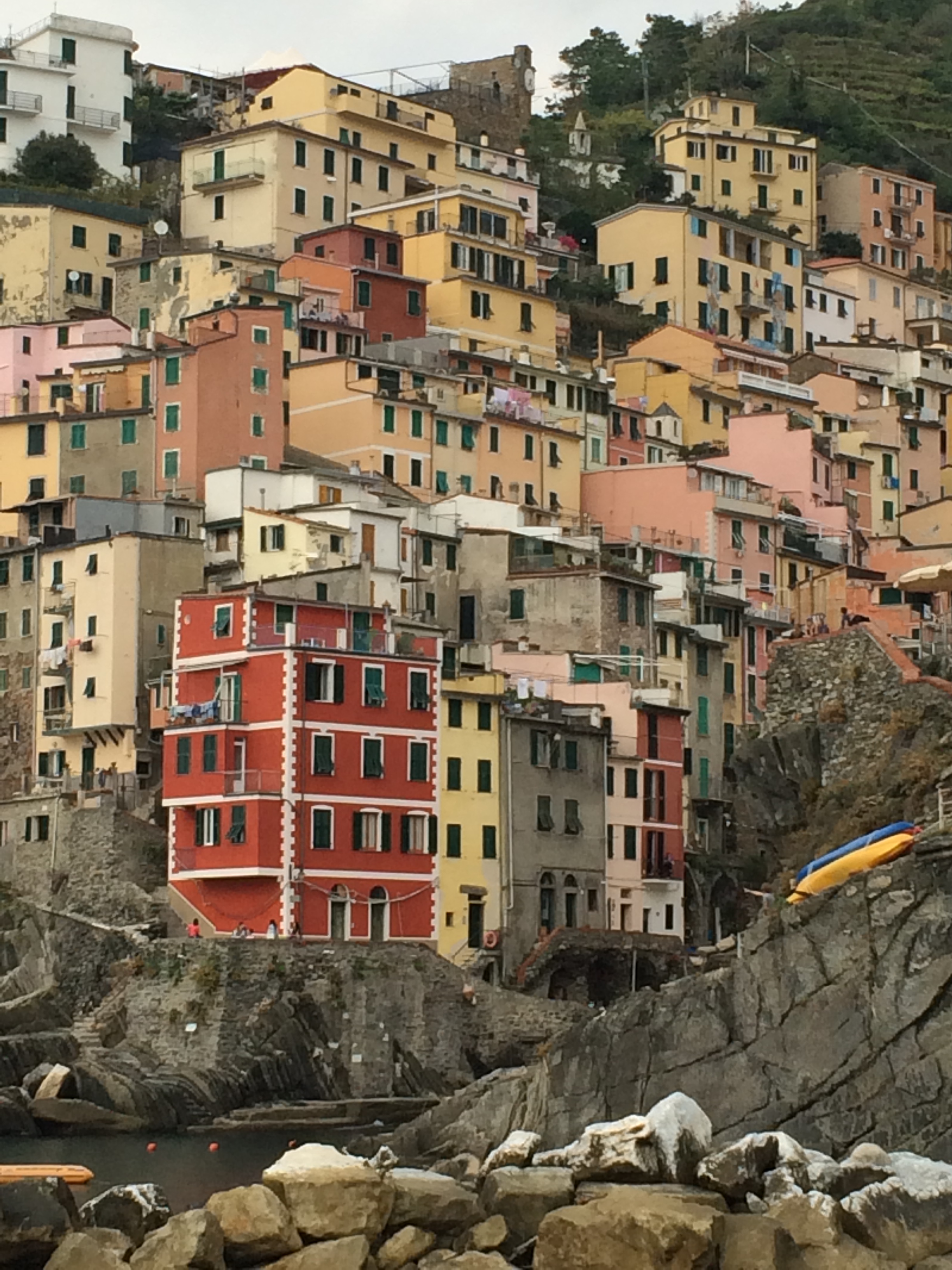
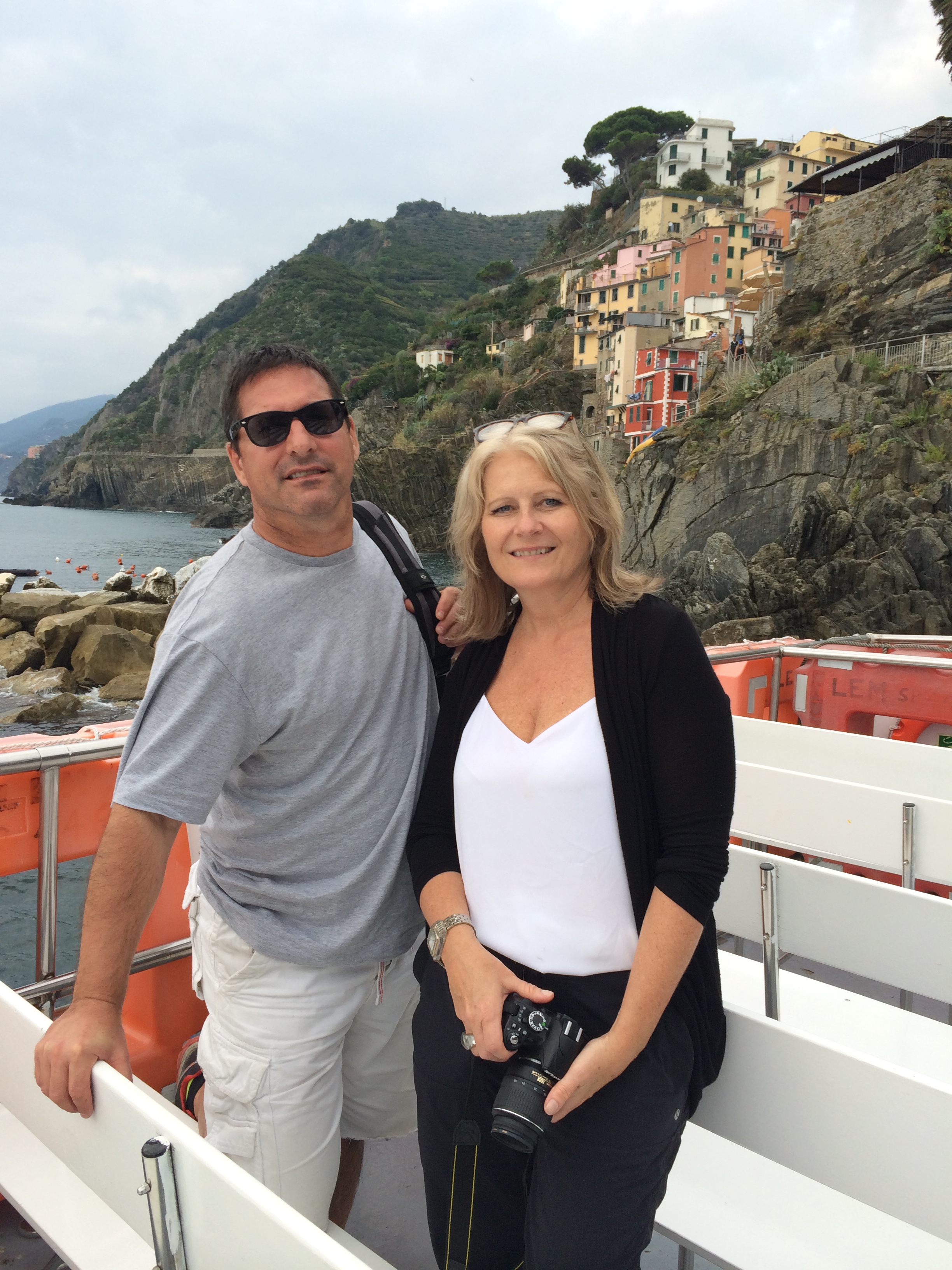
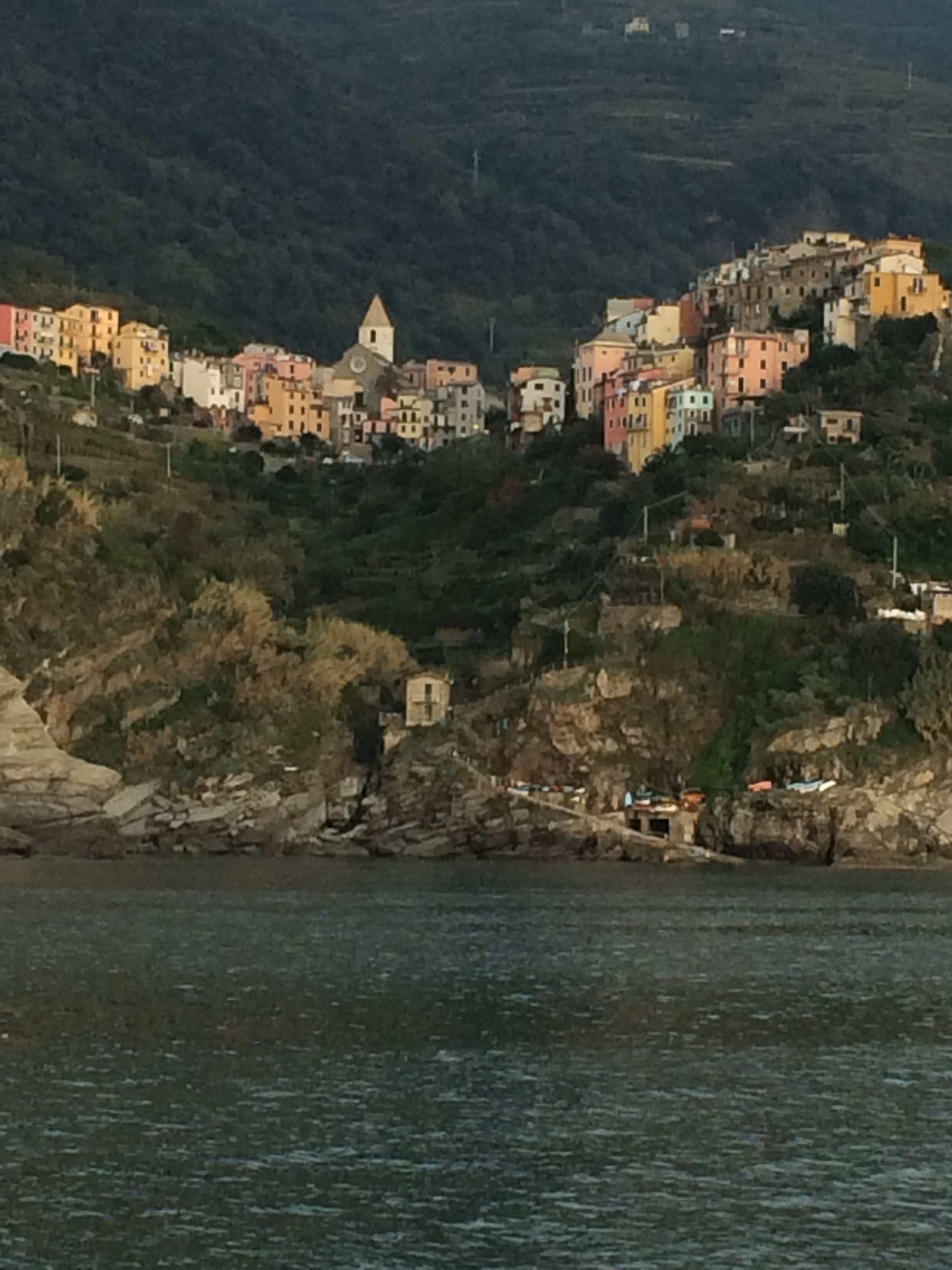
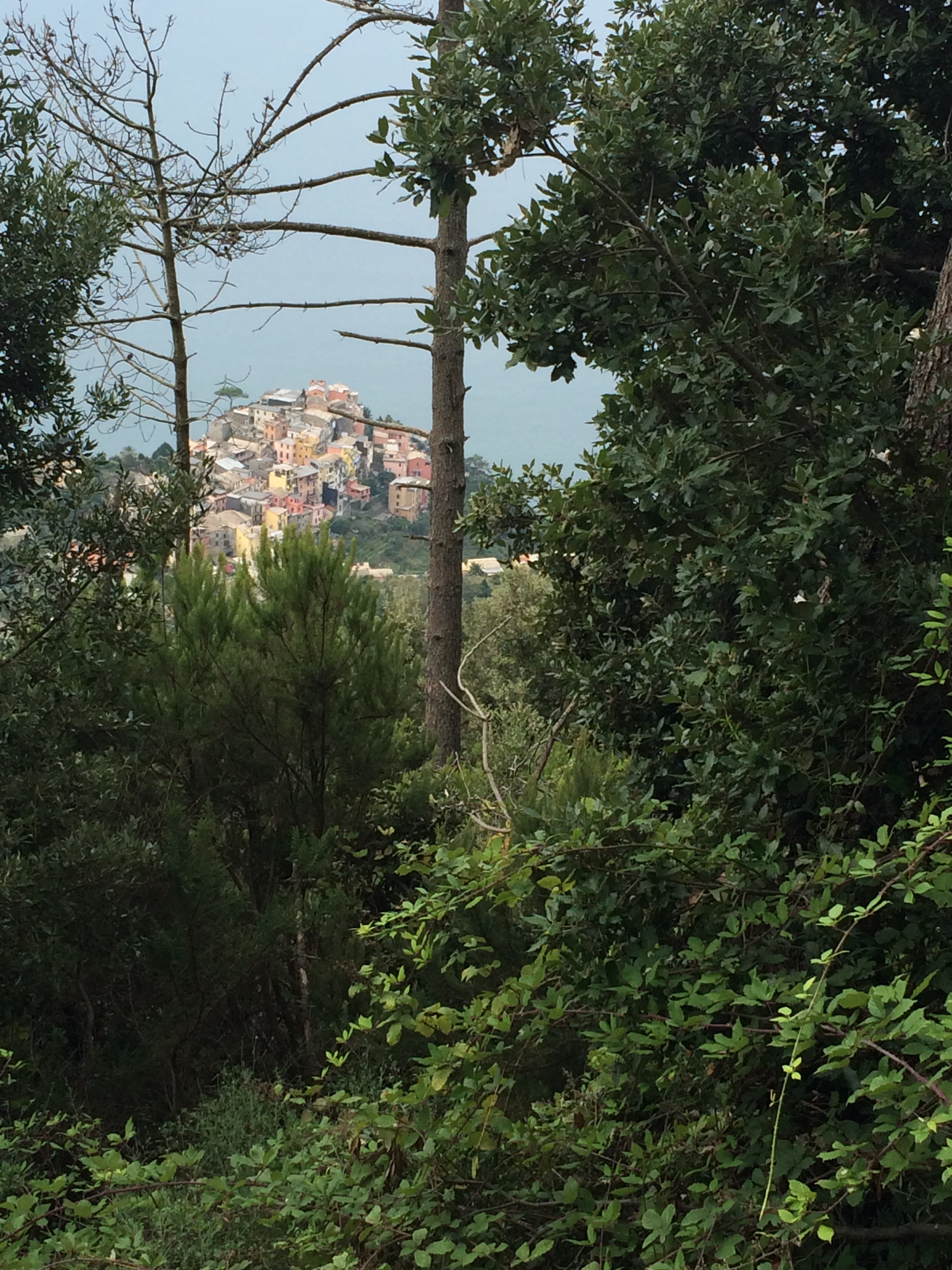
Cinque Terre, five small fishing villages hugging the rugged coastline of Italy in the province of Liguria. The villages, Monterosso al Mare, Vernazza, Corniglia, Manarola and Riomaggiore.

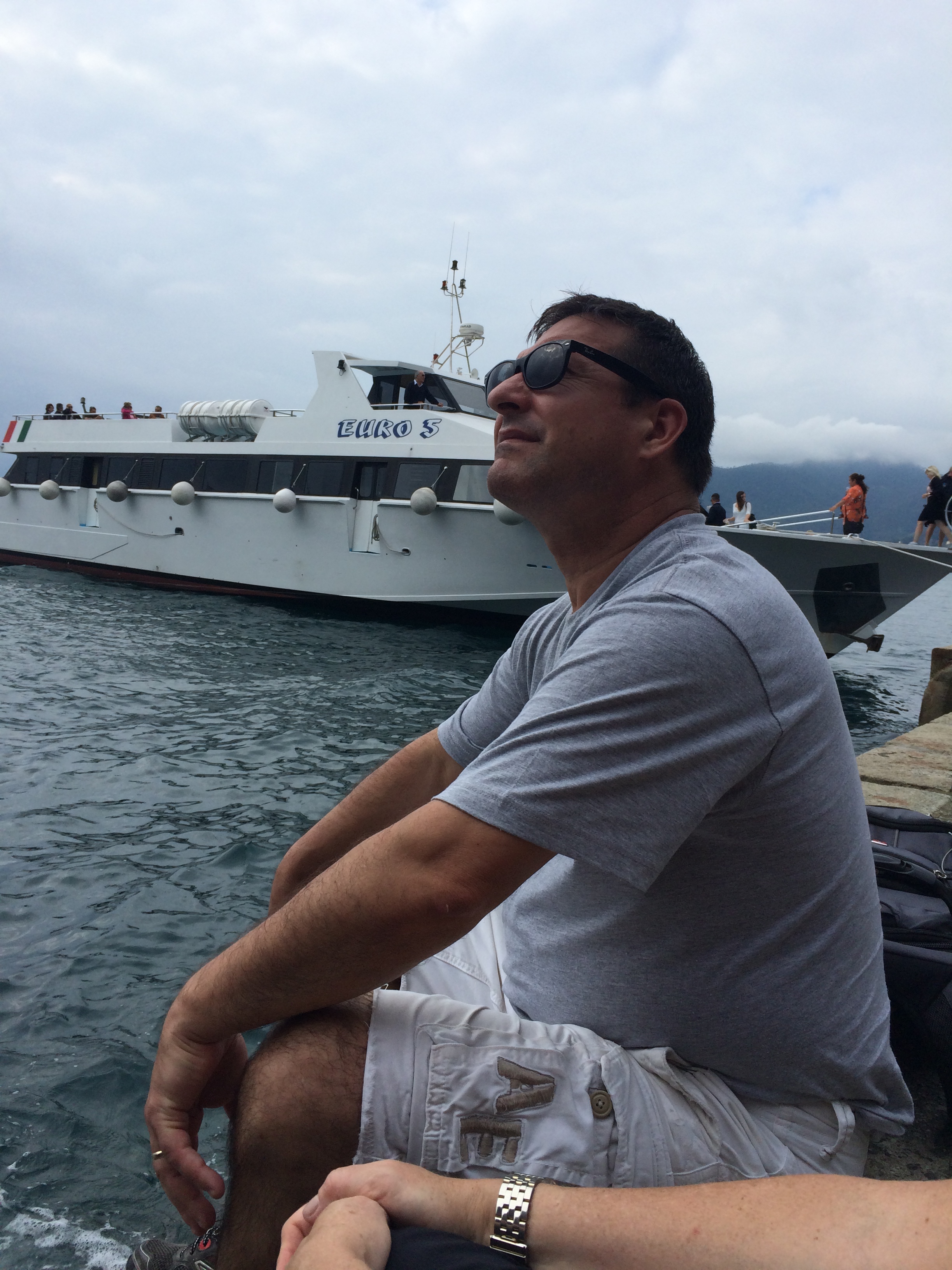
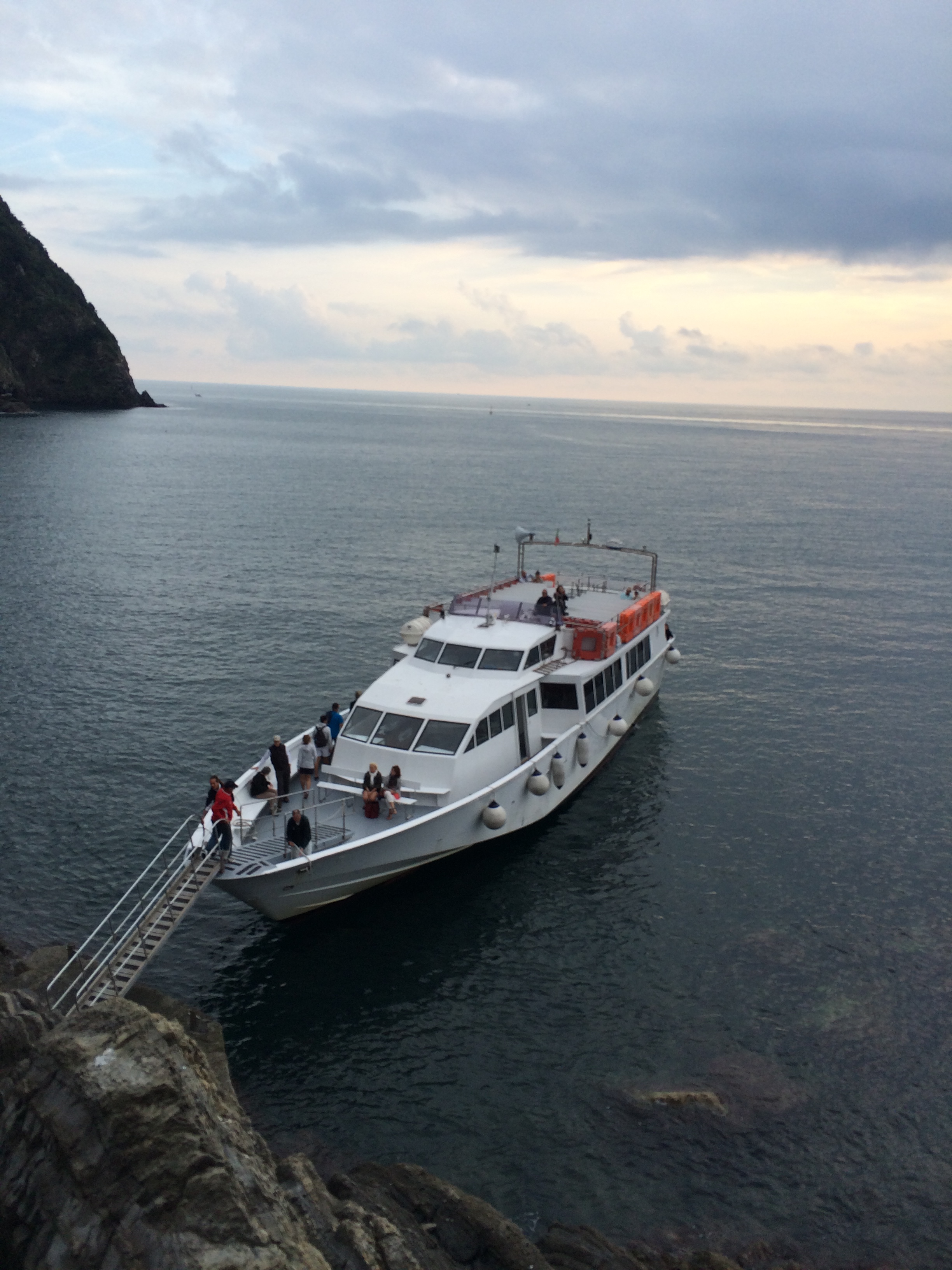
Prior to his arrival, my brother in law had seen pictures of these distinctive colourful villages, asking if they were near Florence and could they possibly be a destination. Knowing the villages are not accessible by car, we took a full day Florence Walkabout Tour to the area. It turned out to be a great day.  We started off by hiking from the top of the hillside to the first village, and thereafter traveled between them via train or boat. It was a great day.

388384

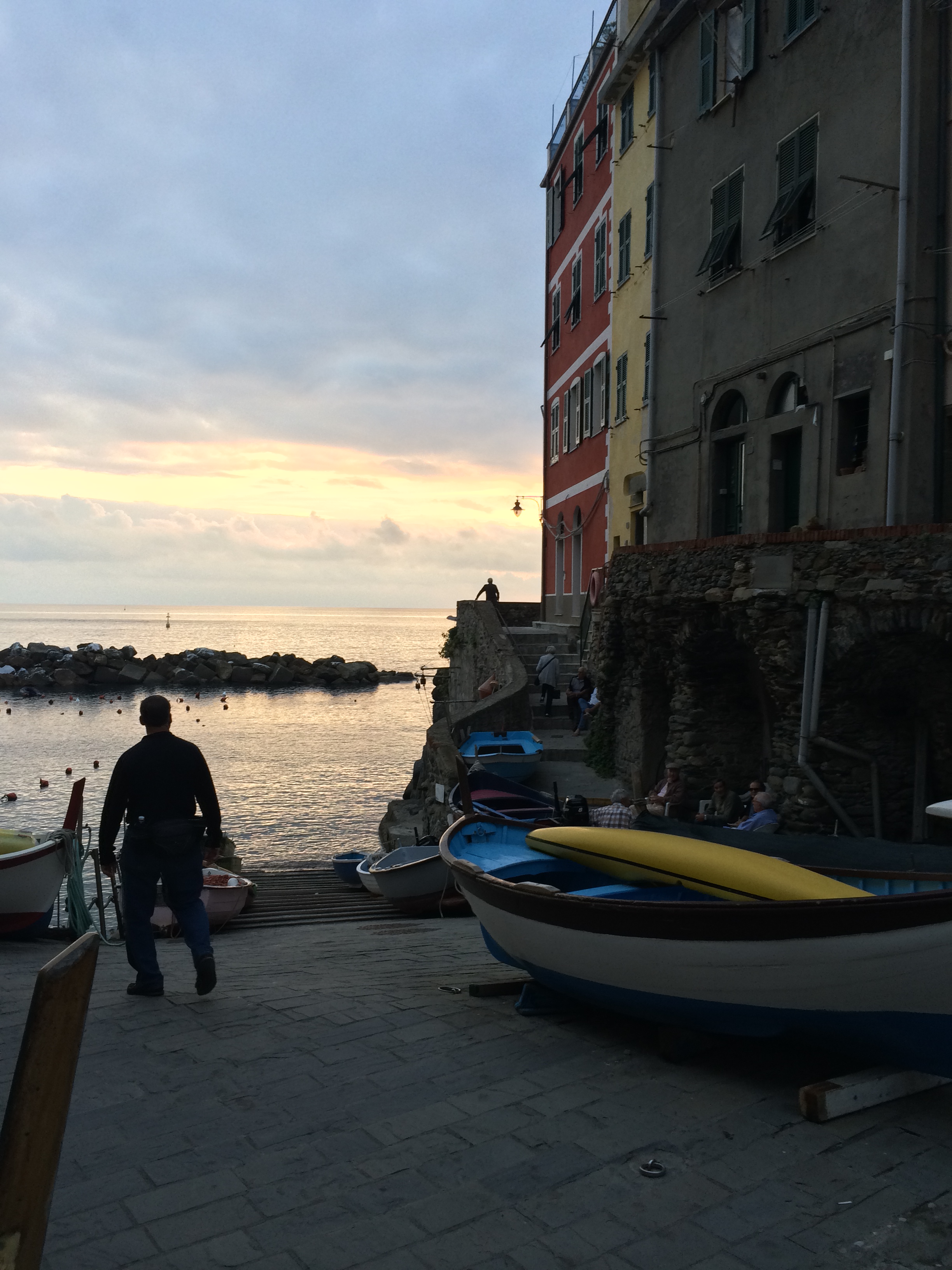
The villages historically ( they date back to the 11th century ) were fishing villages, largely accessible only by boat. Train travel was introduced in the 19th century.

385380

The homes are very colourful as you can see from the photos. They were painted in varied bright colours so that the fishermen could see their homes while offshore. Our guide Freddie informed us that the village councils today make the decision about the colour each home is to be painted.491480

The countryside surrounding the villlages are heavily terraced, indicative of the second source of income for the villages, the growing of grapes for wine and olives for olive oil.

445Annette and I took it upon ourselves to do a tasting of the wines produced in each of the five villages. If truth be told it wasn’t our favorite wine in Italy

Gelato in the village of Corniglia is made of local honey—that we did like.

401486

Italy’s Ministry of the Environment established this incredible set of villages, and surrounding country and marine area as a protected natural environment  Parco Nationale delle Cinque Terre.

 396489

Dramatic coastline and colourful villages crawling up the coastline, definitely worth the trip.497

Monterossa

Monterossa


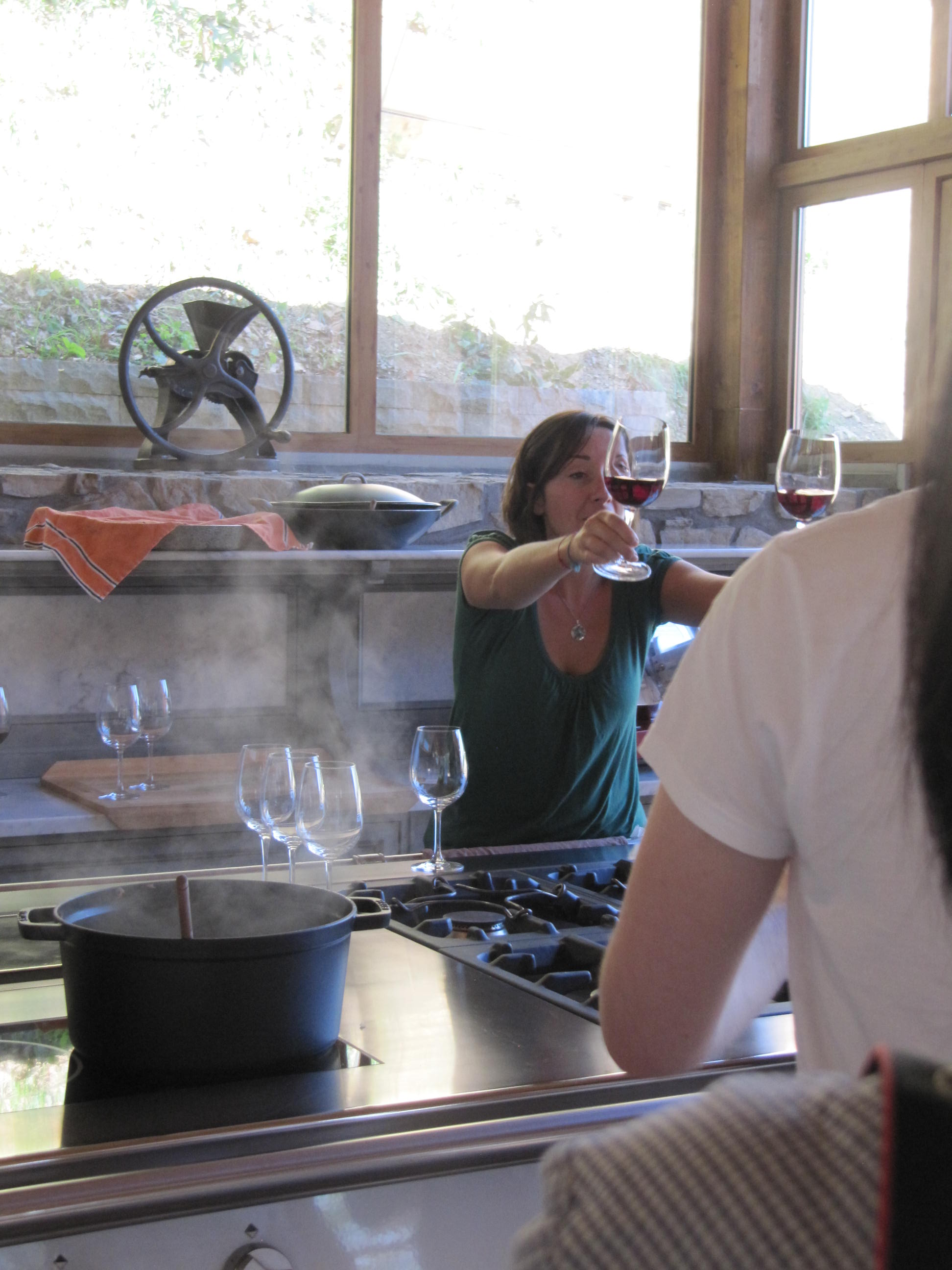
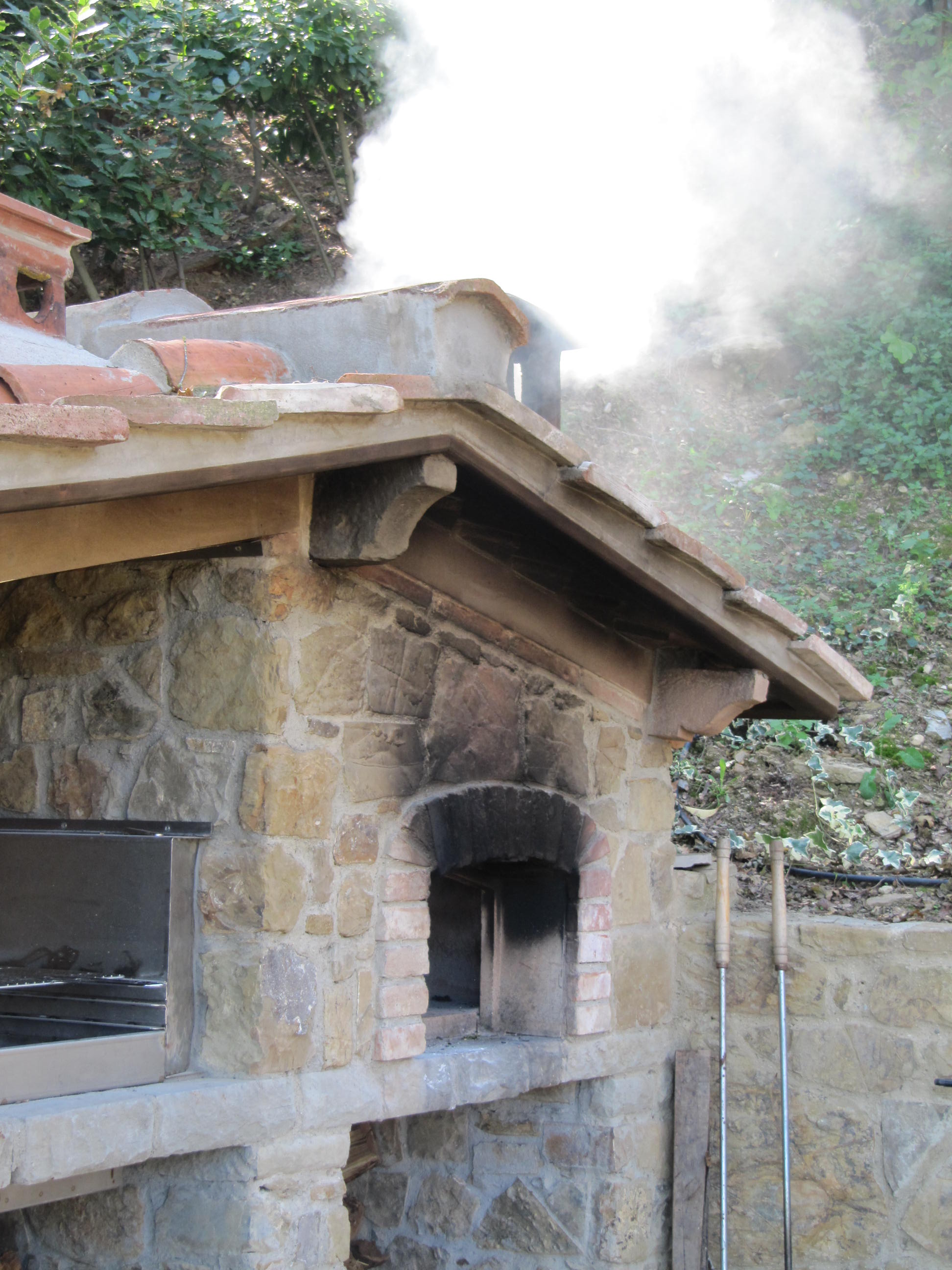
Having toured the food stalls and markets of Florence we were off to our second half of the adventure. In very short order we were transported to the hilly outskirts of Florence and entered the beautiful property of our host. A late summer garden, outdoor pizza oven, tables for eating ‘al fresco’ and an amazing kitchen space both for group cooking awaited us. The site was amazingly designed to fit the purpose.. John you would have loved it. We donned our chef aprons and were ready our Tuscan Cooking Experience

066

IMG_9713

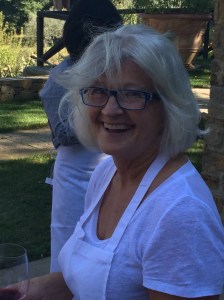
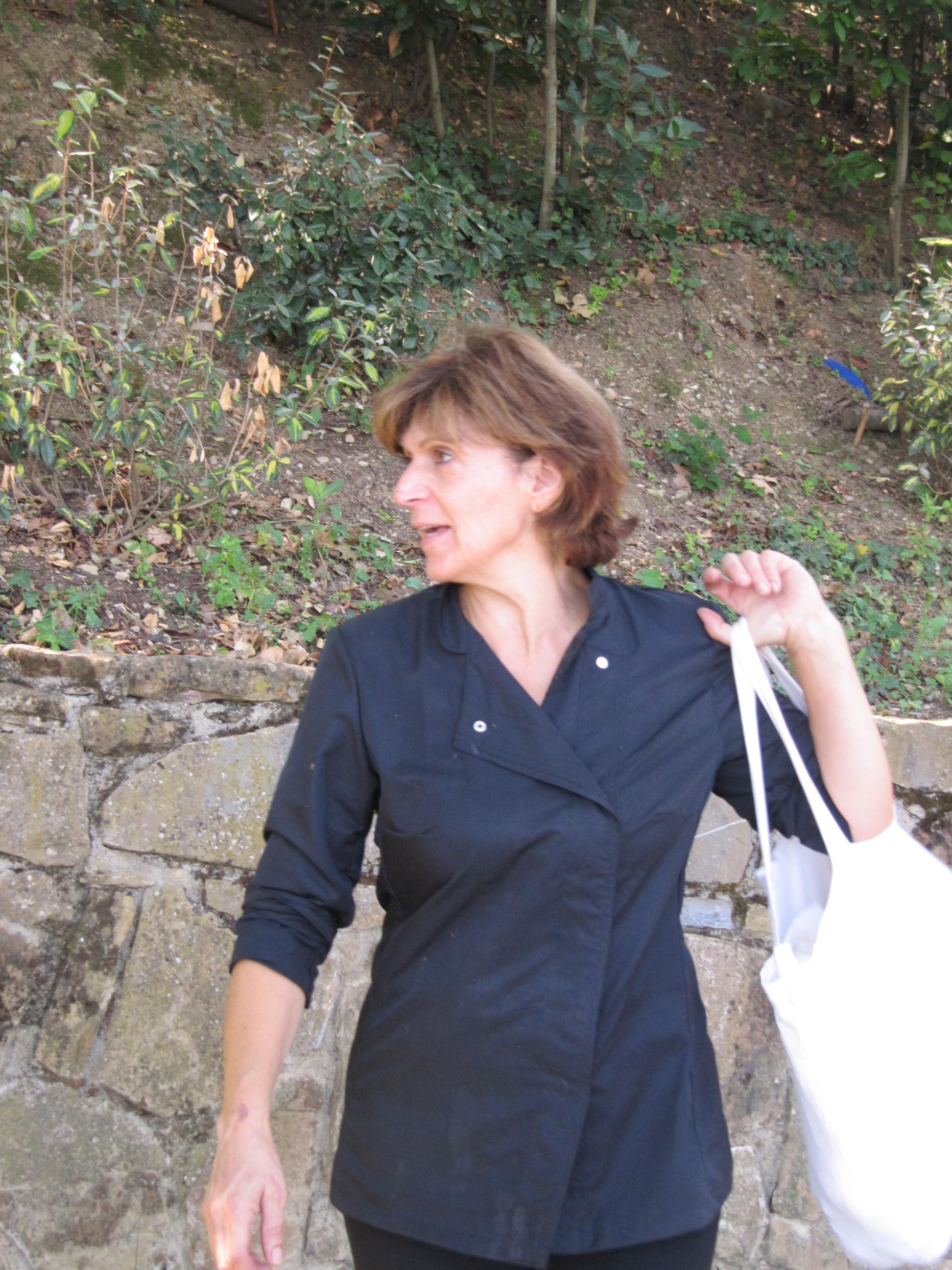
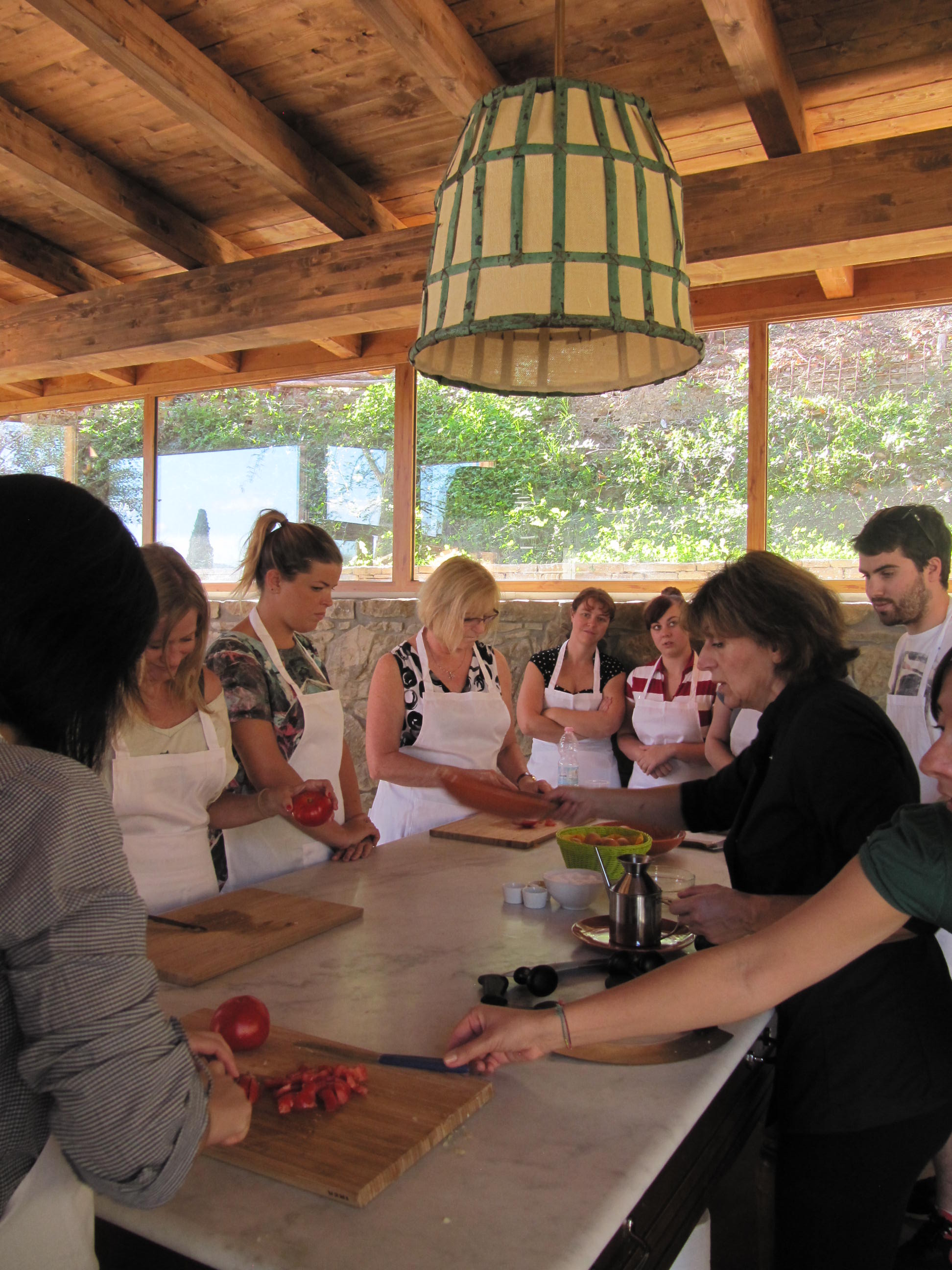
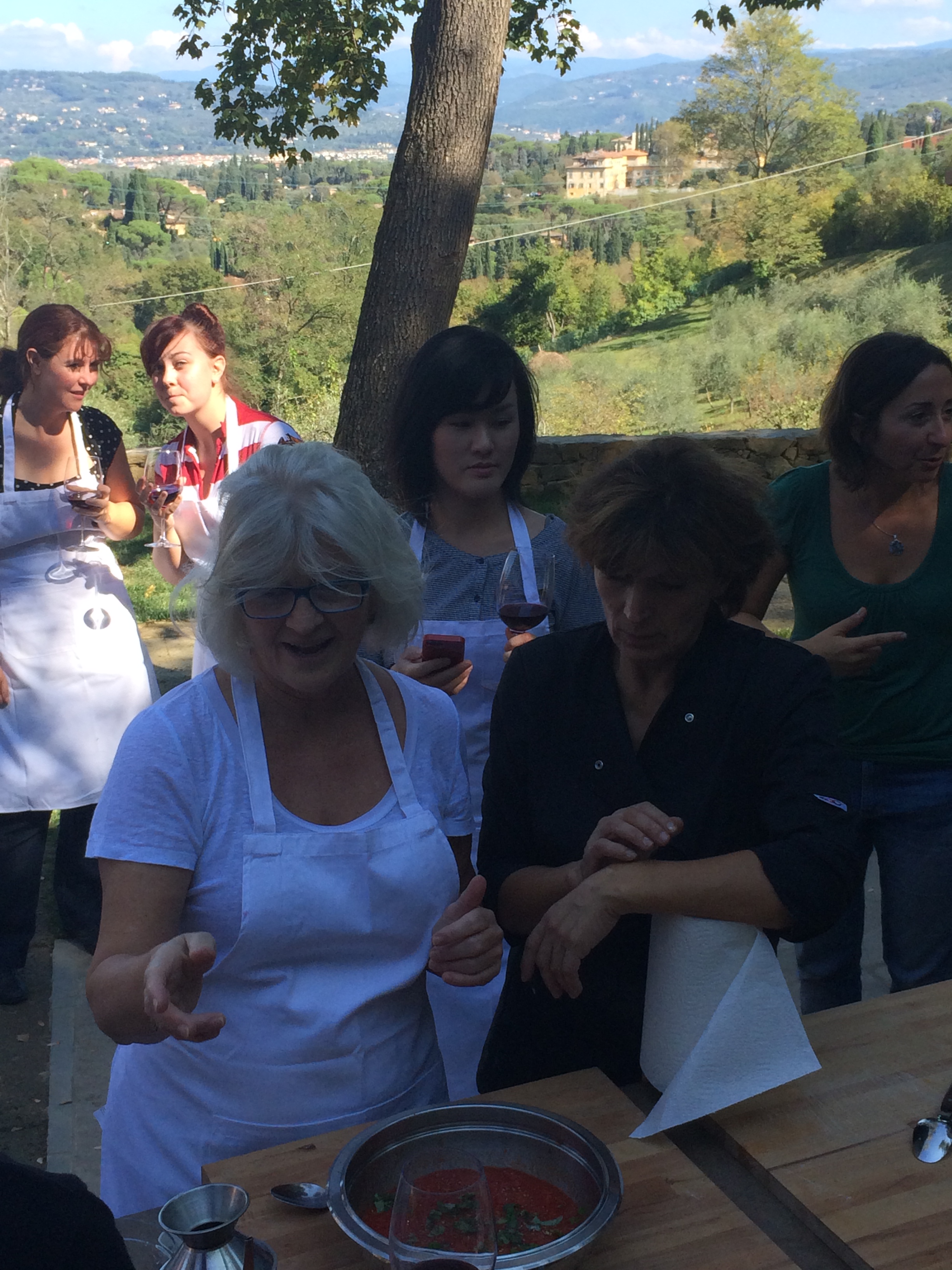
Soon under the careful guidance of our master chef, Carmela ( I am hoping I got the name right) a woman who has been feeding her family home cooked meals, singing and dancing her way through the kitchen.. She spoke Italian— we all caught what we could from her effective full body descriptions of what we were to do—but not to worry, Elisa was on hand to translate her instructions.

IMG_9679IMG_9699

IMG_9693

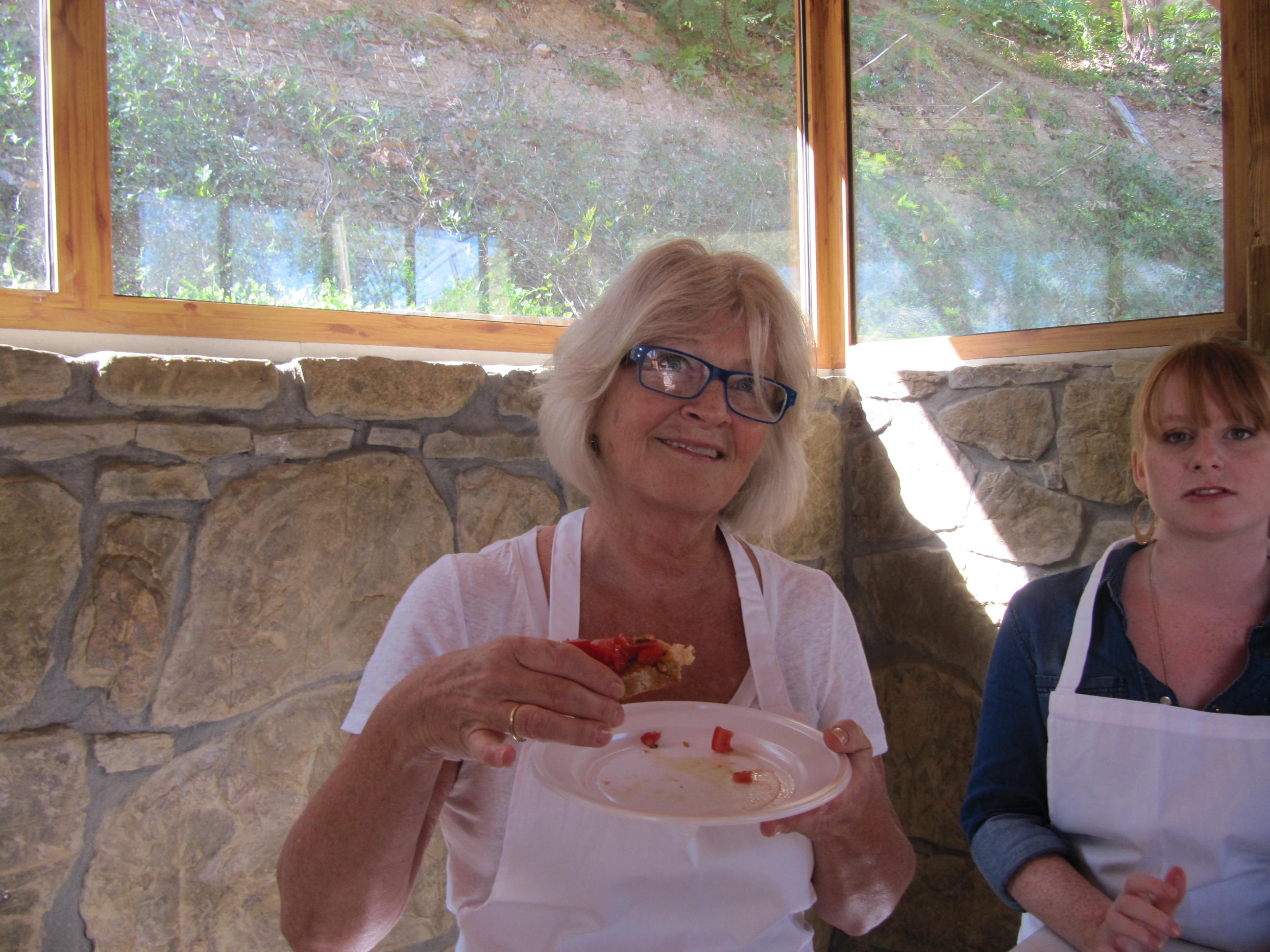
We began by preparing bruschetta….which is pronounced with a hard C not a ch sound as so many of us have come to do in North America. The fresh tomatoes, basil, garlic and bread purchased that morning were soon prepped. Bread on the outdoor pizza oven/barbecue and soon we are tasting the first results of our journey into Tuscan food.

IMG_9715

IMG_9716

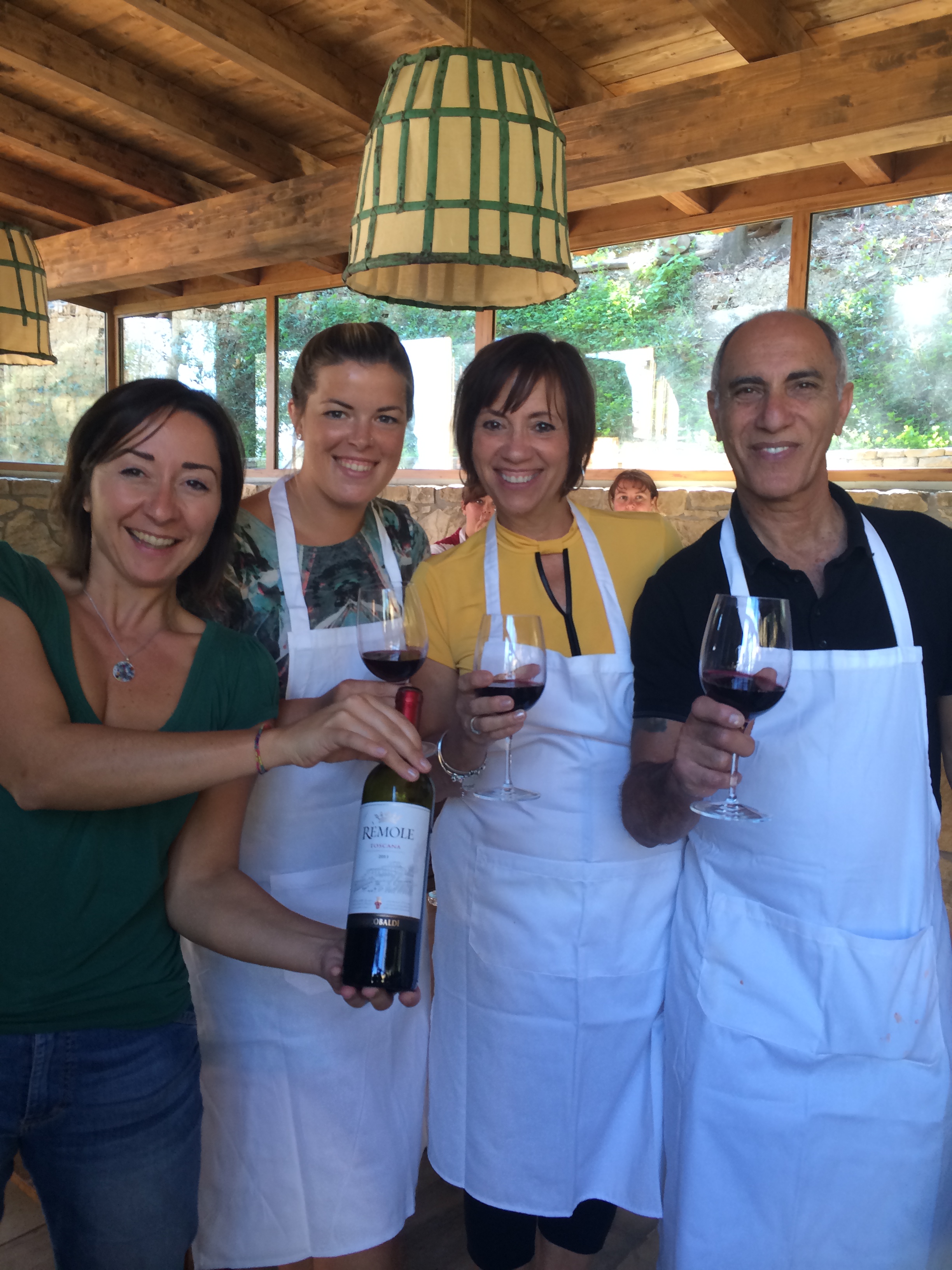
It was quickly established that this group loved a nice ‘vino’, both to accompany the food as well as to enhance the cooking experience and so the wine began to flow…

057

Next was group prep for the ‘bolognese sauce’ –interesting very few herbs in this sauce, simply garlic, onion, celery and carrot finely chopped, hamburger meat, wine and tomato sauce. Trick of course is to let it simmer on the stove for several hours.

047

While the sauce bubbled away, we received a demo in how to make pasta … really had no idea it was so easy. Shortly the whole class was making their own pasta.. Carmella demo’ed how to take pasta and turn it into all the forms of pasta we simply buy in bags at the store.. today we made tagliattelle to go along with our ‘Bolognese’. But now we knew how to make agnolotti, cannelloni, capellini fettucini, etc. It turned out making a pasta serving for one, was fun and quick..I did wonder how long one would have to work to prep Pasta for a family of 6 however…..so it is likely I will continue by pattern of buying fresh pasta at the local grocers…which here in Italy….is really good!!!!

067

068

069

073

IMG_9680

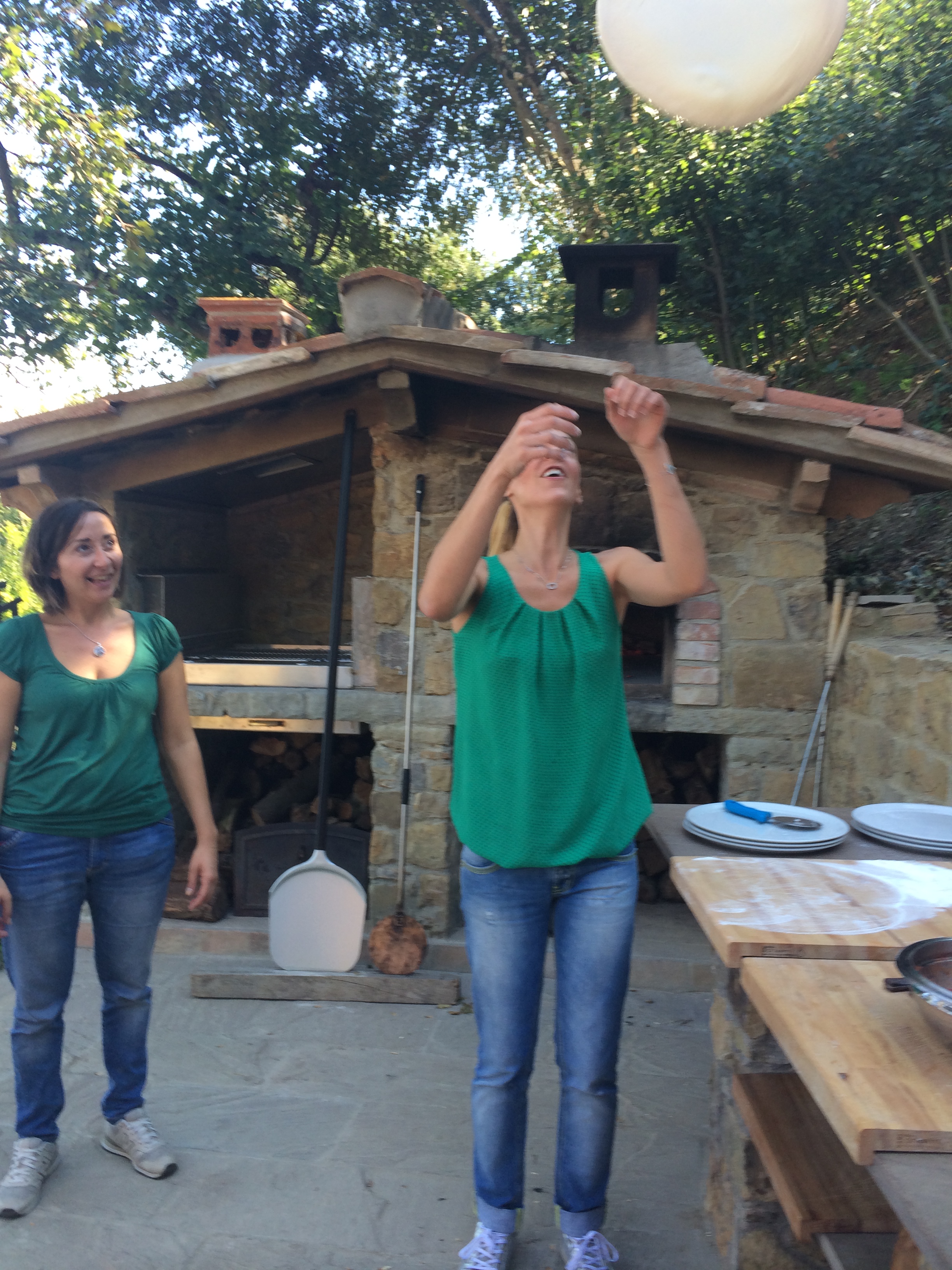
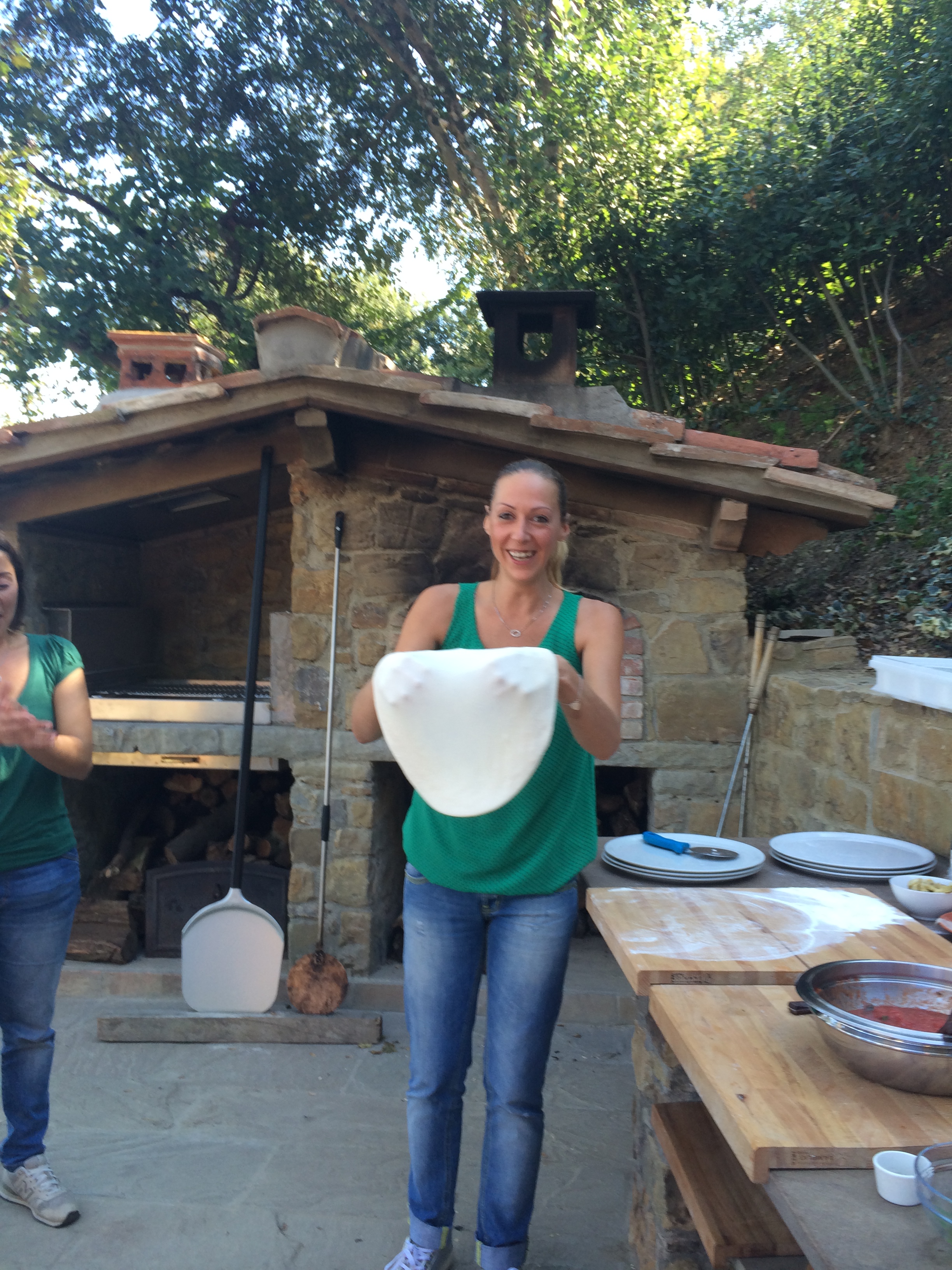
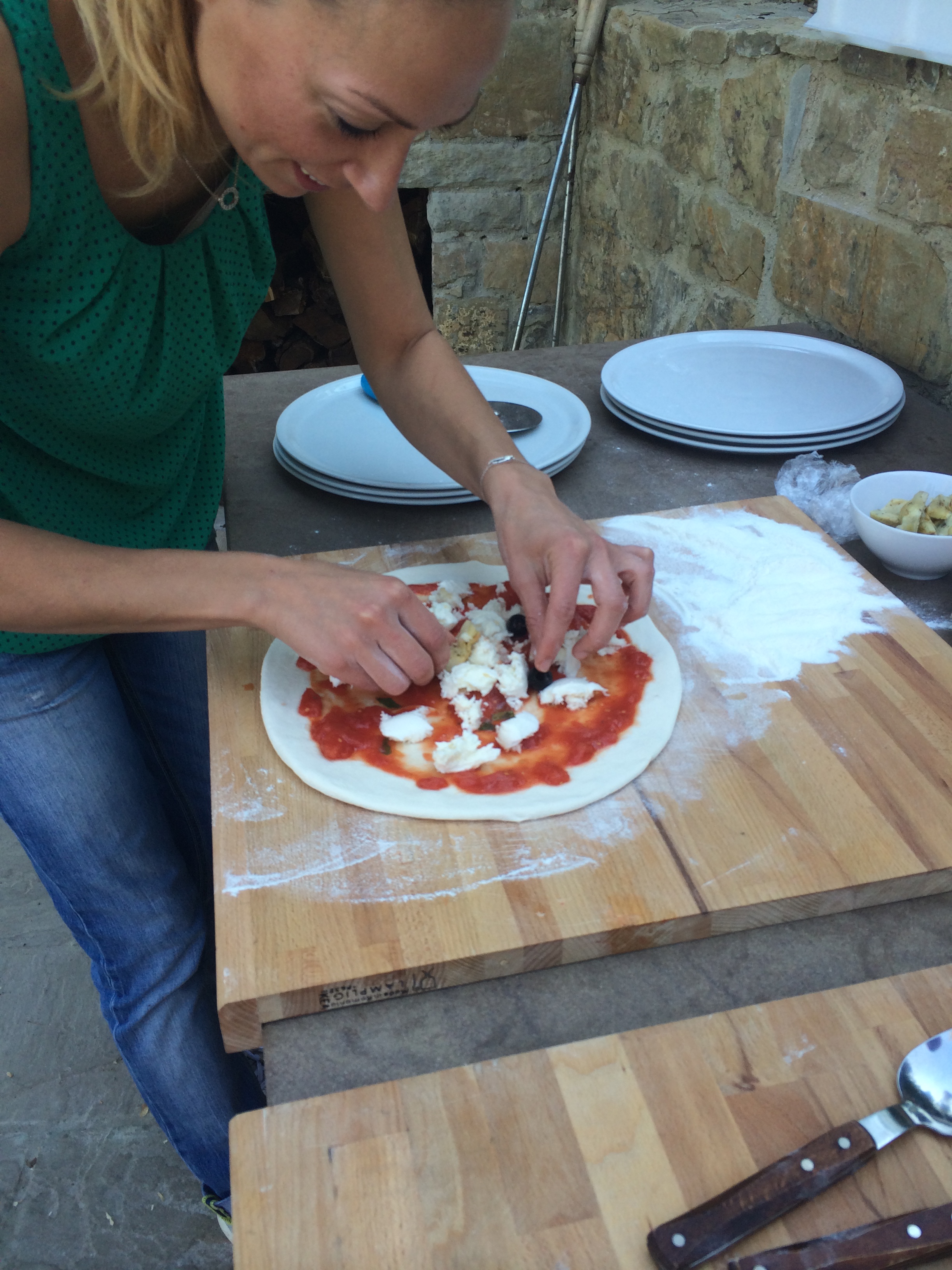
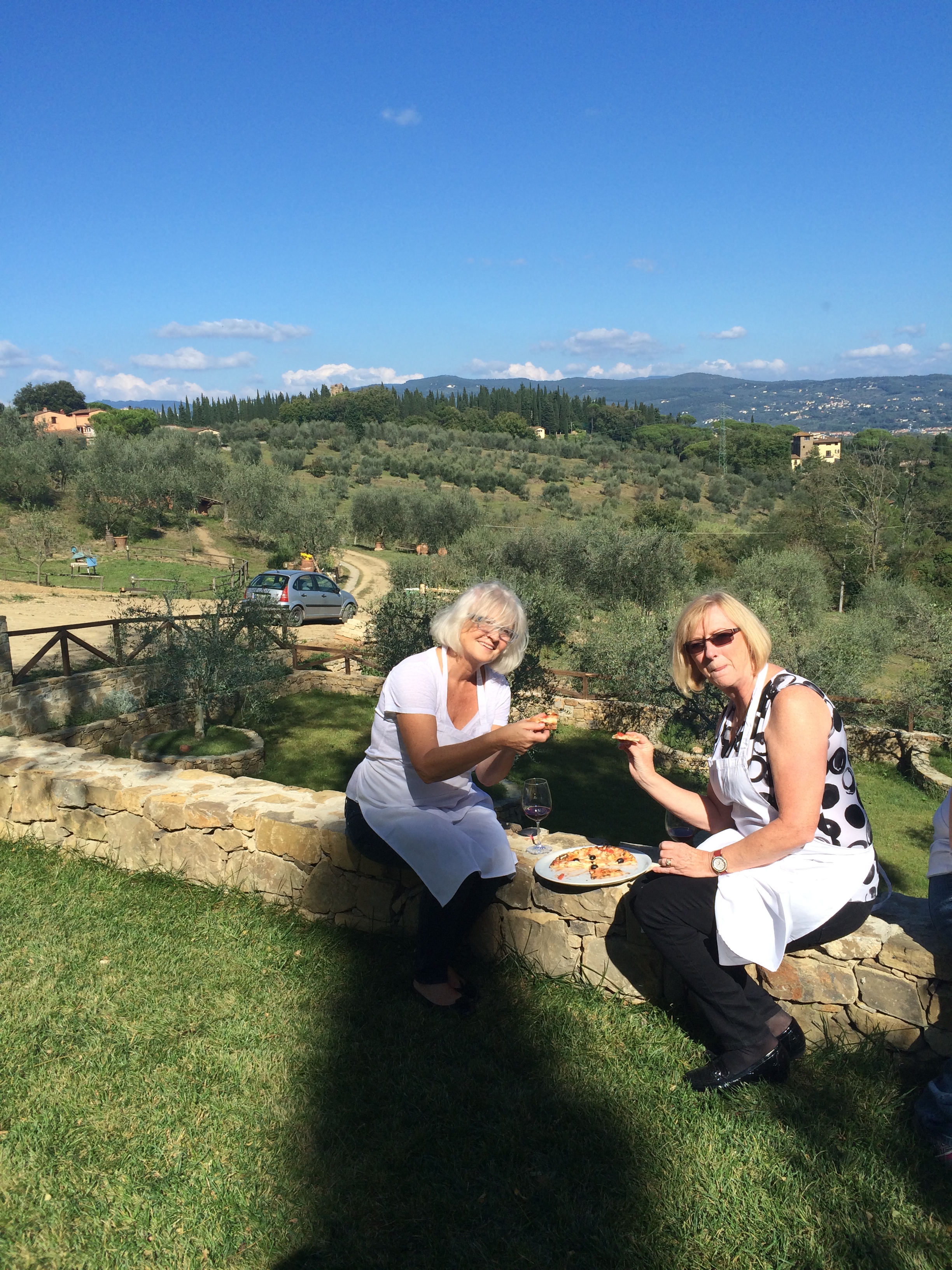
Pasta ready we moved outside to be joined by our second Tuscan chef. She is a pizza specialist and works in a Firenze pizzeria. She had prepped the pizza dough the previous night..apparently she preps hundreds of small pizza dough balls for her work at the pizzeria. We were paired off and set to it to create our personal pizza’s ..fresh tomato sauce, mozzarella al fiori, basil, ham, artichokes.. and of course Olive Oil to top it off. While we did not duplicate our chefs skill in pizza throwing, we successfully baked our pizzas in the 800 degree wood fired out door pizza oven..pizzas were done in a minute and 20 seconds… HOT OVEN is the trick clearly!!!! And then we ate them sitting outside taking in the stunning country side.

062077

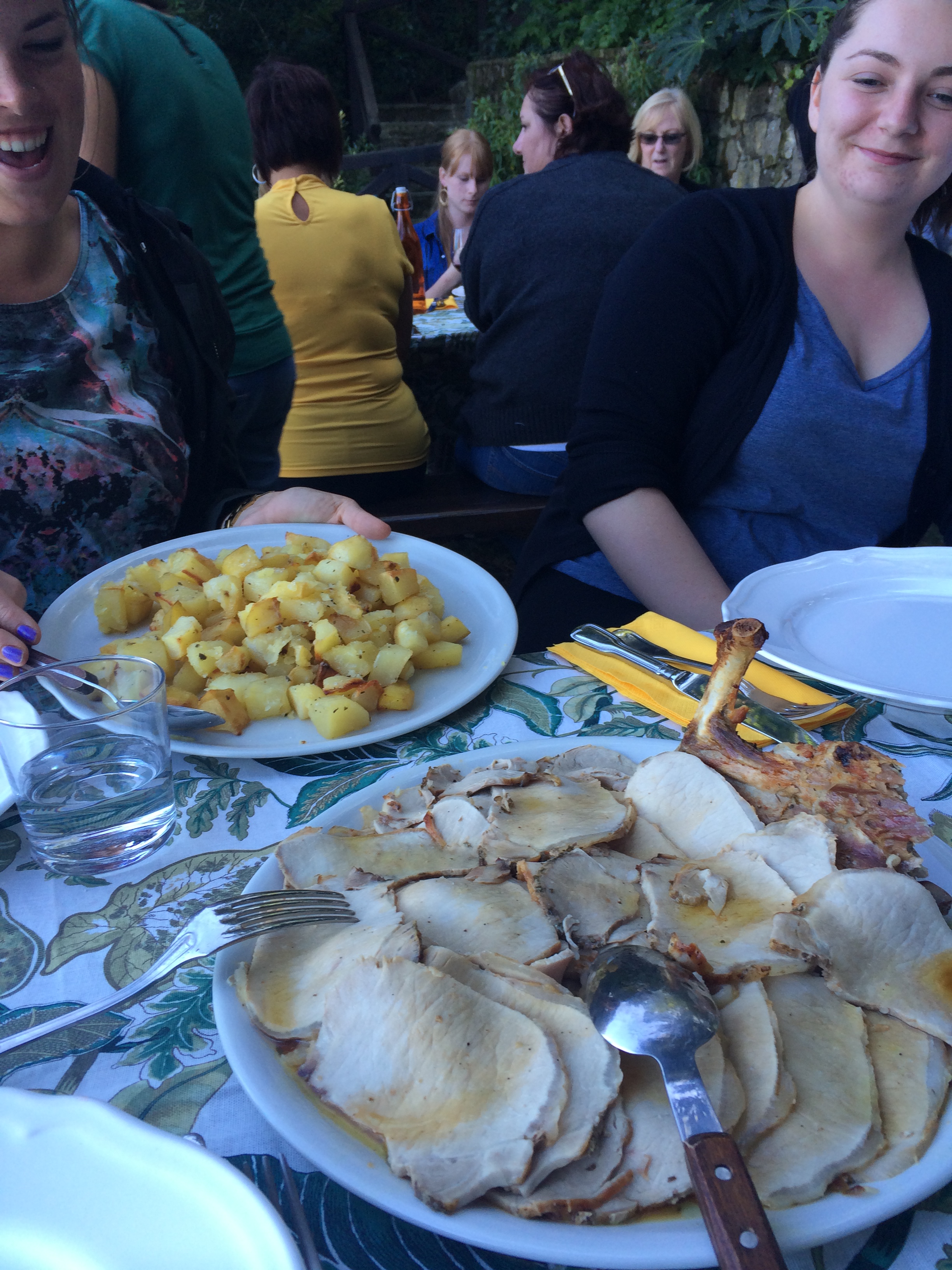
So, antipasti and pizza consumed, ‘Primi’ course bubbling  (sauce)  and drying (pasta), it was time to turn our attention to the ‘secondi’ which was to be the lovely pork tenderloin we had purchased at the Mercato Centrale and the ‘contorni’ (vegetable side dish) in our case roast potatoes. The tenderloin had been cut to specifications by the butcher. The meat had been removed from the bone and then the bone section reattached with kitchen string. The bone of course adds lovely flavour but having it removed in advance eases the carving when the meat is complete. Simple herbs ( garlic, rosemary and sage ( I think) were rubbed onto the meat. The potatoes were salted ( heavily). Both of these dishes again  received a  healthy dose of olive oil, drizzled of course.. it is note worthy that this is a staple for all food prep in Italy. According to Carmela very healthy and much better than butter… I decided that olive oil must be a diet food in Italy.

081086082

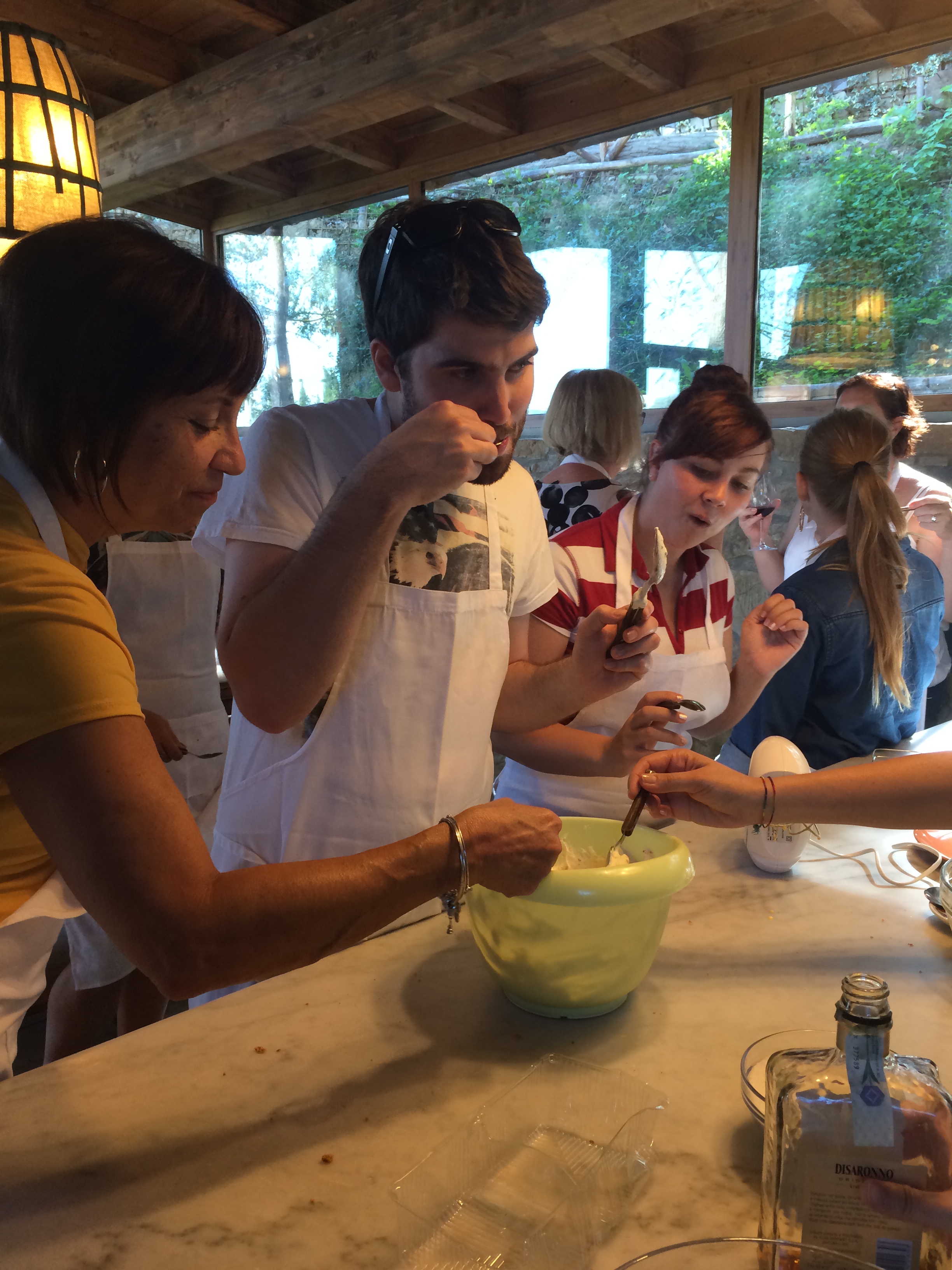
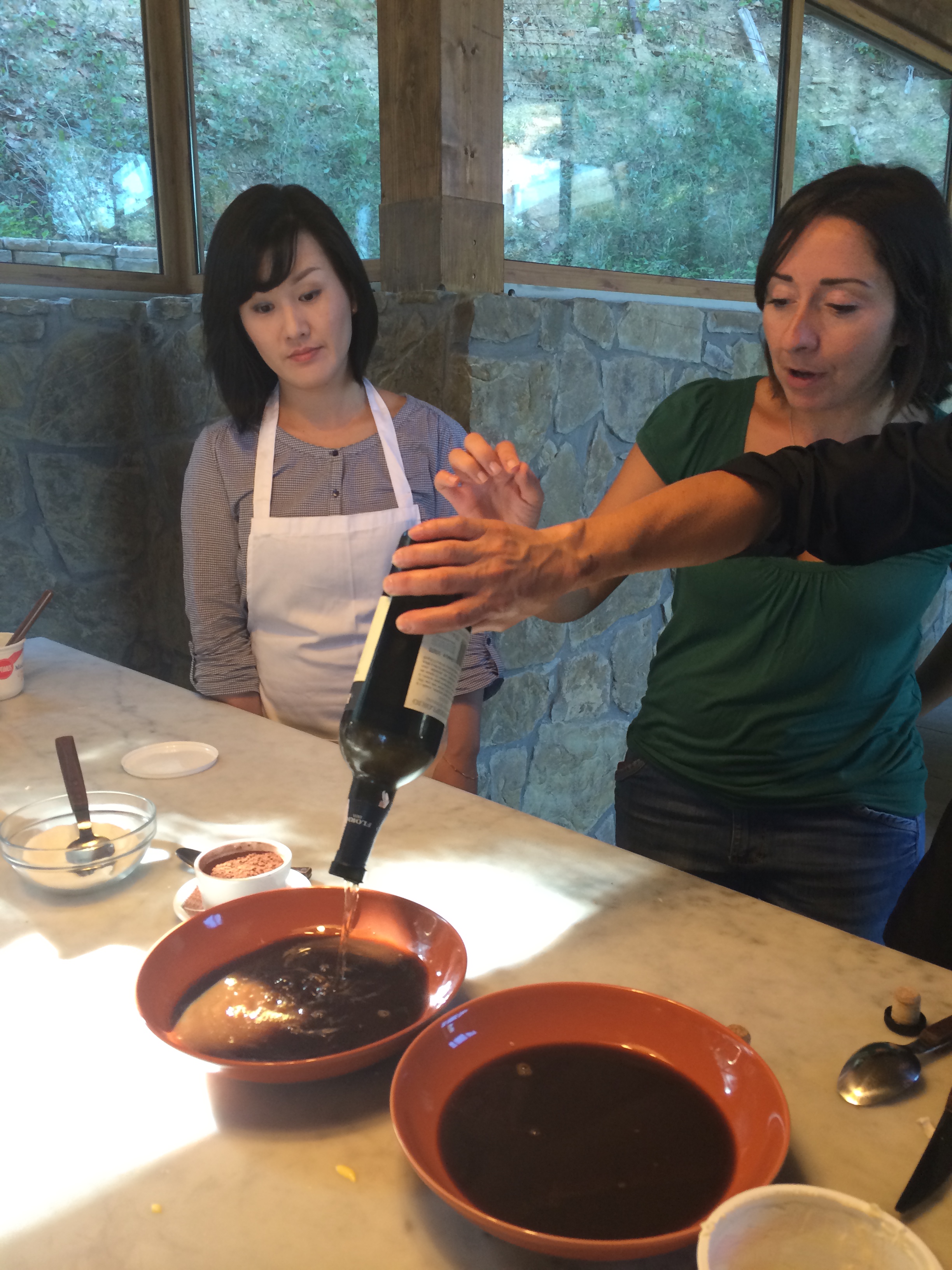
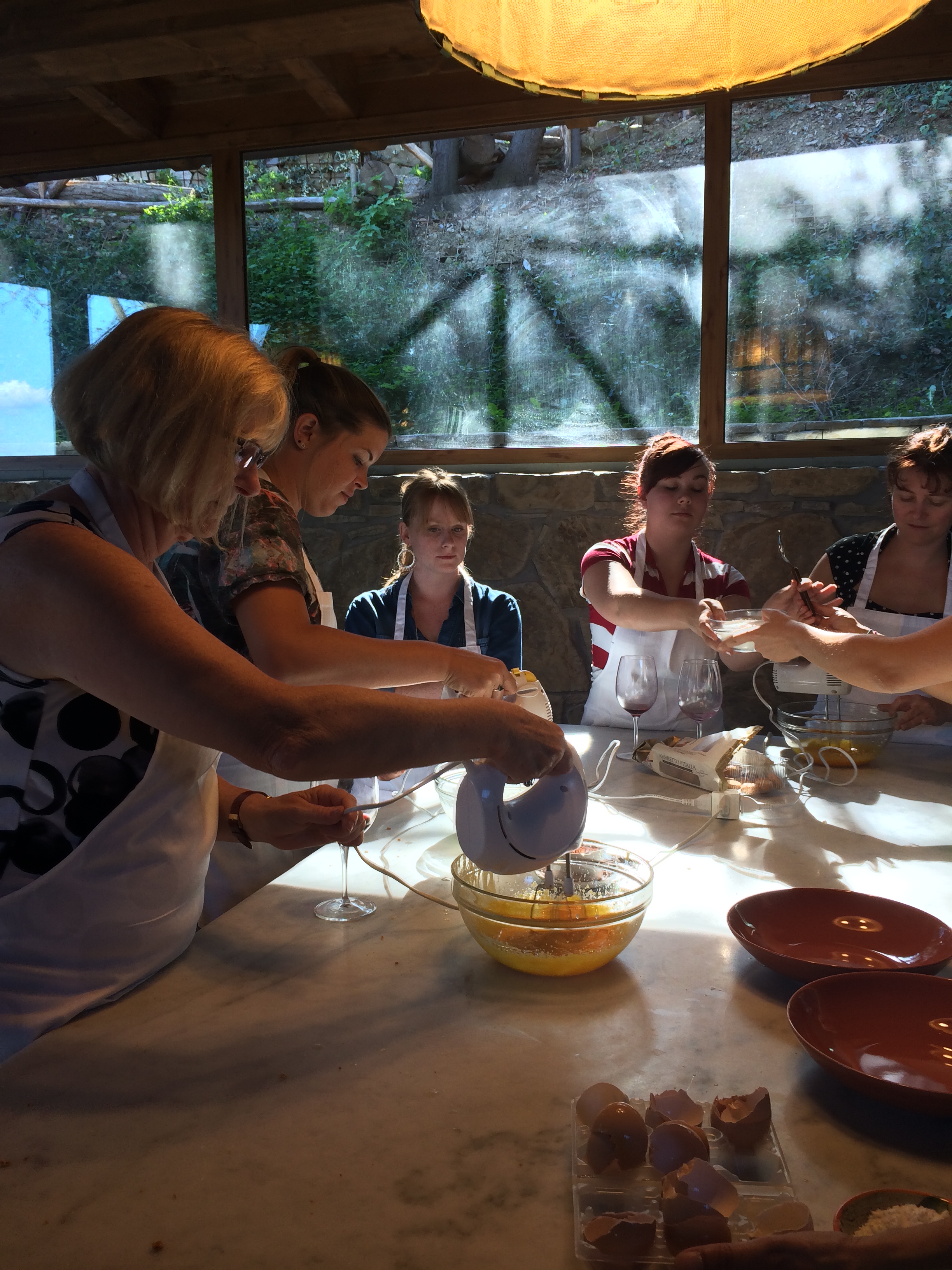
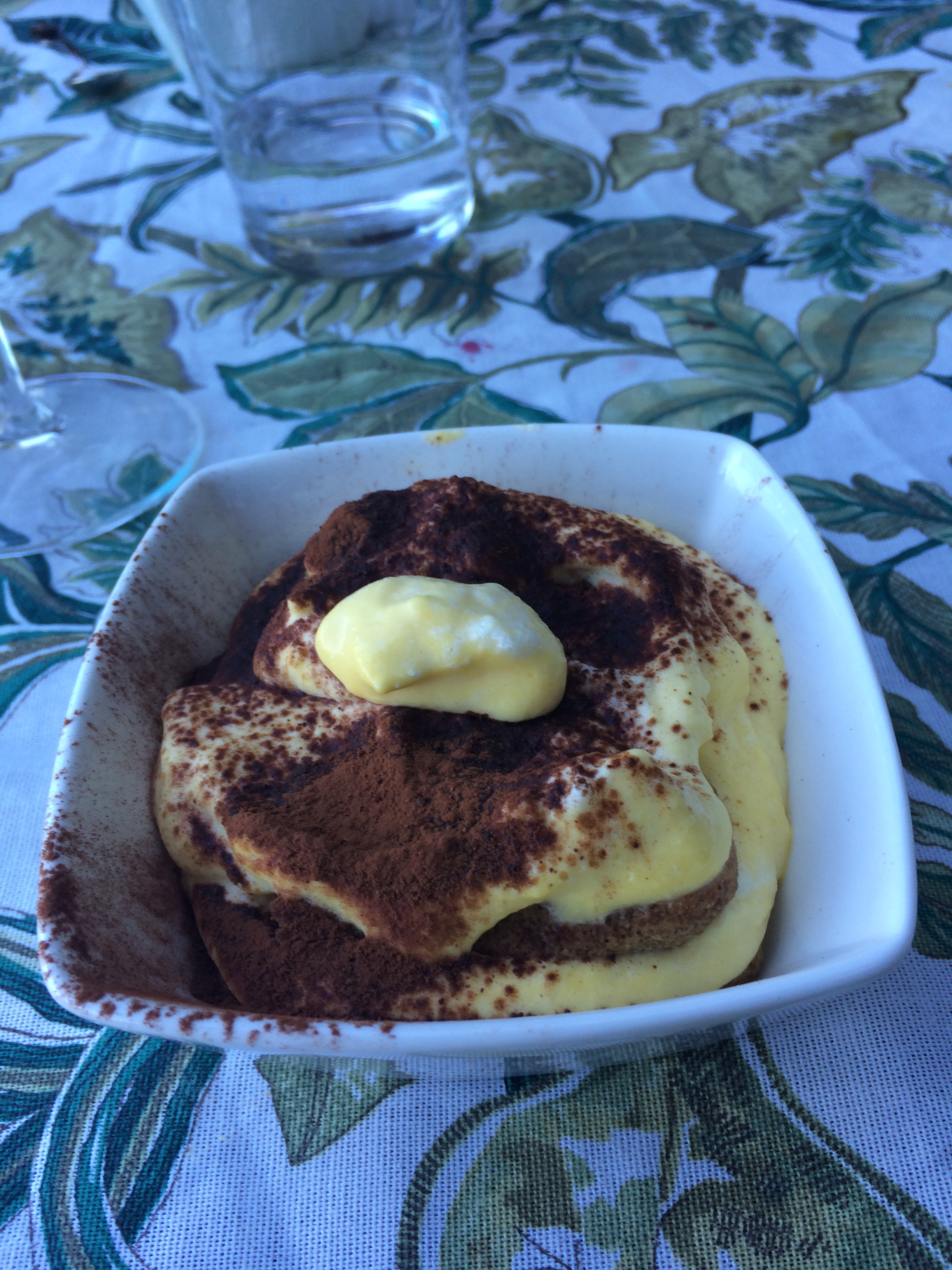
And as our roast was cooking we were given a final lesson in preparation of ‘dolce’ –as a group we prepped Tiramisu and then prepared our individual dish of same. We also collected whipped up some gelato..while all dishes here to had benefited from a liberal doses of Olive Oil… the ‘dolce’ had healthy doses of Liquor.. marsala wine in the tiramisu and amaretto in the gelato!!!!

095

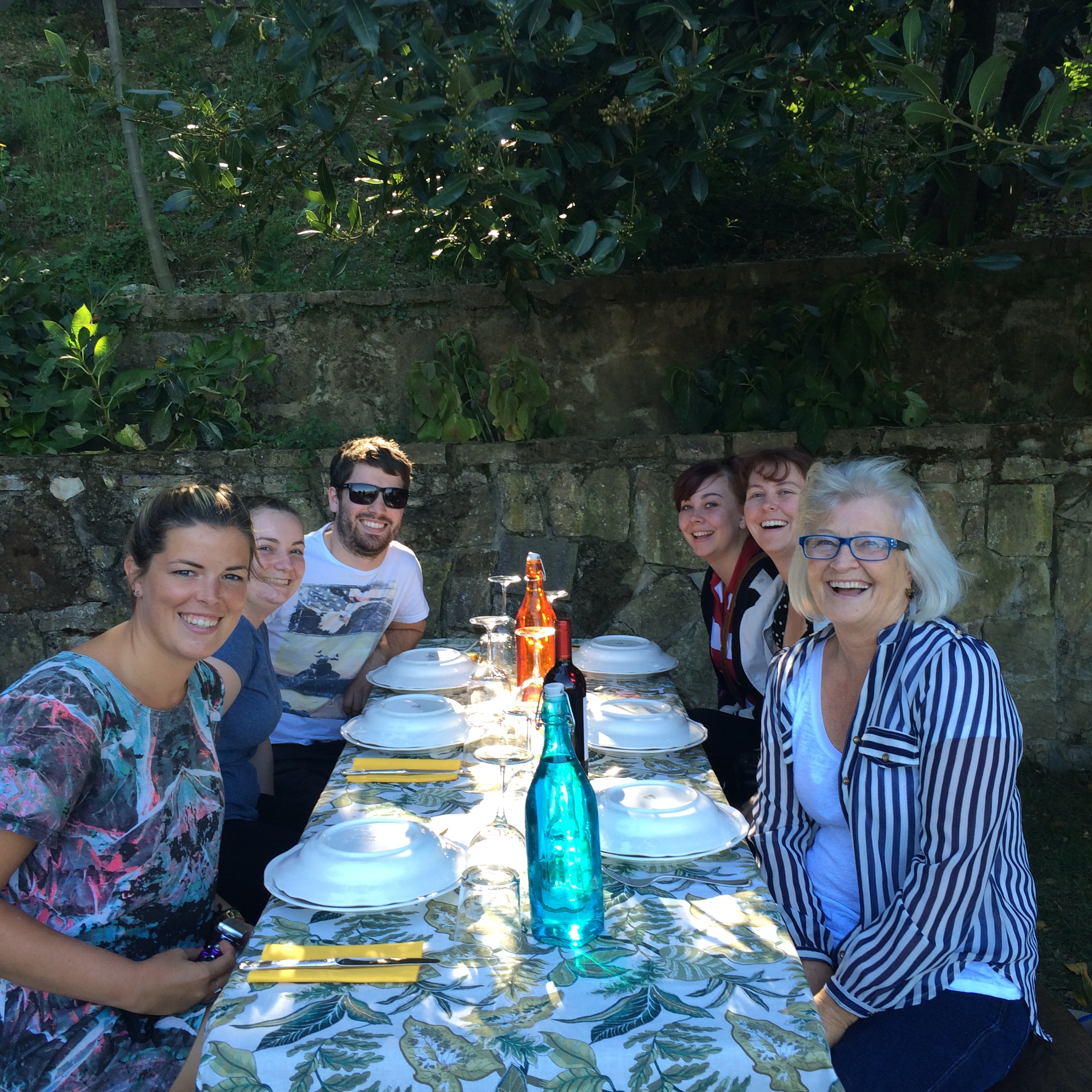
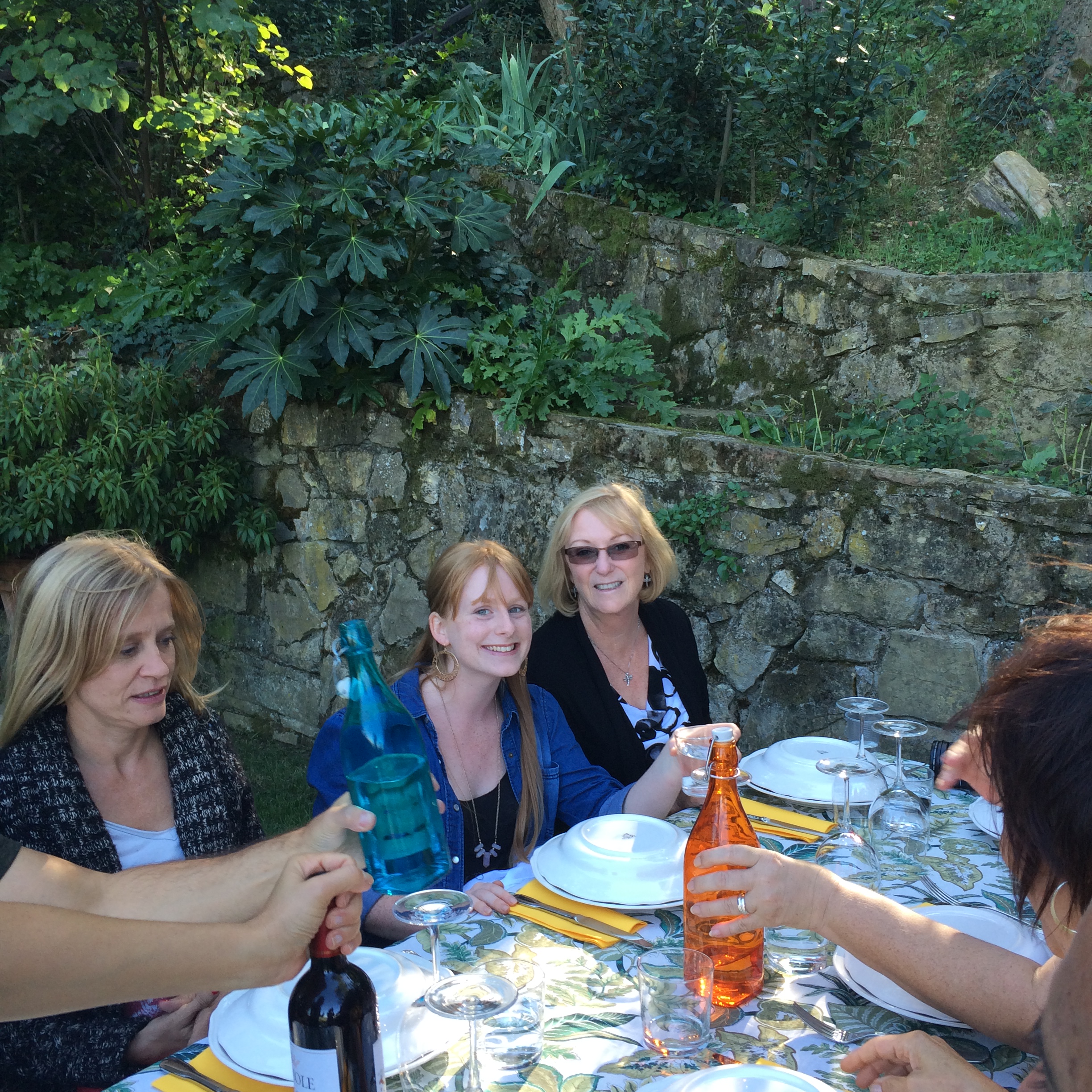
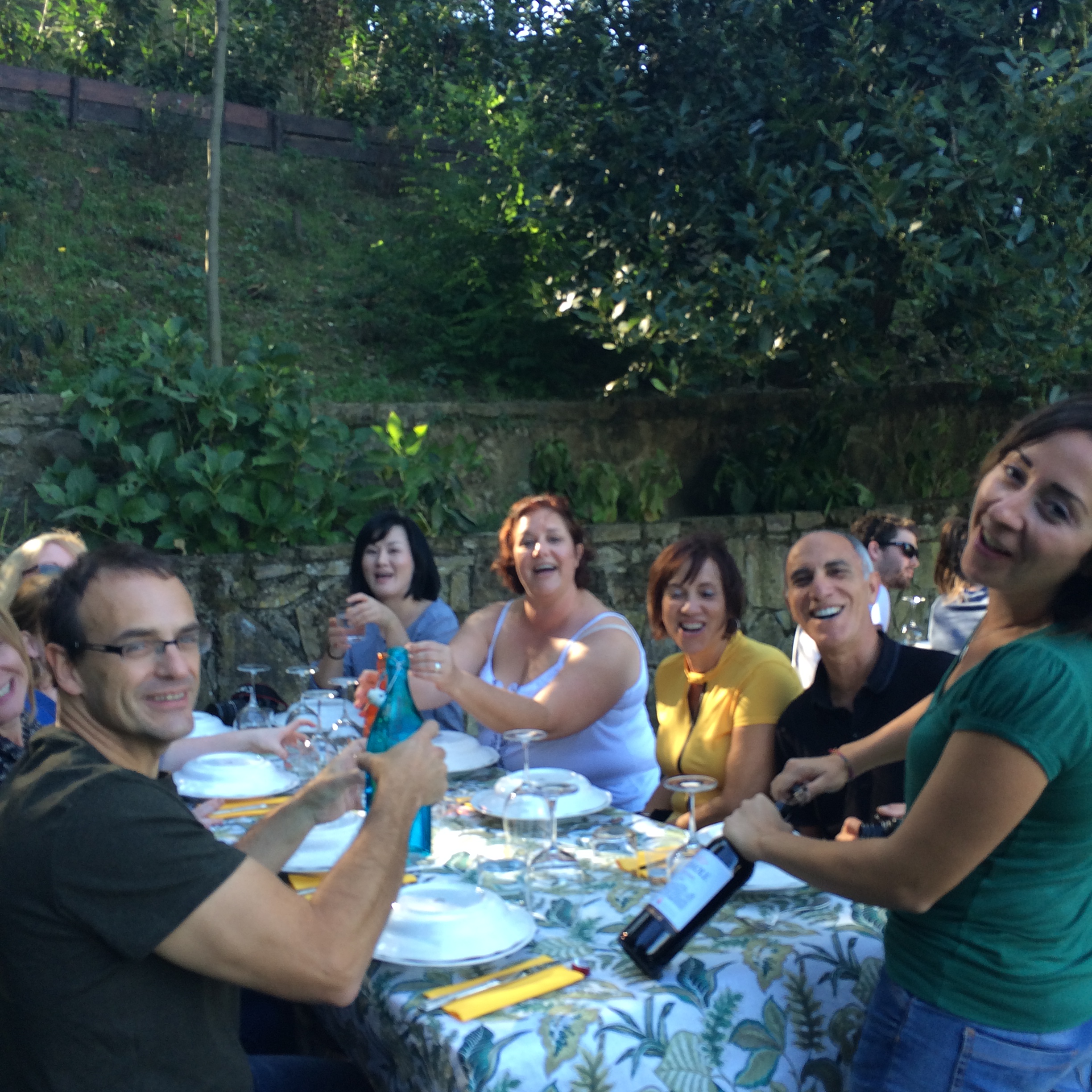
So having completed our lessons, all the while enjoying the chianti and the company,  we moved outside to enjoy our Tuscan dinner ‘alfresco’.

090

092091

Elisa had warned us in the morning that we would have a fulsome Tuscan meal…and indeed that was certainly the case!! A good thing none of us had dinner reservations that evening.. I doubt any of us could have consumed another bite.

094093

Carmela topped off the evening by awarding us all our personal Tuscan Chef School Certificates. What an awesome experience..highly recommended should you come to Florence.

Florence Food Tour

IMG_9632

As many of you know, Italy and Tuscany in particular is known for its love of food and great cuisine. This is very evident in its food markets and shops, big and small, which display local seasonal food to its plethora of  eateries, whether they are called trattoria, osteria, ristorante, birreria, spaghetteria, pizzeria, tavola calda, rosticcerria, café, taverna—-seriously a bewildering series of names —not sure what the difference is.. what is consistent, is a love of good food.

So with this awareness of Tuscany, I had decided to seek out a cooking class. The website offered a lot of choices…eventually I landed on a tour offered by Walkabout Tours Florence https://www.walkaboutflorence.com/ . The tour offered a food tour through old Florence followed by a cooking lesion at a nearby Tuscan Farm House.

IMG_9612What a treat this turned out to be!!!! At 10 am on a Friday morning, 15 people met at the appointed meeting place. We met Elisa, our food and tour guide. My group consisted of visitors from Perth and Sydney Australia, Hong Kong, several cities across the USA (Denver, New Jersey, Virginia, South Carolina to name just a few), ranging in age from 20 to 60+. The group was friendly and eager for a great experience and Elisa was determined to give it to us.

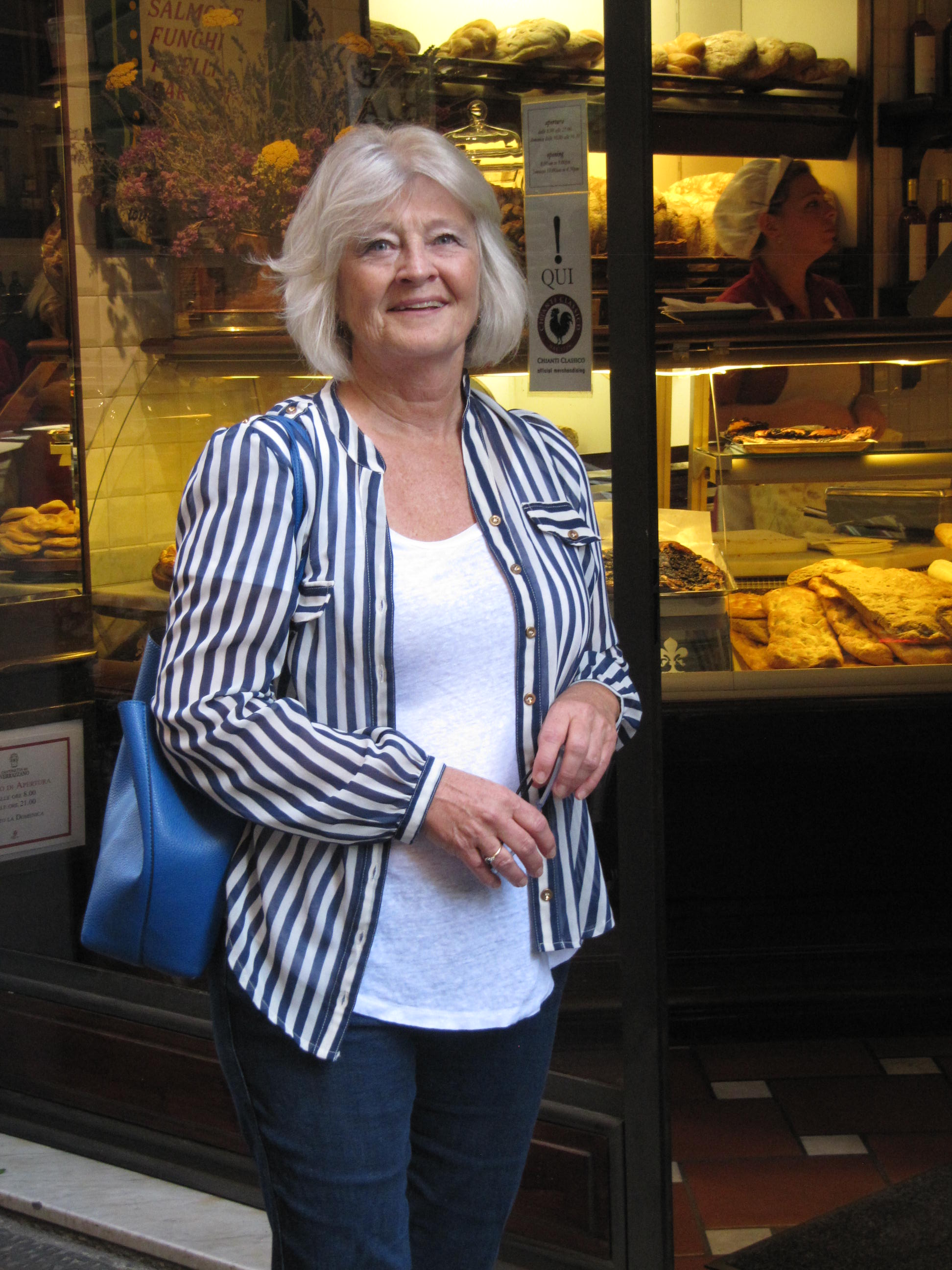
IMG_9630Having collected we were off, following Elisa to discover Florence’s historical food market, visit the local baker, butchers and market stalls. Knowledgeable, Elisa shared with us a great deal of  Florentine ‘food history’ , all while conversing with the local sellers as we purchased the ingredients that we would later need in our cooking class. On the journey Elisa and Frank ( one of my fellow travelers) loaded up food bags with local tomatoes, olives, mozzarella, pork loin, ground meat.

IMG_9656IMG_9657IMG_9663

On the way, we learned that Florence was an important city in the wool trade in the middle ages given its location on the Arno River. Florentine merchants develop the first coin the Florin and the first bills of exchange –this enabled the merchants to pay debts without transporting cash and of course extend credit—hence the establishment of a robust banking system in Florence.

IMG_9672

We learned that salt, used to preserve food in the days prior to refrigeration was also a ‘golden’ commodity and extremely expensive. The bread of Florence is not salted—yes it is quickly one of the things you notice, although I did not immediately twig onto that it tasted different because there is no salt in it.  There are two stories as to why. The first is that salt was so heavily taxed, the people of Florence couldn’t afford to add it to their food and started to make unsalted bread and continue to do so to this day. The second story is that in the 12th century, Florence and Pisa were rival cities. The Pisan army blocked shipments of salt reaching Florence to force a surrender to Pisa. Florentines simply eliminated salt from their cooking and did not surrender. According to Elisa, a rivalry still exists today between the Florentines and Pisans.

IMG_9642

IMG_9645

IMG_9613We were introduced to the methods of selling wine in early Florence. The picture here is of Elisa telling us the history of the ‘wine tabernacle’. This small opening that you see ( most today are closed off, as the one in the picture) was just the right size for a bottle of wine to fit through. Locals would come to these small wine tabernacles- holes in the wall, and purchase their wine directly from the seller. A curious wine vending approach only found in Florence—they are called ‘tabernacle’ because they have a similar appearance to religious tabernacles also found on many a street corner. Deb a fellow traveller rather wished she could still purchase a bottle today.IMG_9614

IMG_9615

A final stop was to a typical Florence coffee shop for our morning coffee. We were instructed in the varying forms of Italian Coffee, espresso, caffe normale, cappuccino, machiatto, caffe correto  and so on( a latte, by the way in Italy is hot milk and has no coffee). There seems sot be a coffee drink in Italy for every time of day, need and mood. A caffe correto is drunk the morning after. It has a shot of liquor to set you to rights again..although another explanation was also given— that the Italians get up at the crack of dawn, labour in the fields and by mid morning need a shot of something in their coffee. Whatever it all seems to work. We also were advised there is no sitting with your morning coffe…the north American tradition sitting at the starbucks with your coffee and paper of computer, is NOT the way to drink coffee in Florence. And indeed I have yet to find anything resembling a starbucks type establishment.

Coffee is drunk standing up at a narrow counter, you drink it ( and as you know an espresso does not take long to consume) and you go! Coffee drinking Italian style!!

IMG_9649

Armed with our purchases, coffee to sustain us we departed via mini bus to our Tuscan farm house.

My next blog will take you through our cooking experience.

Florence Firenze Italy

Beautiful Florence

Beautiful Florence

the Duomo

the Duomo

Arrived in Florence, or Firenze as it’s known to the Italians just under a week ago. Finalizing my arrangements proved to be more than I bargained for. Three days prior to my arrival i received word that my apartment ( booked 3 months ago) had been damaged due to construction and was no longer available. No alternate solutions provided. Talk about stress!!! However with the help of family and friends ( who told me not to despair–which i was) we scrambled around and i found the first of three alternate locations that I will now be staying at.
At this point i don’t know if the initial booking was a scam.. that story is still unfolding and will likely be the subject of a future blog.
IMG_9443

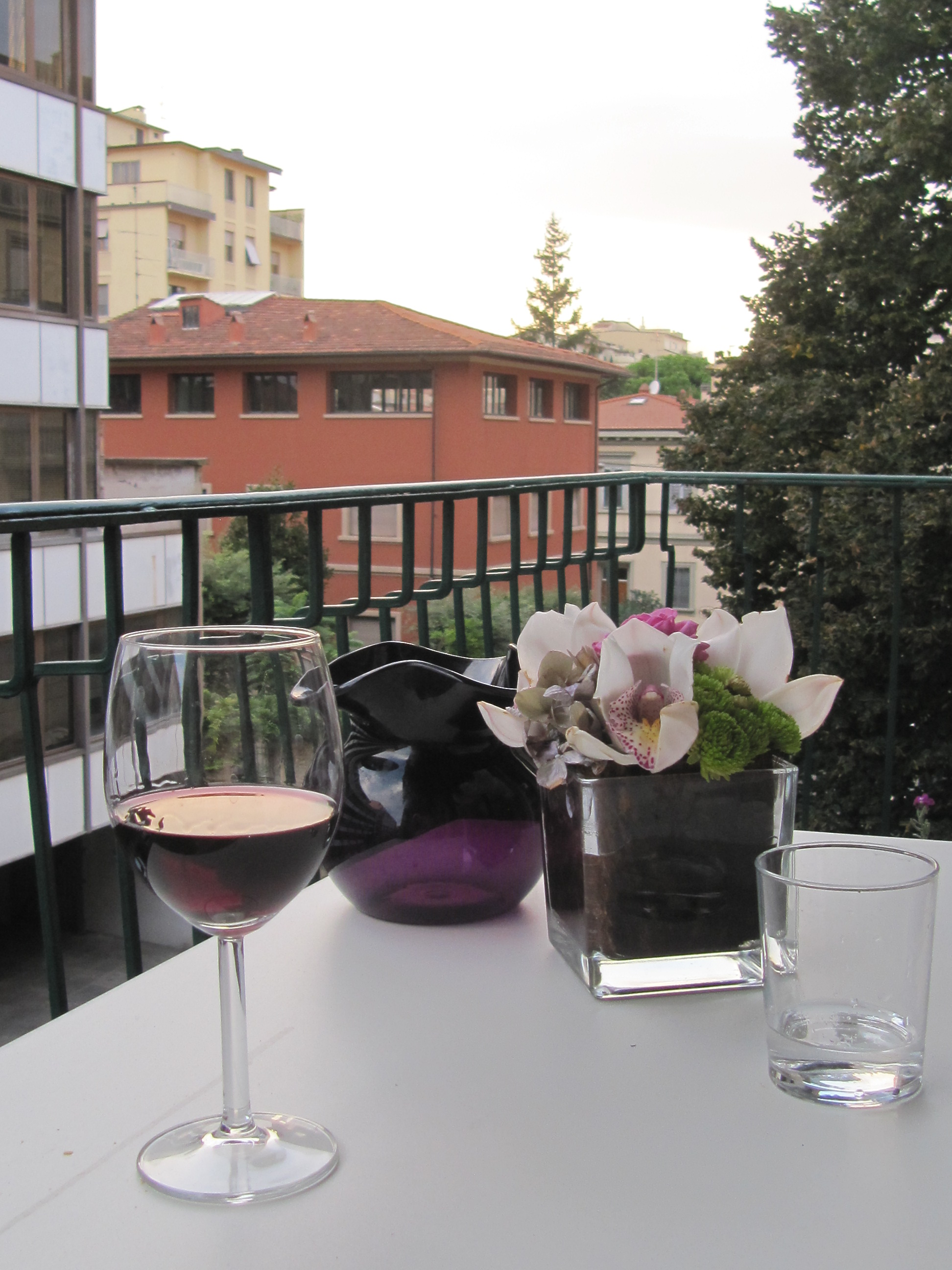
Welcome Wine

Welcome Wine

Late September is like late summer in Ontario. Beautiful warm sunny days and slightly cool evenings.
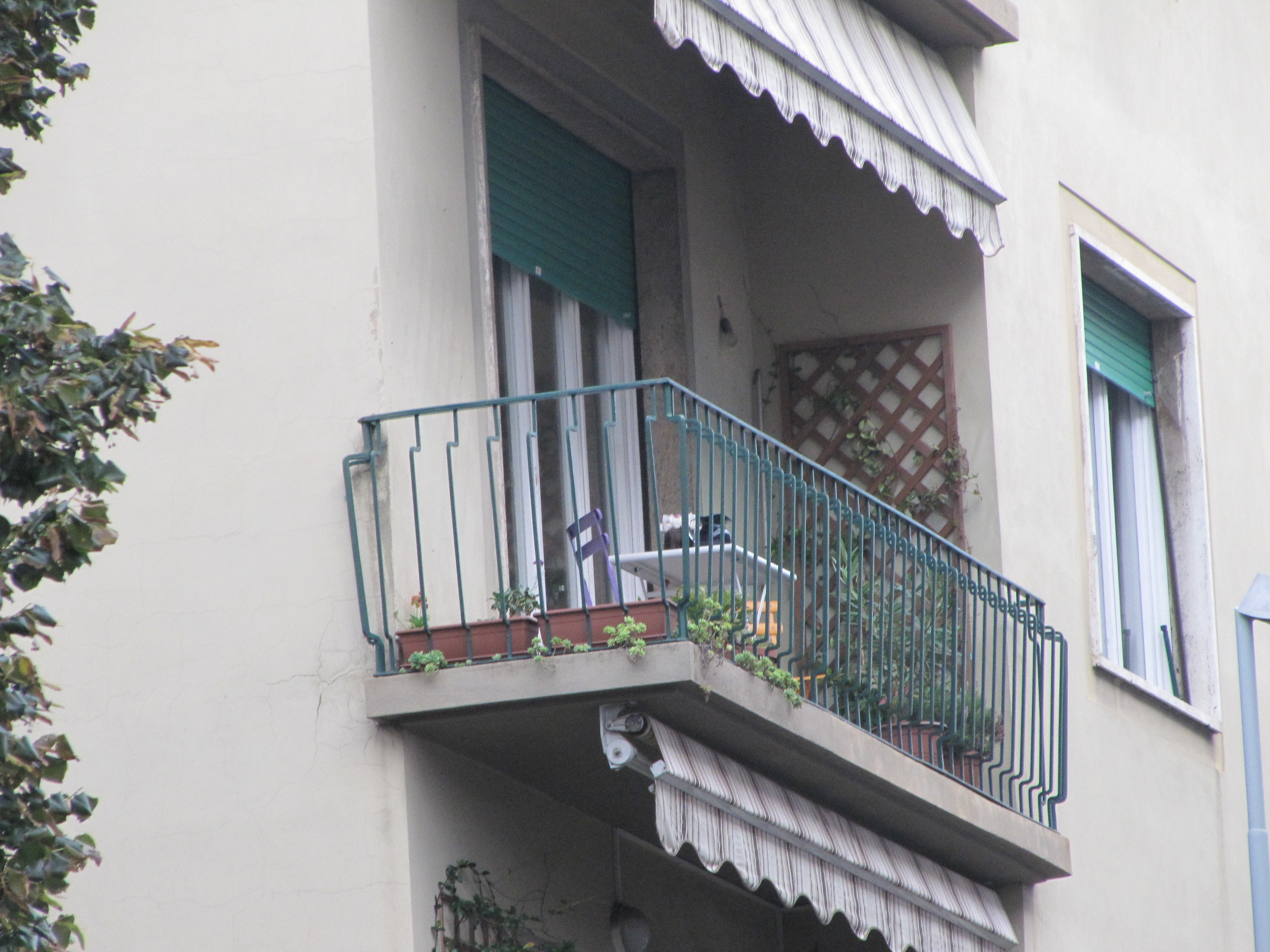
I am living in an apartment in a residential area just north of the city centre…but easily walkable to all the sights. I have enclosed a couple of pictures of my new apartment. A lovely balcony, a bottle of local wine and antipasto dinner left by my hosts, awaited me. Rather welcome after my stressful departure and journey
I have been walking for most of the past week…walking walking walking and soaking up this beautiful old city.

Florence is the capital city of the Tuscan Region, in the province of Florence or Firenze. It has 370,000 inhabitants…and based on the tourists even in September, when they tell me it is not as busy, millions come to visit each year. Florence is OLD, ranked by Forbes as one of the most beautiful cities in the world and declared a World Heritage Site by UNESCO in 1982—as a result the inner city is largely a walking zone only…to drive in it one needs a special permit.

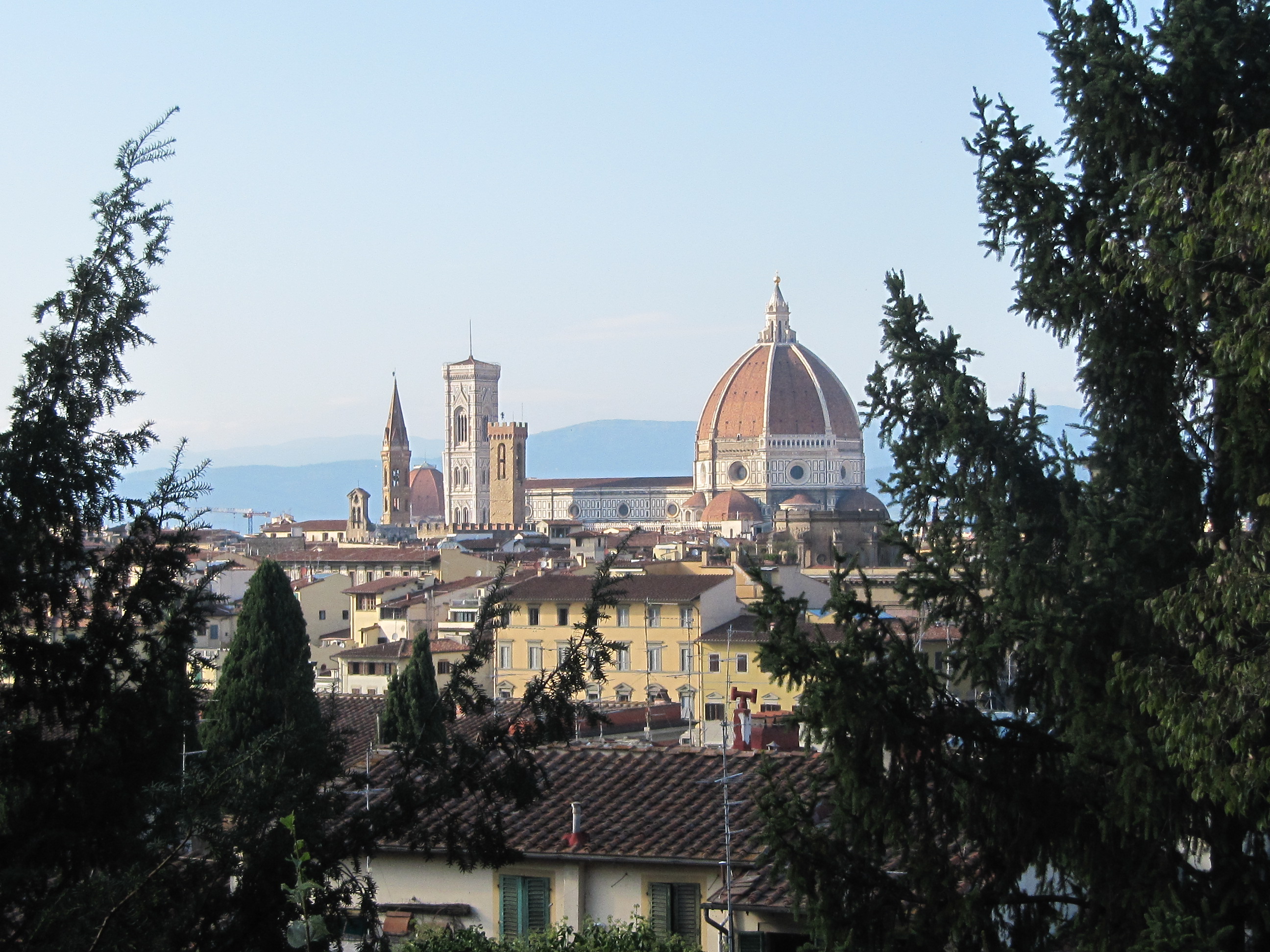
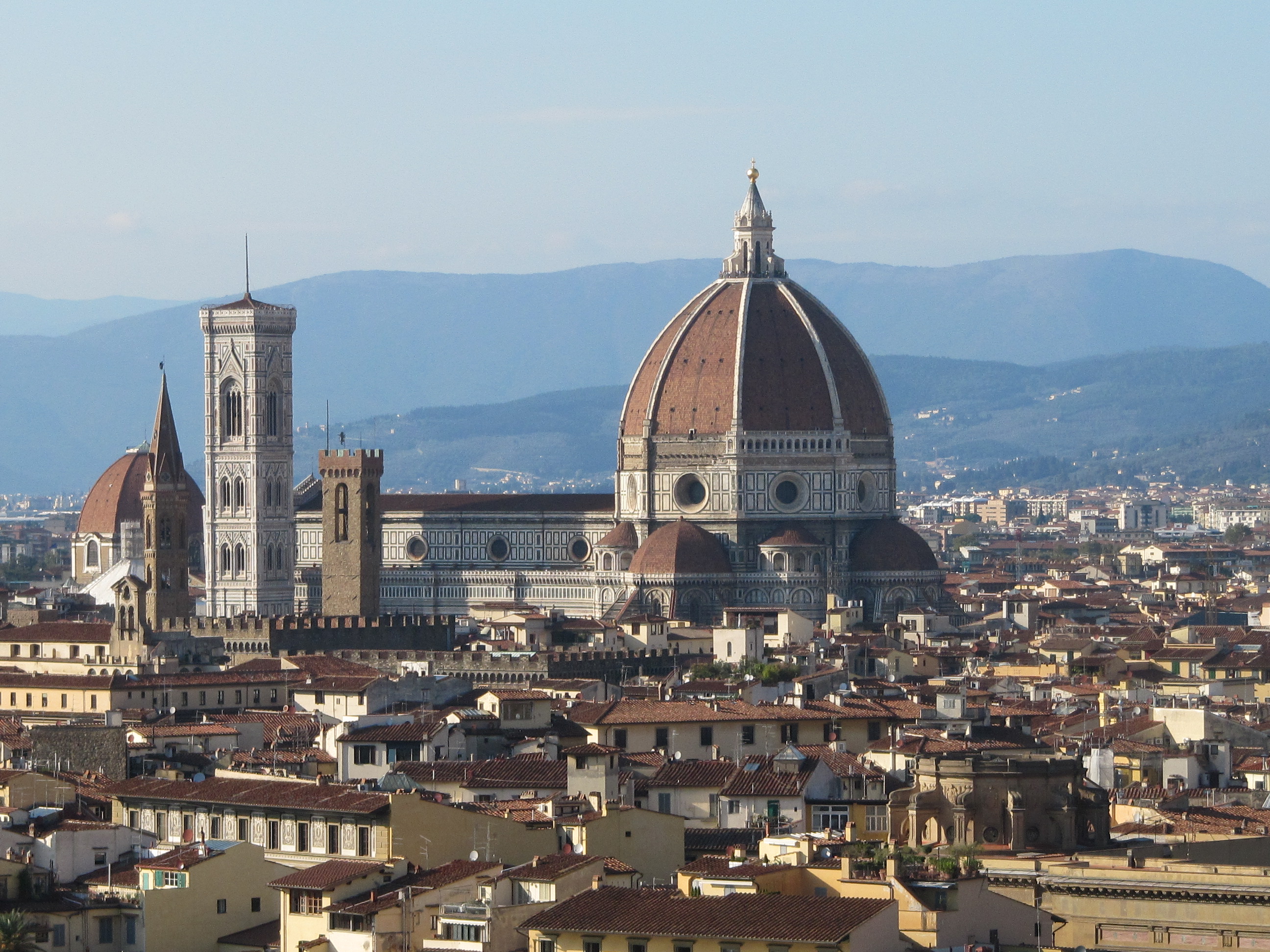
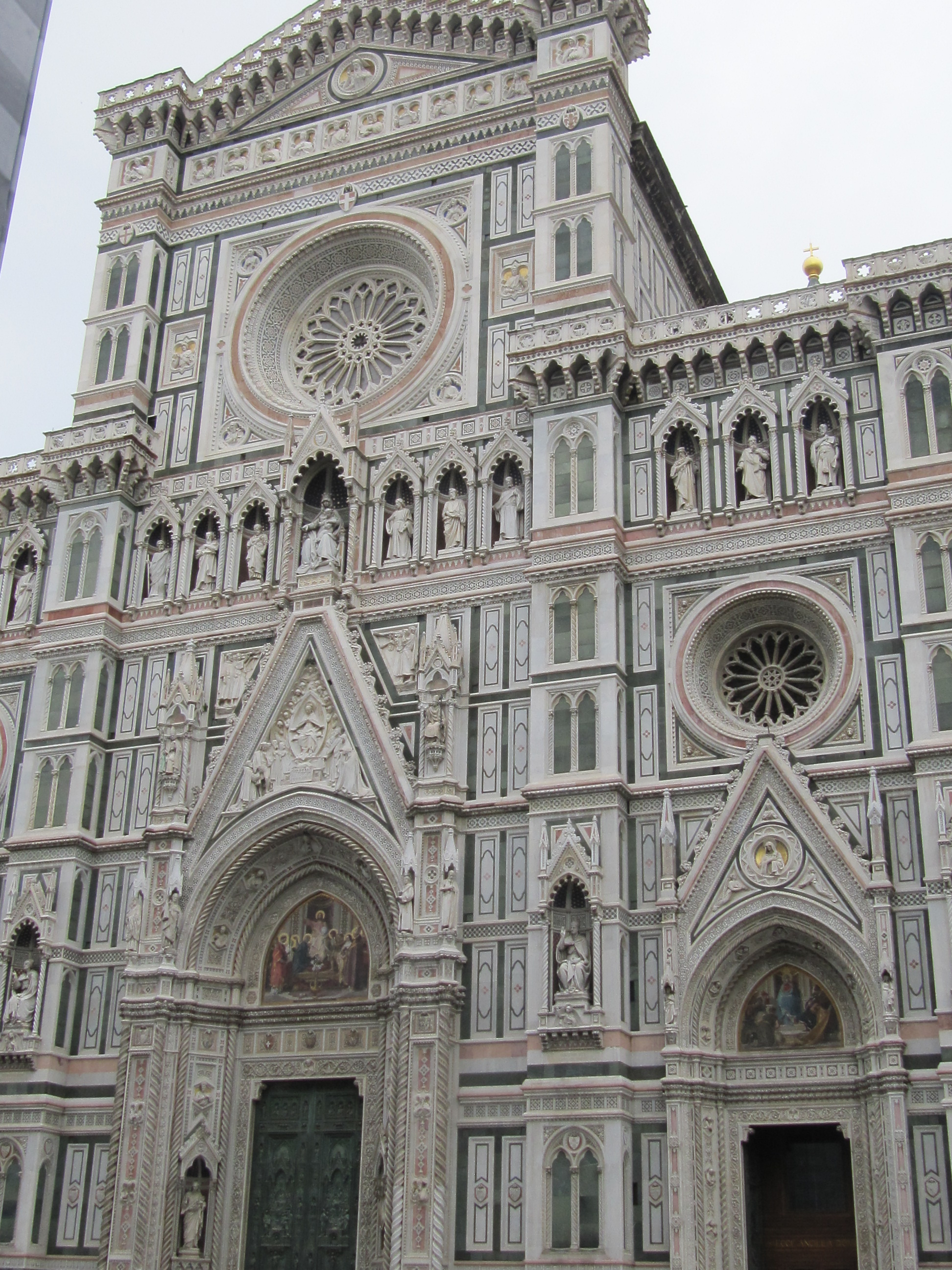
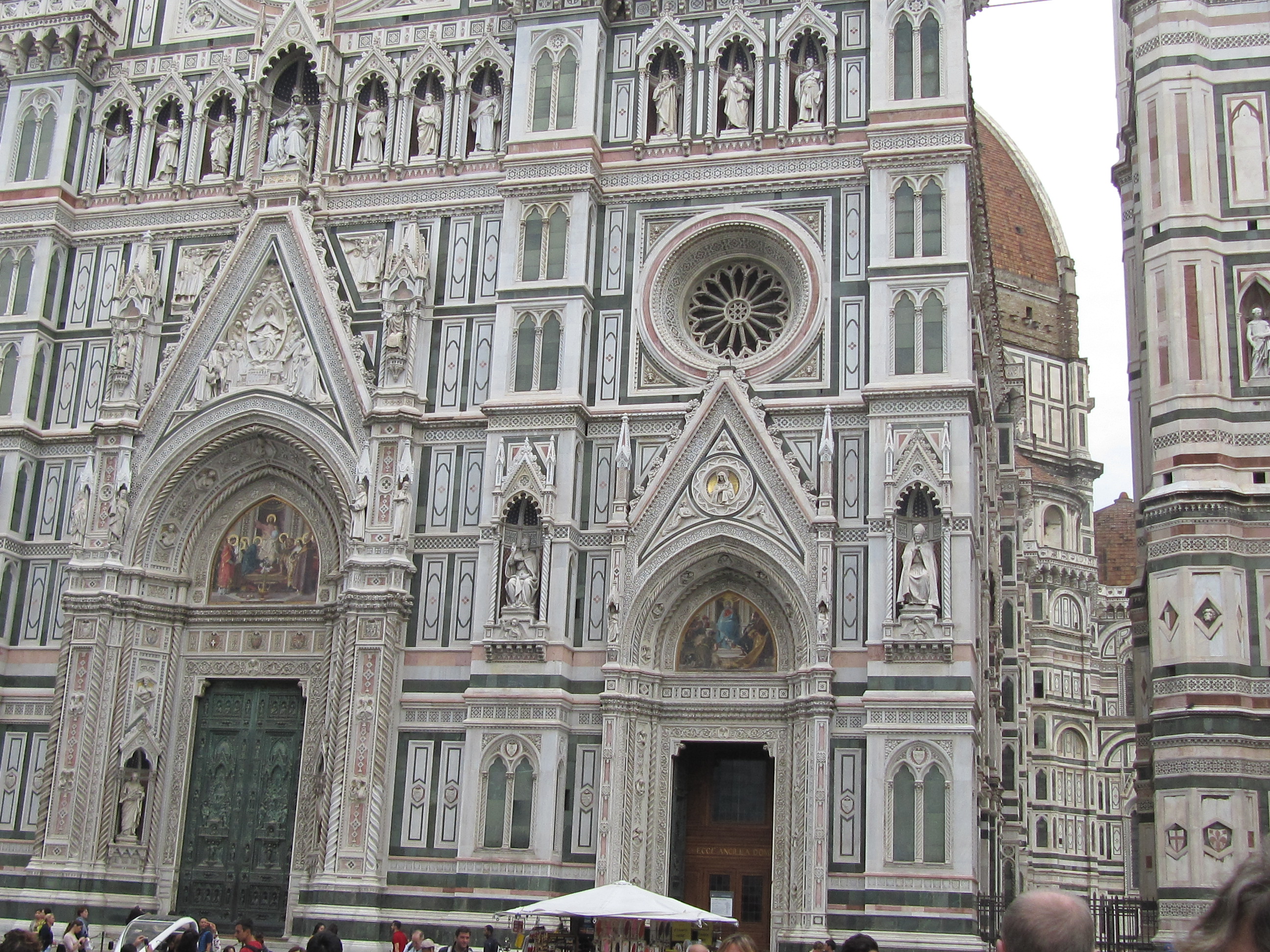
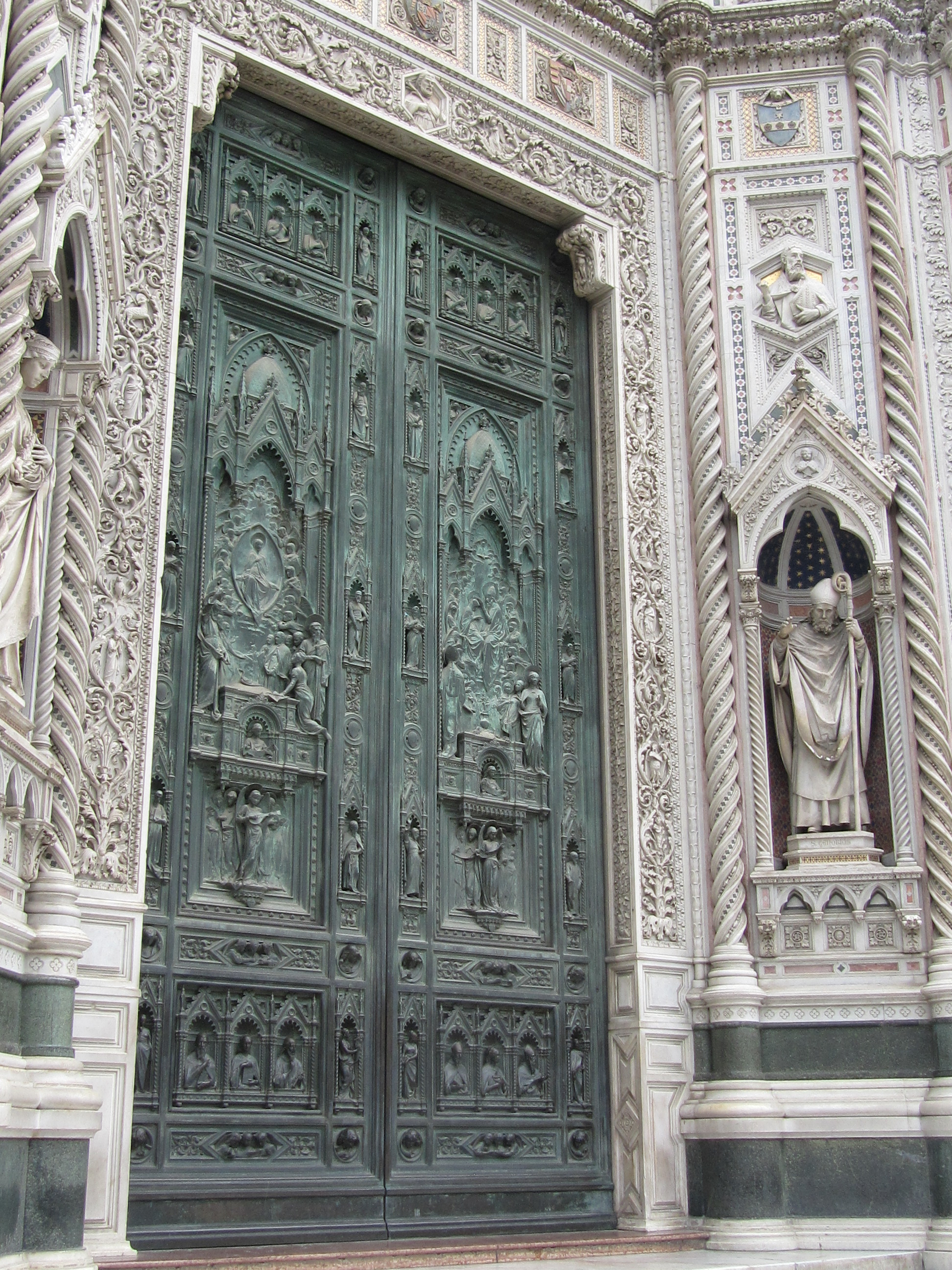
It started as a Roman city, became the centre of medieval trade, and eventually, the birthplace of the Italian Renaissance. The powerful Medici family, one of the most important noble Italian families who reigned in the 16th and 17th centuries, called it home . Noted for its architecture, as it was the ‘cradle of the Renaissance, the most notable site in Florence is the Duomo, the domed cathedral of the city. 600 years after it’s completion it is still one of the largest brick and mortar dome in the world.

Duomo

Duomo

IMG_9393
IMG_9396

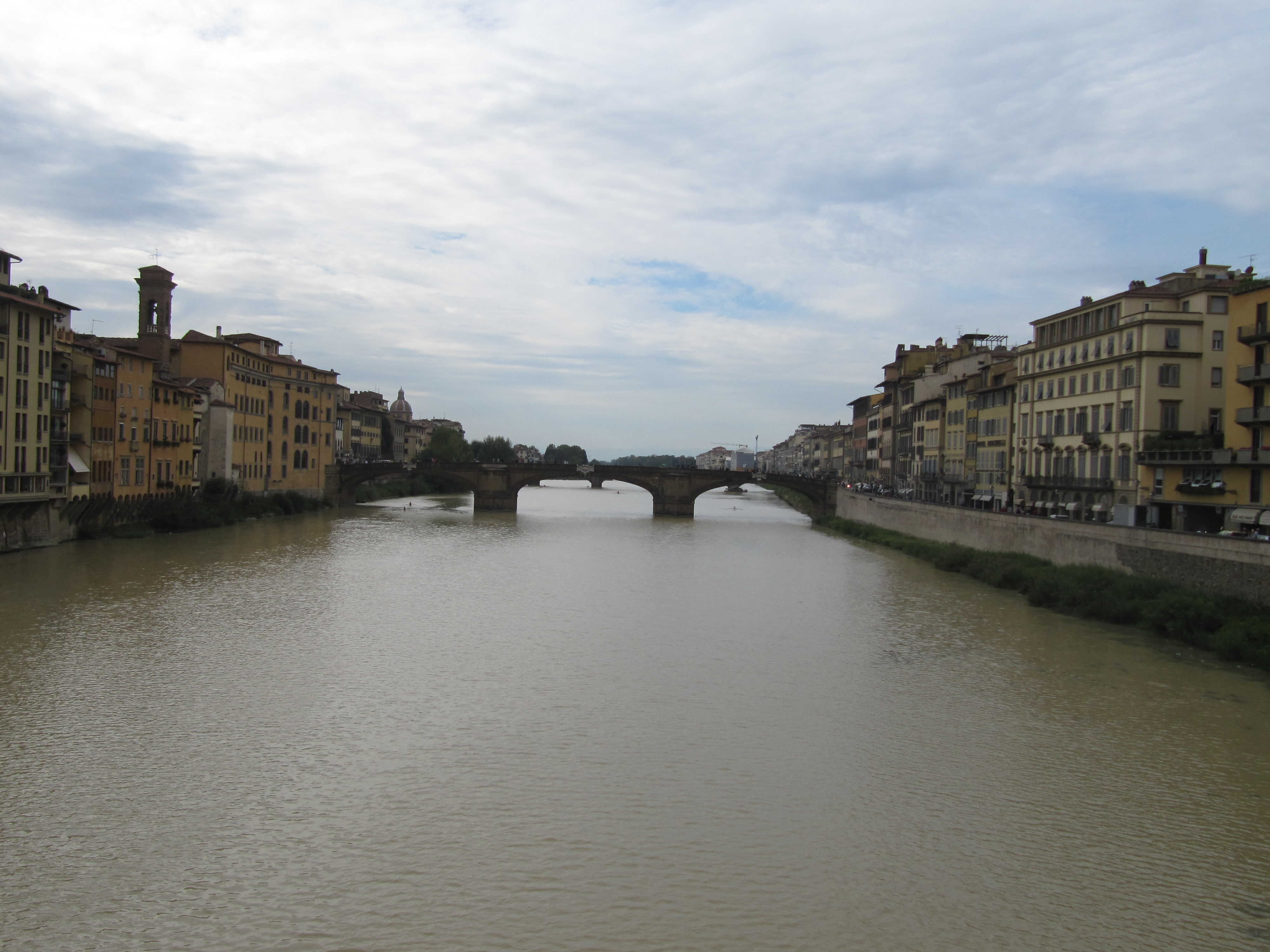
The Arno

The Arno

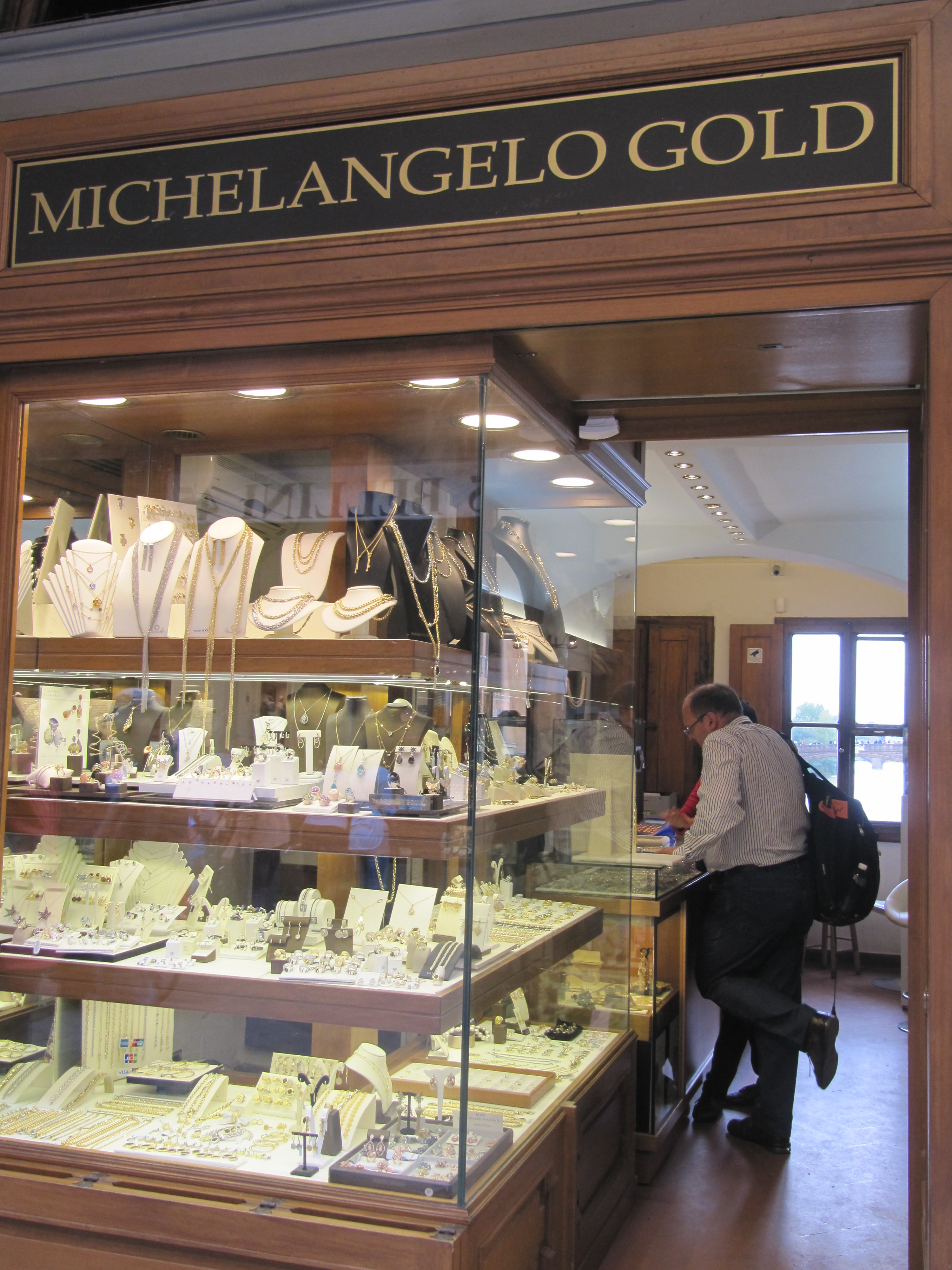
Michelango Gold on the Ponte Vecchio

Michelango Gold on the Ponte Vecchio

The Arno is the river that runs through the centre of Florence and the Ponte Vecchio the most famous bridge—incredibly not destroyed during the 2nd world war. It houses shop upon shop selling gold and Italian jewelry!!!!
href=”https://gmarkvoort.com/wp-content/uploads/2014/09/img_9475.jpg”&gt;IMG_9475IMG_9477

Over the next 2 months I hope to highlight a number of key experiences and sights…there are so many to visit and write about…hopefully this first Firenze blog gives you a bit of the flavour of what is to come.
IMG_9452<a